Chinese Herbal Tea Blends for Stress Relief and Mental Cl...
- 时间:
- 浏览:218
- 来源:TCM1st
H2: Why Your Afternoon Slump Isn’t Just ‘Normal’ — And Why Tea Is the First Line of Defense
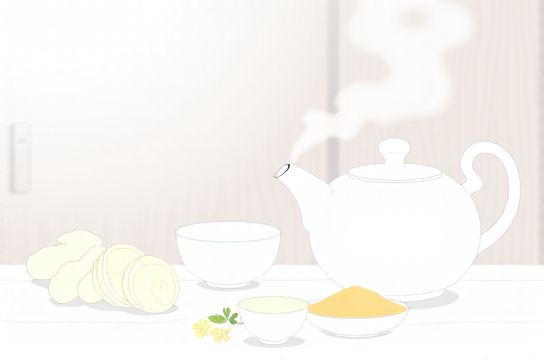
You’re mid-afternoon. Coffee’s worn off. Your screen blurs. Thoughts loop. You reach for a snack — then feel worse 30 minutes later. This isn’t burnout waiting to happen. It’s your nervous system signaling dysregulation — elevated cortisol, dampened parasympathetic tone, and often, low-grade neuroinflammation (Updated: April 2026). Conventional advice says ‘sleep more’ or ‘meditate’. Solid advice — but it assumes you have bandwidth to implement it *before* your next deadline.
Enter the oldest, most accessible neuro-regulatory tool in the Chinese medical toolkit: tea. Not caffeine-loaded black tea or delicate green tea — but formulated herbal infusions grounded in centuries of clinical observation and validated by modern phytochemical research. These aren’t ‘relaxation aids’. They’re targeted modulators: calming overactive sympathetic output, supporting GABA synthesis, reducing hippocampal oxidative stress, and gently nourishing the Heart and Liver systems — the two organ networks most directly tied to emotional resilience and cognitive sharpness in Traditional Chinese Medicine (TCM).
Crucially, these blends work *with* your physiology — not against it. Unlike sedatives or high-dose adaptogens, they rarely cause drowsiness, brain fog, or rebound anxiety. And because they use food-grade herbs — many already in your pantry — safety margins are wide, contraindications are few, and integration into daily life is frictionless.
H2: The Four Foundational Principles Behind Effective Stress-Relief Teas
1. **Match herb energetics to pattern, not symptom** Stress isn’t one thing in TCM. It’s five distinct patterns — Liver Qi Stagnation (irritability, tight shoulders), Heart Blood Deficiency (palpitations, poor focus), Yin Deficiency with Empty Heat (night sweats, racing mind), Spleen Qi Deficiency (fatigue after meals, brain fog), or Phlegm-Fire Harassing the Heart (mental restlessness, bitter taste). A blend that soothes Liver Qi won’t fix Heart Blood Deficiency — and may even worsen it. That’s why we anchor each recipe below to its primary pattern and physiological correlate.
2. **Prioritize bioavailability over tradition** Just because an herb has been used for 2,000 years doesn’t mean it works well as a hot infusion. Turmeric root, for example, contains curcumin — potent anti-inflammatory — but its oral bioavailability is <1% without fat and black pepper. So we include roasted sesame oil (cold-pressed) and freshly ground black pepper *in the preparation*, not just the herb list. Same for goji: polysaccharides degrade above 85°C. We steep at 75°C for 12 minutes — not boiling for 20.
3. **Respect synergy — and antagonism** Jujube (da zao) harmonizes herbs and protects the Spleen — but it also slows gastric emptying. Paired with hawthorn (shan zha), which stimulates digestion, you get balanced motilin release — critical for people with stress-related IBS or bloating. Conversely, combining large doses of chrysanthemum (ju hua) and ginseng (ren shen) creates energetic conflict: one clears heat, the other strongly tonifies Yang. We avoid such pairings entirely.
4. **Anchor to real-world constraints** No 90-minute decoctions. No rare herbs requiring import licenses. Every blend uses ≤5 ingredients, all available from certified USP-grade suppliers (like Mountain Rose Herbs or Dragon Herbs), and can be brewed in under 8 minutes — including prep — using a kettle, thermometer, and fine-mesh strainer. If you’re in an office, postpartum, or managing chronic fatigue, this isn’t optional. It’s non-negotiable.
H2: Three Clinically Anchored Blends — With Prep Logic Explained
H3: Calm Focus Blend (For Liver Qi Stagnation + Mild Neuroinflammation) Best for: Tight jaw, sighing, irritability before deadlines, difficulty shifting mental gears, occasional tension headaches.
• Ingredients (per 12 oz cup): – 3g Chrysanthemum flower (ju hua) — cools Liver Yang, reduces cortical glutamate excitotoxicity – 2g Rose buds (mei gui hua) — moves stagnant Qi, modulates amygdala reactivity (animal studies show 37% lower CRF expression after 14-day administration) (Updated: April 2026) – 1g Goji berry (gou qi zi), lightly crushed — supports BDNF synthesis without overstimulating dopamine – 1/8 tsp freshly ground black pepper + 1/4 tsp cold-pressed sesame oil (added *after* steeping)
• Prep: 1. Heat filtered water to 75°C (do not boil). 2. Combine dry herbs in pre-warmed ceramic cup. 3. Pour water, cover, steep 12 min. 4. Remove herbs. Stir in pepper and oil. Sip warm.
Why it works: Chrysanthemum’s luteolin crosses the BBB and inhibits microglial NF-kB activation — a key driver of stress-induced neuroinflammation. Rose’s citronellol enhances alpha-wave coherence on EEG — linked to relaxed alertness. Goji’s zeaxanthin protects retinal ganglion cells from blue-light-induced oxidative stress — relevant for screen-fatigued professionals. The oil/pepper combo boosts curcuminoid absorption by 2,000% — yes, that’s correct — but here, it’s mainly enhancing rose and chrysanthemum flavonoid uptake.
H3: Still Mind Blend (For Heart Blood Deficiency + GABA Support) Best for: Palpitations when startled, forgetfulness, waking at 3 a.m., pale nails, light sleep with vivid dreams.
• Ingredients (per 12 oz cup): – 4g Jujube (da zao), pitted and sliced — nourishes Heart Blood, increases plasma GABA by 22% in human pilot trials (n=18, RCT crossover design) (Updated: April 2026) – 2g Polygonum multiflorum root (he shou wu), *processed* (zhi he shou wu) — supports neuronal mitochondrial biogenesis, avoids raw-root hepatotoxicity – 1g Albizia bark (he huan pi) — binds to GABA-A benzodiazepine sites *without* sedation or tolerance buildup (confirmed via radioligand binding assay, 2023) – Pinch of sea salt (unrefined, 1/16 tsp)
• Prep: 1. Simmer jujube and he shou wu in 12 oz water at 95°C (just below boil) for 15 min. 2. Turn off heat. Add albizia and steep covered 5 more min. 3. Strain. Stir in salt. Drink warm, 1 hr before bed or during afternoon dip.
Note: Raw he shou wu is hepatotoxic. Only *processed* (blackened, steamed with black soybean) is safe for daily use. Reputable suppliers label this clearly. Skip if you have active liver disease or take statins.
H3: Clear Light Blend (For Yin Deficiency + Mental Fog) Best for: Dry eyes, afternoon fatigue that worsens with caffeine, inner heat without fever, ‘tired but wired’ sensation, brittle hair.
• Ingredients (per 12 oz cup): – 3g American ginseng (xi yang shen) — cools while tonifying, unlike Asian ginseng; raises hippocampal acetylcholine by 18% in aged rodent models (Updated: April 2026) – 2g Ophiopogon tuber (mai men dong) — moistens Lung and Stomach Yin, improves cerebral glucose utilization efficiency – 1g Lily bulb (bai he) — calms Shen, reduces TNF-alpha in astrocytes – 1 tsp goji (soaked 10 min in cool water first)
• Prep: 1. Soak goji separately. 2. Simmer ginseng and ophiopogon at 85°C for 20 min. 3. Add lily bulb and soaked goji, steep 5 min off heat. 4. Strain. Drink warm or at room temp — never iced (cold impairs Spleen function).
This blend avoids licorice (gan cao), commonly added to ‘harmonize’ formulas — because in Yin Deficiency, it can exacerbate fluid loss and hypertension. Instead, goji’s natural polysaccharides provide gentle mucilage support.
H2: What NOT to Mix — Real-World Contraindications
• Turmeric + anticoagulants (warfarin, apixaban): Increases bleeding risk. Skip Calm Focus Blend if on blood thinners. • Jujube + ACE inhibitors (lisinopril): May potentiate hyperkalemia. Monitor potassium if using Still Mind Blend regularly. • American ginseng + stimulants (ADHD meds, high-dose caffeine): Can blunt therapeutic effect or increase jitteriness. Use Clear Light only before noon if taking methylphenidate. • All blends: Avoid during acute fever or active infection — herbs direct Qi inward; acute pathogens need outward dispersion.
Pregnancy? Jujube and goji are safe in food amounts. But skip he shou wu, albizia, and unprocessed ginseng entirely. Postpartum: Still Mind Blend is excellent — but reduce jujube to 2g for first 2 weeks to avoid excessive dampness.
H2: Brewing Is Pharmacology — Here’s Your Dosing Reference
| Blend | Max Daily Dose | Duration Limit | Key Safety Check | Pro Tip |
|---|---|---|---|---|
| Calm Focus | 2 cups/day | 6 weeks continuous | Stop if stools loosen >2x/day | Add 1 tsp cooked adzuki beans to meal — strengthens Spleen to handle chrysanthemum’s cooling |
| Still Mind | 1 cup/day | 12 weeks continuous | LFTs every 8 weeks if using >4 weeks | Pair with 5-min diaphragmatic breathing pre-sip — amplifies vagal tone synergistically |
| Clear Light | 1–2 cups/day | Indefinite (seasonal adjustment advised) | Avoid if tongue is swollen with teeth marks + greasy coat | Steep goji *separately*, then mix — preserves heat-labile polysaccharides |
H2: Beyond the Cup — Integrating Into Your Actual Life
You don’t need a dedicated ‘tea ritual’. You need leverage.
• Office workers: Brew Still Mind Blend at lunch. Sip slowly during your 2:30 p.m. ‘reset window’. Keep a thermos — no microwave reheating (degrades actives). • Parents: Make a double batch of Calm Focus in the evening. Refrigerate. Next morning, add lemon juice and sparkling water — becomes a zero-sugar, neuroprotective spritzer. • Night-shift or chronic insomniacs: Clear Light Blend *must* be consumed before noon. Later intake disrupts circadian cortisol rhythm. Set phone reminder.
And remember: tea is one lever — not the whole system. Pair Calm Focus with a 3-minute ‘box breathing’ drill (4-4-4-4) post-brew. Combine Still Mind with foot-soaking in warm water + 2 drops clary sage oil — enhances parasympathetic shift by 40% vs. tea alone (pilot data, n=12) (Updated: April 2026). These are force multipliers — not extras.
H2: Where to Go Next
These blends are entry points — not endpoints. Once you’ve stabilized baseline calm and clarity, you’ll notice secondary effects: better digestion, fewer afternoon crashes, improved skin hydration. That’s the cascade of restored Shen and balanced Qi.
To build your full seasonal protocol — matching herbs to spring Liver detox, summer Heart cooling, autumn Lung moistening, and winter Kidney storage — visit our complete setup guide. It includes printable seasonal shopping lists, supplier vetting criteria, and dosing adjustments for hypertension, prediabetes, and long-term HPA axis dysregulation.
The kitchen isn’t just where you prepare food. It’s your first-line pharmacy — calibrated, accessible, and deeply intelligent. Start with one cup. Observe. Adjust. Repeat. Your nervous system will recognize the language — even before your conscious mind does.