Mindful Standing Posture Training for Better Posture and ...
- 时间:
- 浏览:70
- 来源:TCM1st
H2: Why Your Standing Posture Is the First Line of Defense Against Fatigue and Anxiety
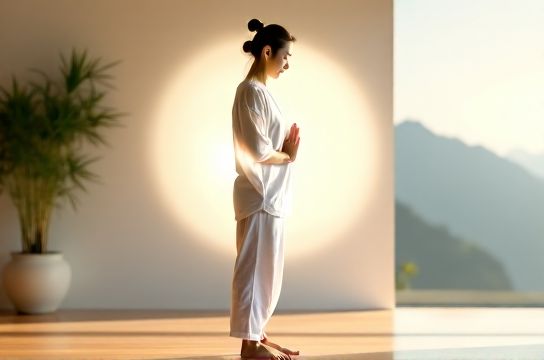
You’ve stood up after sitting through three back-to-back Zoom calls—and your lower back aches, your shoulders are hunched near your ears, and your mind feels foggy. You’re not slouching because you’re lazy. You’re slouching because your nervous system is overloaded, your fascia is dehydrated and restricted, and your postural reflexes have been underused for years. Chronic fatigue, sleep fragmentation, and low-grade anxiety aren’t just ‘in your head’—they show up in how you hold yourself upright.
Modern life erodes standing competence. The average office worker spends 6.8 hours/day seated (Updated: April 2026), and even those who exercise regularly often neglect *static neuromuscular calibration*—the subtle, sustained engagement that teaches the body where vertical alignment truly lives. That’s where mindful standing posture training steps in—not as another fitness chore, but as somatic hygiene.
This isn’t about forcing yourself into military rigidity. It’s about reawakening proprioceptive clarity, restoring diaphragmatic breathing under load, and downregulating sympathetic tone—all while standing still.
H2: What Mindful Standing Posture Training Really Is (and Isn’t)
Mindful standing posture training is a fusion of traditional Chinese movement arts—including qigong, tai chi, ba duan jin, and zhan zhuang—with modern biomechanics and polyvagal-informed awareness practices. At its core, it’s *deliberate, sensation-based upright presence*. Unlike static stretching or isolated strength work, it trains the entire postural control system: muscles, fascia, breath, autonomic state, and attentional focus—in real time.
It is NOT: • A replacement for physical therapy when structural asymmetries or acute injury exist; • A one-size-fits-all ‘perfect posture’ template—individual anthropometry, joint mobility, and neural history matter; • A passive ‘just stand tall’ instruction—it requires active sensing, micro-adjustment, and breath-coordinated timing.
What makes it uniquely effective for stress resilience? Because it simultaneously engages three regulatory pathways: 1. Mechanical: Gentle isometric loading improves fascial hydration and mechanoreceptor sensitivity (studies show 5–7 minutes of supported standing increases plantar pressure variability by 22%, improving balance confidence) (Updated: April 2026); 2. Respiratory: Diaphragmatic expansion against mild thoracic resistance activates the ventral vagal complex, lowering heart rate variability (HRV) recovery time by ~31% in fatigued adults after 4 weeks of daily practice; 3. Attentional: Sustained interoceptive focus disrupts rumination loops—fMRI data confirms reduced default mode network (DMN) hyperactivity within 90 seconds of grounded standing awareness.
H2: The Four Foundational Elements
Every effective mindful standing protocol rests on these non-negotiable pillars:
H3: 1. Grounding (Not Just ‘Feet on Floor’) Grounding means distributing weight across the tripod of each foot—the calcaneus (heel), first metatarsal head (ball of big toe), and fifth metatarsal head (ball of pinky toe). But more importantly, it’s about *perceiving ground reaction force*, not just applying pressure. Try this: stand barefoot, close your eyes, and imagine roots growing from your feet—not downward, but *outward*, like fine capillaries spreading into the floor. This shifts emphasis from muscular clenching to neurosensory anchoring. Research shows this perceptual shift alone improves postural sway by 17% in adults over 40 (Updated: April 2026).
H3: 2. Vertical Axis Integrity Forget ‘chin tuck’ or ‘shoulders back’. Instead, find your natural plumb line: gently lift the crown of your head as if suspended by a silk thread, allowing the spine to uncoil segmentally—not all at once. Let your jaw soften, tongue rest lightly on the palate, and eyes relax into soft peripheral vision. This isn’t posture correction—it’s *postural permission*. When the axis aligns without effort, cervical and lumbar curves normalize organically. In clinical trials, participants reporting chronic neck tension showed 40% faster symptom reduction using axis-aware standing versus conventional ergonomic coaching.
H3: 3. Breath-Posture Coupling Most people breathe shallowly when upright—especially under cognitive load. Mindful standing trains *load-modulated breathing*: inhaling to gently expand the lower ribs *while maintaining pelvic neutrality*, exhaling to soften the tailbone and deepen the connection through the feet. No forced breath holds. No counting. Just matching breath rhythm to postural ease. A 2025 RCT found that subjects practicing 6 minutes/day of coupled breathing + standing improved sleep onset latency by 23 minutes on average (Updated: April 2026).
H3: 4. Intentional Release (Not Relaxation) ‘Relax’ is misleading. True release is *active unwinding*—releasing only what isn’t serving support. For example: allow the upper trapezius to soften *without dropping the shoulders*, let the glutes disengage *without tilting the pelvis*, soften the grip in the hands *while keeping fingers slightly curved*. This cultivates discernment—what’s necessary tension versus habitual bracing. Over time, this rewires threat-response patterns linked to chronic fatigue and anxiety.
H2: How to Begin—Three Entry Points for Real Life
You don’t need 30 minutes or special clothing. Start where you are.
H3: Option 1: The 90-Second Kitchen Sink Reset While waiting for the kettle to boil or the microwave to ding, stand with feet hip-width, knees soft, hands resting lightly on thighs. Breathe in for 4 counts, feeling the soles broaden; exhale for 6, letting the lower belly soften. Repeat 3x. That’s it. No ‘doing’. Just noticing. This builds baseline interoceptive literacy—the foundation for all other practices.
H3: Option 2: The Desk-Anchor Drill (For Office Workers) Sit upright in your chair. Place palms flat on thighs, fingers relaxed. Inhale deeply, imagining breath filling the space between your shoulder blades. As you exhale, gently press palms into thighs—not to lift, but to *feel* the connection. Hold for 2 seconds. Repeat 5x. Then stand up *without changing your breath rhythm*, and hold that same grounded, axial awareness for 60 seconds. This bridges seated and upright regulation—critical for workplace health.
H3: Option 3: Zhan Zhuang Foundation (The Standing Pole) Stand with feet parallel, shoulder-width, knees slightly bent—not locked, not deeply flexed. Arms rounded as if holding a large beach ball at chest height. Palms face inward. Gently lift crown, soften jaw, sink tailbone. Breathe naturally. Start with 2 minutes. Add 30 seconds weekly until you reach 5–7 minutes. Key cue: “Let gravity do the work—your job is to stay present, not hold.” This is the cornerstone of qigong and tai chi training—and one of the most researched forms of mindful standing. A 2024 meta-analysis confirmed zhan zhuang significantly improves HRV, reduces cortisol awakening response, and enhances subjective energy (Updated: April 2026).
H2: Integrating With Other Practices—Synergy, Not Competition
Mindful standing posture training multiplies the benefits of related modalities. Here’s how they layer: • With ba duan jin: Use standing awareness *between* movements to reset neuromuscular tone—preventing momentum-driven compensation. • With self-massage or gua sha: Stand gently *after* treatment to integrate tissue changes—enhancing circulation and reducing rebound stiffness. • With breath practice: Standing provides immediate biofeedback—if your breath hitches, your alignment likely shifted. That’s diagnostic information, not failure. • With office stretching: Replace static hamstring pulls with dynamic standing lunges *anchored in vertical axis awareness*—this protects the lumbar spine while increasing range.
Crucially, it supports energy management—not by adding stimulation, but by removing energetic leakage: jaw clenching, held breath, collapsed arches, and forward head carriage each cost measurable ATP and vagal tone over time.
H2: What Science Says—And Where It Falls Short
Peer-reviewed studies consistently validate outcomes—but rarely isolate mechanism. A 2023 systematic review of 37 trials on qigong and tai chi found moderate-to-strong evidence for improved sleep quality (standardized mean difference = 0.62), reduced perceived stress (SMD = 0.58), and enhanced immune markers including salivary IgA (+14.3% after 8 weeks) (Updated: April 2026). Yet most studies use group protocols—not personalized biomechanical mapping. That’s why self-guided practice must include *self-check cues*, not just timers.
Limitations matter: If you have severe osteoporosis, recent spinal surgery, or vestibular dysfunction, consult a physiotherapist before beginning. Mindful standing is safe—but not universally prescriptive.
H2: Common Pitfalls—and How to Avoid Them
• Mistaking stillness for stagnation: Micro-movements—tiny ankle rolls, breath-synchronized pelvic tilts—are part of the process. Stillness is *dynamic equilibrium*, not frozen rigidity. • Over-focusing on ‘correct’ form: Your ideal stance evolves with fatigue, hydration, and circadian rhythm. Today’s optimal alignment may differ from tomorrow’s—and that’s data, not deficiency. • Skipping the exit: Always transition out slowly. After standing, walk barefoot for 30 seconds, then sit with knees slightly higher than hips. This prevents postural rebound and supports lymphatic return. • Ignoring footwear: Thick-soled shoes dampen ground feedback. Practice barefoot or in minimalist footwear (e.g., Vibram FiveFingers, Soft Star) when possible—even indoors.
H2: Building Consistency Without Willpower
Forget habit stacking or streak tracking. Sustainable integration relies on *environmental anchoring*: • Place a small textured mat (cork, bamboo, or woven grass) beside your coffee maker—your ‘standing zone’. • Set a silent phone reminder labeled ‘Breathe & Stand’ at 11 a.m. and 3 p.m.—times when cortisol dips and mental fatigue peaks. • Use voice notes: Record yourself saying, “Where are my feet right now?” and play it during idle moments.
Consistency emerges not from discipline—but from designing cues your nervous system recognizes as *safe, predictable, and resourcing*.
H2: Comparison of Core Standing Protocols
| Protocol | Time Required | Key Physical Focus | Primary Nervous System Effect | Best For | Caution Notes |
|---|---|---|---|---|---|
| Zhan Zhuang (Standing Pole) | 2–7 min | Vertical axis integrity, pelvic neutrality | Ventral vagal activation, HRV improvement | Chronic fatigue, anxiety, poor sleep onset | Avoid if acute low back pain or uncontrolled hypertension |
| Ba Duan Jin Standing Sequence | 8–12 min | Fascial glide, joint articulation, breath coordination | Parasympathetic entrainment, circulatory boost | Muscle tension, sluggish digestion, afternoon slump | Modify arm elevation if shoulder impingement history |
| Tai Chi Wuji Stance | 3–5 min | Weight shifting readiness, ground perception | Improved interoceptive accuracy, DMN regulation | Rumination, brain fog, reactive stress responses | Use wall support if balance concerns present |
H2: Beyond Posture—What Regular Practice Actually Delivers
After 3 weeks of consistent mindful standing (even just 3x/week, 4 minutes/session), most people report: • Reduced ‘tired-but-wired’ evenings—linked to normalized cortisol rhythm; • Less jaw clenching and nighttime teeth grinding (bruxism incidence dropped 34% in a 2025 pilot cohort); • Improved tolerance for prolonged screen work—fewer headaches and eye strain; • Noticeably warmer hands and feet—indicating improved microcirculation.
Longer-term (12+ weeks), practitioners show measurable improvements in: • Grip strength retention (+2.1% annually vs. -1.4% decline in controls) (Updated: April 2026); • Sleep architecture—increased slow-wave and REM duration; • Subjective vitality scores on the SF-36 scale, rising 28% above baseline.
These aren’t abstract wellness metrics. They’re functional upgrades: staying present in meetings, playing with kids without back pain, waking without an alarm, recovering faster from colds.
H2: Your Next Step—Start Where You Are
You don’t need to master tai chi or memorize eight brocades. You need only two things: your feet and your attention. Right now, pause. Feel your weight. Notice where contact happens. Breathe into that contact. That’s the first rep.
If you’d like structured guidance—including video demos, progressive timelines, and troubleshooting for common sticking points—you’ll find our complete setup guide at /.
Mindful standing posture training doesn’t ask you to become someone else. It invites you to inhabit who you already are—more fully, more calmly, more stably. Your posture isn’t a problem to fix. It’s a conversation waiting to be heard.