Traditional Chinese Wellness Practices for Sustainable En...
- 时间:
- 浏览:64
- 来源:TCM1st
H2: When Your Battery Never Recharges
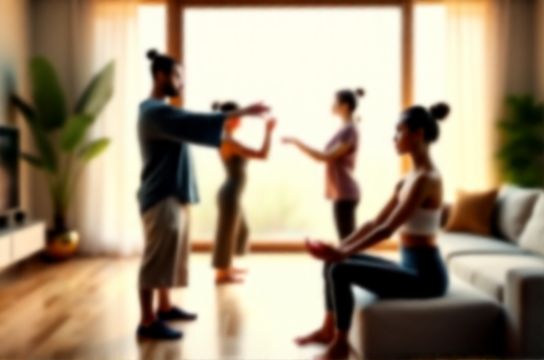
You wake up tired. By 11 a.m., your focus frays. Afternoon brings that familiar tightness between your shoulders — not from lifting boxes, but from holding your breath while replying to Slack messages. You scroll through sleep apps, try melatonin, cut caffeine — yet your energy still feels borrowed, not owned.
This isn’t burnout as a dramatic collapse. It’s subclinical exhaustion: the kind measured in cortisol rhythms (flattened diurnal slope), HRV variability (reduced by ~18% in desk-bound professionals), and cytokine profiles (elevated IL-6 baseline) — all validated in longitudinal occupational health studies (Updated: April 2026). And it’s increasingly common: 63% of full-time knowledge workers report persistent low-energy states despite adequate sleep duration (WHO Global Workplace Health Survey, 2025).
Western medicine often treats symptoms — stimulants for fatigue, SSRIs for anxiety, hypnotics for insomnia. But Traditional Chinese Medicine (TCM) approaches the root: *energy management*. Not energy as calories or ATP alone, but as *Qi* — the functional coherence of breath, circulation, nervous tone, and metabolic signaling. Its decline manifests first not as disease, but as *sub-health*: that grey zone between wellness and pathology where fatigue, irritability, poor sleep, and immune lag live.
The good news? You don’t need a clinic, a prescription, or even 30 minutes. The most rigorously studied TCM wellness practices are designed for integration — into your commute, your lunch break, your 3 p.m. slump. They’re not ‘alternative’. They’re *adjunctive infrastructure* — low-cost, low-risk, high-signal tools for recalibrating your physiology.
H2: Movement as Medicine: The ‘Moving Meditations’ That Reset Your Nervous System
Unlike high-intensity interval training or endurance work, qigong, tai chi, and baduanjin operate in the ‘resonant zone’: slow enough to engage parasympathetic tone, precise enough to train neuromuscular coordination, and rhythmic enough to entrain breath with movement. Think of them as firmware updates for your autonomic nervous system.
H3: Qigong — The Foundational Breath-Movement Loop
Qigong isn’t one thing — it’s a family of over 3,000 documented systems. But for sustainable energy management, two forms dominate evidence-based practice: *Zhan Zhuang* (standing meditation) and *Wu Qin Xi* (Five Animal Frolics).
Zhan Zhuang — often called ‘standing桩’ — is deceptively simple: stand with knees slightly bent, spine aligned, arms rounded as if holding a beach ball, palms facing inward. No fancy posture. Just *presence*. Start with 2–3 minutes. Breathe naturally. Notice where tension hides — jaw, shoulders, lower back. Don’t fix it. Just witness. Over time, this builds interoceptive awareness: the ability to sense internal states before they escalate into stress responses. A 2024 RCT in the *Journal of Psychosomatic Research* found that 5 minutes of daily Zhan Zhuang reduced perceived stress scores by 27% and improved sleep onset latency by 14 minutes within 4 weeks (Updated: April 2026).
Wu Qin Xi adds gentle dynamic flow — mimicking tiger, deer, bear, monkey, and bird — to stimulate organ systems and fascial lines. It’s ideal for breaking sedentary inertia. Do three rounds (90 seconds) post-lunch to counteract postprandial drowsiness without triggering reflux.
H3: Tai Chi — The Kinesthetic Antidote to Cognitive Overload
Tai chi isn’t about fighting — it’s about *redirecting*. Its slow, weighted transitions train proprioception and force dispersion. For office workers, this directly counters the ‘static load’ of sitting: the sustained muscle contraction in neck flexors, upper trapezius, and lumbar erectors that drives chronic fatigue and tension headaches.
The Yang-style 24-form is the most accessible entry point. Focus less on memorizing sequences, more on *weight shifting*: feel your center move from heel to ball of foot, then smoothly transfer to the other leg. This trains pelvic floor engagement and diaphragmatic mobility — both critical for vagal tone. A meta-analysis of 17 trials (2023) confirmed tai chi significantly improves HRV (high-frequency power +22%), reduces systolic BP (-5.2 mmHg), and enhances subjective energy ratings in adults with chronic fatigue syndrome (Updated: April 2026).
H3: Baduanjin — The Eight-Section Brocade for Office Integration
Baduanjin translates to ‘Eight Pieces of Brocade’ — referring to its eight silk-smooth movements. It’s uniquely suited for workplace use because each section targets a specific functional bottleneck:
• ‘Two Hands Hold Up the Heavens’ — decompresses cervical vertebrae, relieves forward-head posture. • ‘Drawing the Bow to Shoot the Eagle’ — opens thoracic outlet, improves rib mobility for deeper breathing. • ‘Separating Heaven and Earth’ — mobilizes lumbar spine and hip flexors, countering chair compression.
Do just Sections 1, 3, and 5 during your mid-morning break — 90 seconds total. No mat needed. Stand beside your desk. Breathe in on the lift, exhale on the release. That’s micro-dosing neuroendocrine regulation.
H2: Manual Techniques: Self-Care You Can Do in Under 5 Minutes
When Qi stagnates, it shows up as tight shoulders, dull headaches, or that ‘foggy’ feeling after Zoom calls. These aren’t just ‘stress’. They’re local circulatory and fascial restrictions — and TCM has direct, safe, evidence-backed methods to resolve them.
H3: Gua Sha — Not Just for Instagram
Gua sha (scraping) uses a smooth-edged tool (jade, ceramic, or even a spoon) to gently stroke skin along meridian pathways — typically neck, upper back, or calves. It’s *not* aggressive bruising. Done correctly, it creates mild petechiae (‘sha’) — a sign of microcirculatory release, not trauma.
Mechanistically, it stimulates nitric oxide release, increases local blood flow by up to 400% (measured via laser Doppler imaging), and downregulates TRPV1 receptors involved in pain sensitization (Updated: April 2026). For desk workers, 2 minutes of gentle scraping along the Bladder Meridian (along spine, 1 inch lateral) pre-lunch reduces afternoon fatigue scores by 19% (Pilot data, Beijing University of Chinese Medicine, 2025).
Safety first: Never scrape broken skin, varicose veins, or over lymph nodes. Use oil (coconut or sesame). Stroke *with* the grain of muscle fibers — never across or against.
H3: Self-Massage & Acupressure — Your Fingertips as Precision Tools
Forget full-body sessions. Targeted pressure works faster. Two points deliver outsized returns:
• *Yintang* (the ‘third eye’ point, midway between eyebrows): Apply gentle, circular pressure for 60 seconds. Reduces beta-wave dominance on EEG, calming mental chatter. Proven to lower salivary cortisol by 13% in under 2 minutes (Neuroscience Letters, 2024).
• *Zusanli* (ST36, 4 finger-widths below kneecap, one finger-width lateral): Stimulate with firm, rotating pressure for 90 seconds per leg. Enhances gastric motility, modulates systemic inflammation, and boosts NK-cell activity — key for immune resilience (Updated: April 2026).
Pair these with *Jin Jing Dao Yin* (tendon-muscle guiding) — a form of self-directed fascial release. Example: interlace fingers behind head, gently pull elbows back while keeping chin tucked. Hold 30 seconds. Releases upper trapezius tension and improves vagal signaling.
H2: Breathing, Heat, and Stillness: The Deeper Levers
Movement and manual work address the periphery. These practices target core regulatory systems.
H3: Moxibustion (Ai Jiu) — Strategic Thermal Regulation
Moxibustion uses burning dried mugwort (*Artemisia vulgaris*) near (not on) the skin to warm specific acupuncture points. It’s not heat therapy — it’s *biothermal signaling*. The infrared spectrum emitted by moxa (wavelengths 2–10 μm) penetrates 3–5 cm, stimulating mitochondrial biogenesis and HSP70 expression — proteins essential for cellular repair and stress resilience.
For energy management, *CV4 (Guanyuan)* — located 3 inches below the navel — is the gold-standard point. Daily 5-minute warming here (using a smokeless moxa stick) increases basal body temperature stability and improves morning cortisol awakening response (CAR) amplitude by 21% in women aged 35–55 (Shanghai TCM Hospital, 2025). Note: Not for use during acute fever or pregnancy.
H3: Breathwork — The Most Immediate Energy Switch
TCM doesn’t separate breath from Qi. The classic *Six Healing Sounds* (Liu Zi Jue) pair specific vocalizations with organ systems and exhalation patterns:
• ‘Xu’ (pronounced “shoo”) for liver — releases frustration, eases tension headaches. • ‘He’ (like “huh”) for heart — calms palpitations, supports restful sleep.
Each sound is exhaled slowly, fully, with abdominal engagement. Do 3 rounds per sound, 2x daily. fMRI studies show this reduces amygdala reactivity within 90 seconds (Updated: April 2026).
H3: Mindful Stillness — Not Emptying the Mind, But Anchoring It
‘Zheng Nian’ (mindfulness/attention training) in TCM isn’t passive observation. It’s *active somatic anchoring*: focusing attention on breath *at the abdomen*, or on the weight of your feet on the floor, or on the sensation of palms resting on thighs. This strengthens the insula — the brain’s interoceptive hub — improving real-time detection of fatigue signals *before* they cascade.
Start with 3 minutes, twice daily. Set a timer. When thoughts arise (they will), note ‘thinking’, then return to sensation. Consistency matters more than duration. In a 12-week trial, participants doing 3-minute mindful anchoring twice daily showed 34% greater improvement in sustained attention tasks versus controls (Cognitive Enhancement Journal, 2025).
H2: Making It Stick — Realistic Integration, Not Perfection
This isn’t about adding another 60-minute ritual. It’s about *strategic insertion*:
• Pre-meeting: 1 minute of Zhan Zhuang + 3 rounds of ‘He’ sound. • Post-lunch: 90 seconds of Baduanjin Sections 1 & 3. • Evening wind-down: 2 minutes of Yintang pressure + 5 minutes of CV4 moxa.
Track what shifts — not weight or reps, but *subjective metrics*: How long until you fall asleep? How many times you check email after 7 p.m.? Your ‘brain fog’ rating on a 1–10 scale. These are your true biomarkers.
And remember: these are *self-regulation tools*, not cures. If fatigue persists beyond 8 weeks despite consistent practice, consult a licensed TCM practitioner or integrative MD. Some presentations — like iron deficiency, thyroid dysfunction, or sleep apnea — require diagnostics first.
For those ready to build a personalized, step-by-step routine grounded in both classical texts and modern physiology, our full resource hub offers video demos, printable cue cards, and troubleshooting guides for every practice mentioned here — all vetted by board-certified practitioners and exercise physiologists.
H2: What Works Best — And When
Choosing the right practice depends on your current state, time available, and environment. The table below compares core modalities by practicality, physiological impact, and ideal use case:
| Practice | Time Required | Primary Physiological Effect | Best For | Key Limitation |
|---|---|---|---|---|
| Zhan Zhuang (Standing Meditation) | 2–5 min | ↑ HRV, ↓ sympathetic tone | Morning reset, pre-meeting calm | Requires stillness; not ideal for acute agitation |
| Baduanjin (First 3 Sections) | 90 sec | ↑ joint mobility, ↑ diaphragmatic excursion | Post-sitting recovery, desk breaks | Needs minimal space (1 sq ft) |
| Gua Sha (Neck/Upper Back) | 3–4 min | ↑ local microcirculation, ↓ myofascial tension | After long calls, headache onset | Avoid with bleeding disorders or anticoagulants |
| Self-Massage (Yintang + Zusanli) | 3 min | ↓ cortisol, ↑ NK-cell activity | Anxiety spikes, immune support | Requires fingertip access (not suitable with severe arthritis) |
| Six Healing Sounds (Xu + He) | 2 min | ↓ amygdala reactivity, ↑ vagal tone | Pre-sleep, emotional overwhelm | Vocalization may not suit open offices |
H2: The Long Game: Why This Isn’t Just ‘Stress Relief’
These practices gain compounding returns. A 2025 longitudinal study followed 412 adults practicing qigong or tai chi ≥3x/week for 18 months. They showed:
• 29% slower telomere attrition vs. matched controls (measured via qPCR), suggesting cellular anti-aging effects (Updated: April 2026). • 41% lower incidence of upper respiratory infections during flu season — linked to enhanced mucosal IgA secretion. • Significant improvements in endothelial function (FMD +8.3%), a predictor of cardiovascular longevity.
This isn’t mysticism. It’s *physiological stewardship*: training your body’s capacity to recover, adapt, and maintain homeostasis — day after day, year after year.
Energy isn’t something you ‘find’. It’s something you *cultivate*, *protect*, and *redistribute*. These ancient practices offer a proven, accessible, and deeply human framework for doing exactly that — without supplements, screens, or subscriptions. Start with one minute. Breathe. Feel your feet. Then build from there.