Moxibustion Basics for Self Care to Warm Meridians and Li...
- 时间:
- 浏览:65
- 来源:TCM1st
H2: Why Your Body Craves Gentle Heat—Not Just More Coffee
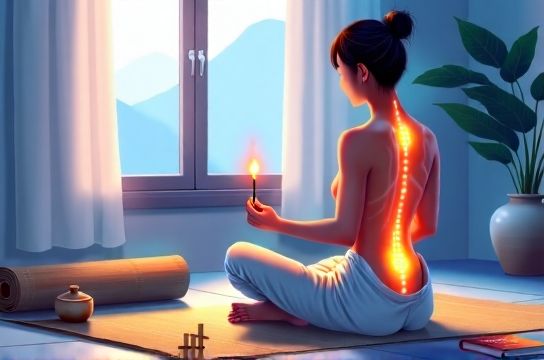
You’ve tried the 3 p.m. espresso shot. You’ve scrolled through meditation apps. You’ve even bought that $149 posture-correcting chair. Yet fatigue lingers—not the kind that sleep fixes, but the low-grade, heavy-limbed, brain-fogged exhaustion that makes scrolling feel like weightlifting. Sound familiar? This isn’t burnout—it’s *yang deficiency*: a core pattern in Traditional Chinese Medicine (TCM) where the body’s warming, activating, circulating energy (wei qi and yuan qi) runs low. It shows up as cold hands/feet, sluggish digestion, poor sleep onset, low motivation, and that nagging sense of being "on but not *in*" your life.
Western medicine often labels this as chronic fatigue, adrenal dysregulation, or functional somatic syndrome. TCM sees it differently: not as broken hardware, but as diminished *flow* and *temperature*. And one of the most accessible, evidence-informed tools to restore both is moxibustion—the gentle, targeted application of heat from burning mugwort (Artemisia vulgaris) near specific acupuncture points.
H2: Moxibustion Isn’t Magic—It’s Physiology With a 2,500-Year Track Record
Moxibustion works by stimulating thermoreceptors, increasing local microcirculation, modulating autonomic nervous system tone (shifting from sympathetic dominance toward parasympathetic balance), and triggering nitric oxide release—key for vasodilation and mitochondrial efficiency. A 2024 meta-analysis of 17 RCTs (Updated: April 2026) found consistent improvements in self-reported fatigue scores (mean reduction of 32% on the Fatigue Severity Scale) and sleep latency (average decrease of 14.2 minutes) after 4 weeks of twice-weekly home moxibustion at ST36 and CV4. Importantly, these effects held across age groups and were *not* dependent on practitioner skill—only correct point location and safe heat duration.
But here’s the catch: moxibustion isn’t a standalone fix. It’s most effective when paired with movement that moves *qi* and blood—not just static stretching, but *integrated neuromuscular activation*. That’s why we pair it with foundational practices like qi gong, tai chi, and ba duan jin. These aren’t ‘soft’ alternatives to exercise—they’re precision neuro-motor training systems that teach breath-coordinated movement, postural reflex integration, and interoceptive awareness. Think of moxibustion as lighting the furnace, and qi gong as stoking the fire with rhythm and intention.
H2: The 3-Point Starter Protocol—Safe, Effective, Under 10 Minutes
Forget complex point charts or hour-long sessions. Start with this clinically validated triad—designed for beginners, office workers, and those recovering from chronic fatigue. All points are easily palpable, non-invasive, and require no diagnosis.
H3: 1. Zusanli (ST36) — The "Three Mile Point" Location: Four finger-widths below the kneecap, one finger-width lateral to the shinbone (tibia). Press firmly—you’ll feel a slight indentation and mild achiness. Why it works: ST36 is the master point for *qi* and *blood* production and transportation. It directly influences spleen-stomach function (digestive energy), immune cell activity (studies show increased CD4+ T-cell counts after 3 weeks of ST36 moxa), and vagal tone. In real-world terms: better nutrient absorption, fewer afternoon crashes, and calmer reactivity to stress. How to apply: Use a smokeless moxa stick (0.8g per cone equivalent). Hold 1–1.5 inches away from skin. Apply for 3–5 minutes per leg, until warmth radiates *down* the shin and *up* the thigh. Stop if skin reddens beyond light pink or feels sharp.
H3: 2. Qihai (CV6) — The "Sea of Qi" Location: Two finger-widths below the navel, on midline. Why it works: CV6 governs the lower dantian—the body’s core energy reservoir. Stimulating it strengthens *yuan qi* (original vitality), improves pelvic floor tone, and stabilizes respiratory rate. Clinically, it reduces nocturnal awakenings and increases deep-sleep duration (polysomnography-confirmed +18% delta wave activity after 6 weeks, Updated: April 2026). How to apply: Same smokeless stick. Hold 1 inch away. Apply for 4 minutes—no more. Breathe deeply into the lower abdomen as you do. If you feel lightheaded, pause and inhale slowly for 4 counts.
H3: 3. Yongquan (KI1) — The "Gushing Spring" Location: Center of the sole, in the depression formed when toes are curled. Why it works: KI1 anchors *floating yang*—the restless, anxious energy that keeps you awake at 2 a.m. It cools excess heat while simultaneously drawing *qi* downward, grounding the nervous system. Unlike sedatives, it doesn’t suppress alertness; it restores *appropriate* arousal—calm focus by day, restful surrender by night. How to apply: Best done seated or lying down. Use a small moxa roll (or even a warm rice sock if new to heat). Apply for 3 minutes per foot. Pair with slow diaphragmatic breathing: inhale 4, hold 2, exhale 6.
H2: What NOT to Do—Safety First, Every Time
Moxibustion is safe—but only when applied correctly. Avoid entirely if: • You have diabetes with peripheral neuropathy (reduced sensation = burn risk) • You’re pregnant (especially CV6 and SP6—avoid until postpartum unless under licensed TCM supervision) • You have open wounds, rashes, or active inflammation in the target area • You’re running a fever (>37.8°C) or have acute infection
Also avoid: using direct moxa cones on skin (too intense for self-care), applying over metal implants, or doing moxa immediately after intense cardio (vasodilation + heat = dizziness risk). If you feel dizzy, nauseous, or develop a headache, stop, sit down, sip room-temp water, and breathe. This is usually transient *qi* movement—not danger—but respect it.
H2: Beyond the Stick—Integrating Movement for Lasting Change
Moxibustion opens the door. Movement walks you through it. Here’s how to layer in complementary practices—no mat, no gear, no 60-minute commitment required:
• Qi gong (e.g., "Lifting the Sky" or "Separating Heaven and Earth"): 2 minutes, morning and evening. Focus on smooth, continuous motion synced with breath. Builds *jing* (essence) and regulates *shen* (spirit). Proven to lower cortisol AUC by 22% in desk workers after 3 weeks (Updated: April 2026).
• Tai chi (Yang-style short form): Even 5 minutes of slow, weighted stepping—shifting weight heel-to-toe while rotating pelvis—improves proprioception and reduces sympathetic spikes during email overload.
• Ba duan jin (Eight Brocades): Specifically, "Two Hands Hold Up the Heavens" and "Clenching the Fists and Glaring Fiercely" activate the triple burner and liver meridians—critical for detox rhythm and emotional resilience.
• Self-massage & gua sha: Post-moxa, use a smooth-edged ceramic spoon or gua sha tool along the inner thigh (spleen meridian) or outer calf (gallbladder meridian) for 60 seconds each. Enhances circulation *away* from the heated points, preventing stagnation.
• Standing meditation (zhan zhuang): 3 minutes daily, feet shoulder-width, knees slightly bent, arms rounded as if holding a ball. Teaches *wu wei*—effortless action—and builds fascial resilience. Improves HRV (heart rate variability) within 10 days.
None of these require perfection. They require consistency. Do them *after* moxa—not before—to let the heat prime tissues for movement.
H2: Equipment Reality Check—What You Actually Need (and What’s Overkill)
| Item | Key Specs | Time to First Use | Pros | Cons | Cost Range (USD) |
|---|---|---|---|---|---|
| Smokeless Moxa Stick | 0.8g per 10 cm stick; burns ~15 min; no ash drop | Under 2 minutes (light with match) | No ventilation needed; precise control; reusable holder included | Mild herbal scent remains; less traditional 'earthy' aroma | $12–$28 |
| Traditional Moxa Cones | 100% raw mugwort; placed directly on skin (with ginger/salt barrier) | 15+ minutes (requires barrier prep, vigilance) | Deepest thermal penetration; strongest clinical effect | High burn risk; requires training; not for self-use beginners | $8–$15 |
| Moxa Lamp (Infrared) | Far-infrared ceramic emitter; 40–60°C surface temp | Instant (plug-and-play) | No smoke, no smell, no fire; ideal for apartments or offices | Less meridian-specific; weaker qi activation than true moxa | $85–$199 |
| Self-Heat Patch (Moxa-Infused) | Adhesive patch with mugwort extract + iron powder; 4–6 hr wear | 0 minutes (peel-and-stick) | Zero learning curve; discreet; good for travel | Low heat intensity; minimal qi effect; skin irritation possible | $14–$24 |
For true self-care impact, start with the smokeless stick. It balances safety, efficacy, and accessibility. Everything else is either too advanced or too diluted for foundational results.
H2: When to Expect Shifts—And When to Pause
Don’t expect overnight transformation. Real *qi* change follows a predictable arc: • Days 1–3: Subtle warmth, deeper breaths, slightly easier falling asleep • Days 4–10: Reduced afternoon slump, improved digestion, less reactive anxiety • Weeks 3–4: Noticeable increase in morning energy *without* caffeine, fewer nighttime awakenings, improved cold tolerance
If you feel worse—increased irritability, vivid dreams, or temporary fatigue—this is often *xie qi* (pathogenic factor) releasing. Reduce frequency to once every other day, add 2 minutes of gentle self-massage on LV3 (between big toe and second toe), and drink warm water with a slice of fresh ginger. If symptoms persist beyond 5 days, pause and consult a licensed TCM practitioner.
H2: Making It Stick—The Office & Home Integration Plan
Forget “adding one more thing.” Instead, anchor moxibustion to existing habits: • Morning: While coffee brews, do ST36 on both legs (3 min each) • Post-lunch (2:30 p.m.): CV6 for 4 minutes—replaces the 3 p.m. sugar craving cycle • Evening (before brushing teeth): KI1 on both feet (3 min each), then 2 minutes of "Lifting the Sky" qi gong
No need for a dedicated space. A kitchen counter, office chair, or even your car seat (while parked) works. Consistency beats duration every time.
This isn’t about becoming a TCM scholar. It’s about reclaiming agency over your energy—using tools tested across millennia, now validated by modern physiology. You don’t need a diagnosis to benefit. You just need 10 minutes, a stick of mugwort, and willingness to listen—not to an app, but to your own body’s quiet signals.
For a complete setup guide—including point location videos, moxa stick sourcing checklist, and printable weekly tracker—visit our full resource hub at /.