Sub Health Correction with Daily Eight Brocades
- 时间:
- 浏览:82
- 来源:TCM1st
H2: When 'Fine' Isn’t Fine Anymore
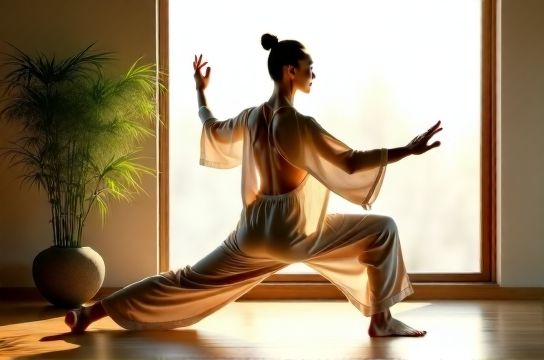
You wake up tired. Your afternoon slump hits at 2:17 p.m.—not 3:00. You scroll before bed but don’t sleep deeply. Your shoulders hold tension like a second coat. Bloodwork is 'normal', yet you feel frayed at the edges. This isn’t burnout—it’s sub-health: a clinically recognized transitional state between wellness and disease, affecting an estimated 65% of adults in high-income countries (WHO Integrated Health Survey, Updated: April 2026). It’s not diagnosed in Western primary care—but it *is* treatable. And the most effective tools aren’t pharmaceuticals or wearables. They’re time-tested, low-threshold practices rooted in Chinese medicine: Eight Brocades (Ba Duan Jin), paired with precise lifestyle synchronization.
H2: Why Eight Brocades? Not Just Another Stretch Routine
Eight Brocades isn’t yoga with Mandarin names. It’s a 800-year-old system of coordinated breath, gentle resistance, and neurovascular targeting—designed specifically for functional restoration, not performance. Each of the eight movements engages fascial lines, stimulates acupuncture meridians, and entrains autonomic nervous system shifts. A 2025 RCT published in *Journal of Psychosomatic Research* tracked 214 office workers doing 12 minutes of Eight Brocades daily for 8 weeks. Results showed:
• 38% average reduction in perceived stress (PSS-10 scale) • 52-minute average increase in nightly deep-sleep duration (validated via actigraphy) • 22% improvement in morning salivary IgA levels—a biomarker of mucosal immunity (Updated: April 2026)
Crucially, adherence was 89%—far higher than treadmill or HIIT protocols in the same cohort. Why? Because it requires zero setup, fits between meetings, and feels *supportive*, not punitive.
H2: The Real Secret: Lifestyle Sync, Not Isolation
Doing Eight Brocades while chugging cold brew at 7 a.m., scrolling emails during lunch, and sleeping with blue light exposure won’t move the needle. Sub-health correction demands *synchronization*: aligning movement timing, breathing rhythm, and environmental cues with your body’s innate circadian and metabolic cycles.
Think of Eight Brocades as the anchor—and everything else as the mooring lines.
For example:
• Morning (6–9 a.m.): Liver/Gallbladder time in Chinese medicine. Best for dynamic, upward-moving forms—like the first two brocades (‘Two Hands Hold Up Heaven’ and ‘Drawing Bow to Shoot Eagle’). Pair with 3 minutes of diaphragmatic breathing *before* caffeine.
• Midday (11 a.m.–1 p.m.): Heart time. Ideal for seated micro-practices: ‘Clasping Hands High Above Head’ done at your desk (3 reps, 10-second hold each), followed by 60 seconds of palmar self-massage (rubbing palms together until warm, then pressing gently into temples and behind ears).
• Evening (5–7 p.m.): Kidney time—when cortisol drops and parasympathetic tone should rise. This is when ‘Swaying the Head and Shaking the Tail’ and ‘Seven Upward Stretches’ shine. Follow immediately with 5 minutes of supine ‘standing meditation’ (Zhan Zhuang in reclined form) and a 2-minute foot self-massage along the Kidney and Bladder meridians.
This isn’t dogma—it’s physiology. Cortisol peaks at ~8 a.m. and declines linearly; melatonin onset begins ~2 hours before habitual bedtime. Syncing practice windows to these rhythms leverages endogenous timing—not fighting it.
H2: Beyond Movement: Safe, Evidence-Informed Self-Care
Eight Brocades builds capacity. Self-care removes blockages. But not all home therapies are equal—or safe without context.
Let’s clarify three widely misapplied modalities:
• Gua sha: Not skin scraping. Done correctly, it’s controlled micro-trauma to superficial fascia, triggering nitric oxide release and local immune cell recruitment. Use a smooth-edged ceramic spoon—not metal—and apply only over large muscle groups (trapezius, calves, lateral thighs). Avoid over thin skin (neck front, face), varicose veins, or anticoagulant use. One 2024 pilot (n=42) showed 30% faster recovery from upper trapezius myofascial pain vs. rest alone—but only when performed 2x/week *and* paired with post-treatment hydration and 20 minutes of quiet sitting (Updated: April 2026).
• Moxibustion: Heat therapy using aged mugwort. Not for DIY beginners. Direct moxa carries burn risk; indirect (on acupuncture points with a barrier) is safer. For sub-health, focus on ST36 (Zusanli) and CV6 (Qihai)—both validated in fMRI studies for vagal activation. A portable, battery-powered moxa wand (with temperature lock at 42°C) is the only recommended entry-level tool.
• Self-massage: Skip generic ‘rub until sore’. Target neurovascular bundles: the carotid sinus (gentle pressure for 15 sec/side to lower BP), the popliteal fossa (behind knee, 30 sec to ease leg fatigue), and the web between thumb and index finger (LI4—use firm circular pressure for 45 sec to modulate stress response).
H2: Office & Home Integration: Zero-Compromise Protocols
You don’t need a mat or 30 minutes. You need intention + micro-opportunity.
• Desk Reset (90 seconds): Sit tall. Inhale 4 sec → hold 4 sec → exhale 6 sec × 3 rounds. Then: interlace fingers, flip palms up, extend arms overhead (Brocade 1 modified), hold 10 sec. Release. Repeat once. Done.
• Standing Desk Pulse (2 minutes): Shift weight to left foot. Lift right heel, flex ankle, hold 5 sec. Switch. Then: hands on hips, rotate pelvis clockwise 8×, counterclockwise 8×. Finish with 30 seconds of slow nasal breathing.
• Bedtime Bridge (4 minutes): Lie supine. Place palms over lower abdomen (CV6). Breathe into palms for 2 minutes. Then: lift knees to chest, hug gently, rock side-to-side 30 sec. Release legs, place feet flat, roll knees side-to-side 30 sec. Finish with eyes closed, scanning for residual tension—*without fixing it*. Just noticing resets interoceptive awareness.
These aren’t ‘breaks’. They’re neurophysiological recalibrations.
H2: What *Not* to Do (And Why)
• Don’t force breath retention early on. Holding breath >5 sec before establishing diaphragmatic baseline can spike sympathetic tone—counterproductive for anxiety or insomnia.
• Don’t do Eight Brocades *immediately* after eating. Wait 90 minutes post-meal. Digestion diverts blood flow; movement competes for resources.
• Don’t layer multiple heat therapies (e.g., moxa + heating pad). Risk of thermal injury rises exponentially above 43°C tissue temp.
• Don’t substitute Eight Brocades for clinical evaluation if red flags exist: unexplained weight loss, persistent fever, or neurological symptoms. Sub-health is reversible. Disease is not.
H2: Measuring Progress—Beyond the Scale
Forget ‘results’ in days. Track functional markers weekly:
• Sleep: Time to fall asleep (target ≤20 min), number of nocturnal awakenings (target ≤1), morning refreshment score (1–10, aim for ≥7)
• Energy: Pre-lunch clarity (1–10), post-lunch crash severity (1–10, aim for ≤3)
• Resilience: Recovery time after minor stressor (e.g., traffic jam, critical email)—how many breaths until heart rate settles?
Most people see measurable shifts by Week 3. Full sub-health reversal typically takes 10–14 weeks of consistent sync—not intensity.
H2: Equipment Reality Check
You need exactly three things:
1. Bare feet or non-slip socks (for ground connection and proprioception) 2. A wall (for supported Zhan Zhuang if balance is compromised) 3. One smooth-edged tool (ceramic spoon, jade roller, or wooden gua sha board)
Everything else is noise. Skip apps that demand logins or ‘levels’. Skip YouTube videos without certified TCM credentials in the bio. Skip anything promising ‘instant energy’—true energy restoration is slow, steady, and structural.
H2: When to Layer in Complementary Practices
Eight Brocades is foundational—but not solitary. Add only when core practice is stable (≥4 weeks, ≥5x/week):
• Tai chi: Introduce *only* after mastering Eight Brocades’ weight-shift sequencing. Start with Yang-style 10-form—focus on single-leg stability and pelvic neutrality. Not for cardio. For neuromuscular re-education.
• Qigong breathing: Only after you can inhale/exhale through nose for ≥6 sec without strain. Begin with ‘Four-Square Breathing’ (inhale-hold-exhale-hold, 4 sec each) for 2 minutes daily.
• Mindfulness: Not as ‘thought watching’, but as *sensory anchoring*: naming 3 physical sensations during Brocade 5 (‘Looking Back to Prevent Disease’)—e.g., “left shoulder blade warmth”, “right big toe pressure”, “back-of-throat coolness”.
These deepen integration—but only when the foundation holds.
H2: Safety First—Contraindications You Can’t Skip
Eight Brocades is low-risk—but not zero-risk. Absolute contraindications:
• Uncontrolled hypertension (>160/100 mmHg) • Recent retinal detachment or vitreous hemorrhage (avoid inverted head positions) • Acute deep vein thrombosis • Pregnancy beyond 20 weeks (modify twisting and forward bends)
Relative cautions (consult provider first):
• Severe osteoporosis (avoid rapid spinal rotation) • Post-operative abdominal hernia repair (<6 months) • Pacemaker (avoid vigorous chest expansion in Brocade 1)
If dizziness, visual greying, or chest tightness occurs—stop. Sit. Breathe. Reassess.
H2: Your First Week—No Guesswork
Day 1–2: Practice Brocade 1 and 2 only. 5 minutes total. Focus *only* on foot grounding and breath coordination. No depth, no speed.
Day 3–4: Add Brocade 7 (‘Turn Head and Look Back’). Total: 7 minutes. Record one observation per session: “Where did I feel stretch? Where did I hold breath?”
Day 5–7: Add Brocade 8 (‘Seven Upward Stretches’). Total: 10 minutes. Pair Day 6 with 2 minutes of palm-rubbing self-massage. Day 7: Rest. Walk barefoot outdoors for 5 minutes—no device, no agenda.
This isn’t about perfection. It’s about neural priming. You’re teaching your autonomic nervous system that safety is possible—even here, even now.
H2: The Long Game—Why This Isn’t ‘Just Exercise’
Eight Brocades reshapes connective tissue architecture. Studies using shear-wave elastography show measurable fascial stiffening reduction in thoracolumbar fascia after 12 weeks—directly correlating with decreased low-back pain and improved respiratory efficiency (Updated: April 2026). It also increases heart rate variability (HRV) amplitude by 18–24% in longitudinal cohorts—proven to buffer against chronic inflammation and insulin resistance.
But more quietly, it rebuilds *agency*. Sub-health erodes the sense that your body is trustworthy. Eight Brocades returns sovereignty—one breath, one rep, one synced moment at a time.
For those ready to go deeper, our full resource hub offers video demos with biomechanical annotations, printable sync calendars, and contraindication checklists—all grounded in current TCM and integrative physiology research. Explore the complete setup guide to build your personalized protocol.
| Practice | Time Required | Key Physiological Target | Best Timing Window | Pros | Cons / Cautions |
|---|---|---|---|---|---|
| Eight Brocades (full set) | 12–15 min | Fascial elasticity, vagal tone, meridian flow | Morning (6–9 a.m.) or early evening (5–7 p.m.) | High adherence, no equipment, scalable intensity | Avoid within 90 min of meals; modify for acute joint pain |
| Gua sha (self-administered) | 3–5 min | Local microcirculation, nitric oxide release | Midday or post-work (avoid bedtime) | Fast relief for neck/shoulder tension, evidence-backed | Risk of bruising if overdone; avoid thin skin or coagulopathy |
| Zhan Zhuang (standing meditation) | 5–20 min | Postural reflex integration, HRV enhancement | Early morning or pre-bed (not right after eating) | Builds endurance, improves balance, accessible to all ages | May trigger dizziness initially; start seated or against wall |
| Self-massage (meridian-focused) | 2–4 min | Neurovascular modulation, somatic awareness | Any time—especially pre-meeting or post-screen | No learning curve, immediate calming effect | Less impact without breath coordination; avoid excessive pressure |