Meridian System Origins in TCM History Revealed
- 时间:
- 浏览:108
- 来源:TCM1st
If you’ve ever dabbled in acupuncture, acupressure, or even yoga with an Eastern twist, you’ve probably heard about the meridian system. But where did it actually come from? Spoiler: It’s way older—and way more scientific in its own context—than most people think.
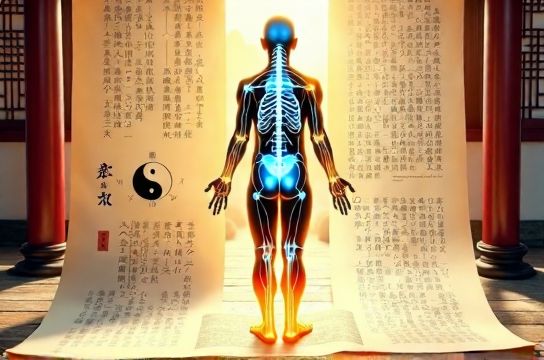
The meridian system is a foundational concept in Traditional Chinese Medicine (TCM), mapping invisible energy channels—called jīngluò (经络)—that carry qi (life force) throughout the body. Think of it like the body’s Wi-Fi network for vital energy. No signal? You feel sluggish, sick, or out of balance.
Historical records trace the earliest detailed meridian theory back to the Huangdi Neijing (The Yellow Emperor’s Inner Canon), compiled around 100 BCE. But get this: archaeological finds like the Mawangdui manuscripts (1973, Hunan Province) revealed meridian-like concepts as early as 168 BCE—predating the Neijing and showing how deeply rooted this system is.
So what exactly are these meridians? Modern TCM recognizes 12 primary meridians, each linked to an organ system—not necessarily anatomical organs, but functional units. For example, the Liver meridian doesn’t just govern liver function—it affects emotions like anger, eye health, and even tendon flexibility.
Key Meridians & Their Functions
| Meridian | Associated Organ | Peak Time (Circadian) | Main Functions |
|---|---|---|---|
| Lung | Lung | 3–5 AM | Respiration, immunity, grief regulation |
| Large Intestine | Large Intestine | 5–7 AM | Elimination, letting go (physical & emotional) |
| Stomach | Stomach | 7–9 AM | Digestion, nourishment |
| Spleen | Spleen-Pancreas | 9–11 AM | Energy production, muscle strength |
| Heart | Heart | 11 AM–1 PM | Circulation, mental clarity, joy |
This circadian rhythm alignment—called the Chinese Body Clock—is still used today by practitioners to time treatments and diagnose imbalances. Notice when your energy dips or symptoms flare—they might align with a specific meridian’s cycle.
Now, skeptics often ask: “Is there any proof?” While qi itself can’t be measured by conventional instruments, fMRI studies have shown that acupuncture points along meridians correlate with distinct neural activity. A 2020 study published in *Nature* found that stimulating the Stomach meridian activated predictable brain regions—suggesting there’s a physiological basis we’re only beginning to understand.
One thing’s clear: The meridian system isn’t just ancient mysticism. It’s a sophisticated model developed through centuries of observation and clinical practice. Whether you're into holistic healing or just curious about the science behind TCM, understanding meridians opens a new lens on health—one where energy, emotion, and anatomy are deeply intertwined.