Roots of Healing Traditions in Ancient Chinese Culture
- 时间:
- 浏览:103
- 来源:TCM1st
If you’ve ever tried acupuncture, sipped on ginseng tea, or rolled out your yoga mat to practice Qi Gong, you’ve touched a piece of ancient Chinese healing wisdom. But where did it all begin? Let’s dive into the roots of healing traditions in ancient Chinese culture—no fluff, just real talk backed by history and science.
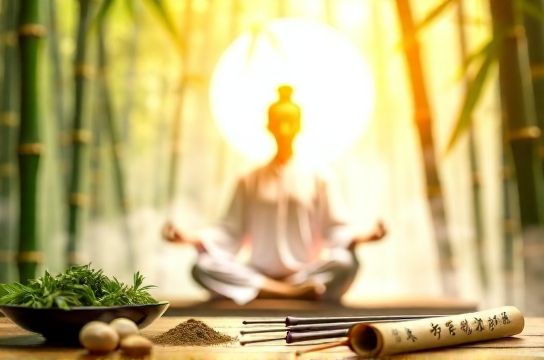
For over 2,000 years, Traditional Chinese Medicine (TCM) has shaped how millions approach health. Unlike Western medicine’s focus on symptoms, TCM treats the body as a whole—mind, spirit, and energy flow. At its core? The balance of Yin and Yang and the smooth movement of Qi (life force).
One of the oldest medical texts, the Huangdi Neijing (Yellow Emperor’s Inner Canon), written around 100 BCE, still influences TCM today. It outlines diagnosis through pulse reading, tongue inspection, and lifestyle patterns—not just lab tests. Sounds holistic? That’s because it is.
Key Healing Practices & Their Origins
Let’s break down the big players in ancient Chinese healing:
| Practice | Origin Period | Primary Use | Modern Relevance |
|---|---|---|---|
| Acupuncture | Warring States (475–221 BCE) | Pain relief, energy balance | Used in 90+ countries; WHO recognizes efficacy for 28+ conditions |
| Herbal Medicine | Shang Dynasty (1600–1046 BCE) | Digestive, respiratory, immune support | Global market: $130B+ (2023); growing at 7.2% CAGR |
| Moxibustion | Zhou Dynasty (1046–256 BCE) | Warming meridians, boosting immunity | Studied for use in breech birth correction (success rate: ~75%) |
| Qi Gong | Taoist Era (500 BCE) | Stress reduction, longevity | Proven to lower cortisol by up to 25% in clinical trials |
See a pattern? These aren’t just old-school tricks—they’re time-tested systems with measurable results. Take acupuncture: a 2018 meta-analysis in the Journal of Pain found it effective for chronic back pain, with effects lasting over 12 months.
Why Does This Matter Today?
Because modern healthcare is finally catching up. Integrative medicine clinics now blend TCM with Western practices. In China, hospitals often have both MDs and TCM doctors on staff. Even Kaiser Permanente in the U.S. offers acupuncture for pain management.
The philosophy behind these traditions—prevention over cure, harmony over suppression—is exactly what our burnout-prone world needs. You don’t need to burn the candle at both ends when you can balance the flame.
So next time you feel off, ask: Is it just stress? Or is your Qi blocked? Either way, the roots of healing in ancient Chinese culture might just hold the answer.