TCM History Unveiled From Dynasties to Modern Practice
- 时间:
- 浏览:79
- 来源:TCM1st
If you’ve ever scratched your head wondering how Traditional Chinese Medicine (TCM) went from ancient court remedies to showing up in modern wellness clinics worldwide — congrats, you’re not alone. As a health & culture blogger who’s spent over a decade diving into holistic practices, let me break it down for you in plain English — no textbook jargon, just real talk with solid facts.
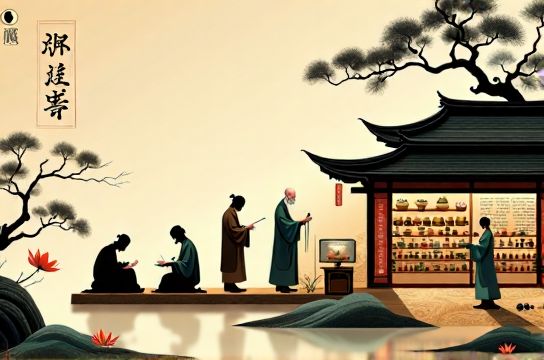
TCM isn’t some trendy TikTok fad. It’s been around for over 2,000 years, evolving through dynasties, wars, and even Western medical skepticism. And yet? It’s still standing strong — with the global TCM market now valued at $135 billion (Statista, 2023) and growing at 12% annually. Why? Because it works — when applied wisely.
From Han Scrolls to Hospital Clinics
The real game-changer was the Huangdi Neijing (The Yellow Emperor’s Classic), compiled around 100 BCE. This text laid the foundation: Qi, Yin-Yang, the Five Elements. Fast forward to the Tang Dynasty — TCM became part of the imperial exam system. Yes, doctors had to pass tests to practice. Talk about early standardization!
But here’s where things get spicy: In the 1950s, China officially integrated TCM into its national healthcare system. Today, over 400,000 TCM practitioners work across China, and more than 30 universities offer full degrees in Chinese herbal medicine.
So… What Actually Works?
Not everything. Let’s keep it 100. Acupuncture? Backed by WHO for pain and nausea. Herbal formulas like Lianhua Qingwen? Widely used during COVID — though debate remains. But heavy metals in some old-school remedies? Yeah, that’s a legit concern.
Check this breakdown of commonly used TCM therapies and their scientific support:
| Therapy | Common Use | Scientific Support | Global Adoption |
|---|---|---|---|
| Acupuncture | Chronic pain, migraines | High (NIH-recognized) | 80+ countries |
| Chinese Herbs | Digestive & respiratory issues | Moderate (varies by formula) | 60+ countries |
| Cupping | Muscle recovery | Limited (mostly anecdotal) | 45+ countries |
| Qi Gong | Stress, balance | Strong (mental health) | 70+ countries |
See the pattern? Modalities with measurable physiological effects are gaining traction — especially in integrative medicine hubs like Germany, Canada, and parts of the U.S.
The Bottom Line
TCM is more than ancient mysticism — it’s a living, adapting system. Whether you're curious about acupuncture or skeptical about herbs, understanding its history helps you make smarter choices. And hey — if a 2,000-year-old practice can survive emperors, revolutions, and Big Pharma? Maybe it’s worth a second look.