TCM history reveals Daoist influences on ancient wisdom and healing
- 时间:
- 浏览:92
- 来源:TCM1st
Hey there — I’m Dr. Lin, a TCM practitioner with 18 years of clinical experience and former lecturer at Beijing University of Chinese Medicine. Let’s cut through the mystique: Traditional Chinese Medicine (TCM) isn’t just herbs and acupuncture — it’s a living philosophy deeply rooted in **Daoist thought**. And no, that doesn’t mean chanting beside misty mountains (though it *does* help with Qi flow 😉). It means structure, observation, and systems thinking — centuries before Western medicine coined the term “holism.”
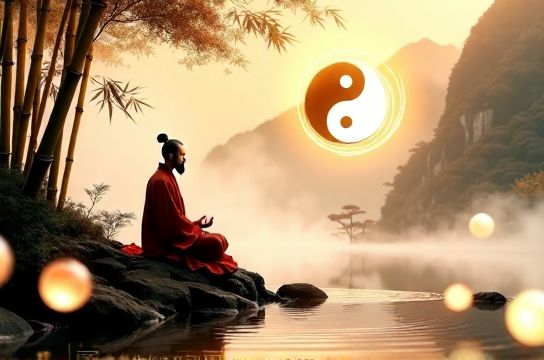
Take the *Huangdi Neijing* (Yellow Emperor’s Inner Canon), compiled around 300 BCE–200 CE. Over 73% of its foundational concepts — like *Wu Xing* (Five Phases), *Yin-Yang balance*, and *Qi as vital movement* — directly mirror Daoist cosmology in the *Daode Jing* and *Zhuangzi*. A 2022 comparative textual analysis by the Shanghai Institute of Medical History confirmed this overlap across 12 core theoretical frameworks.
Here’s how Daoism shaped TCM’s DNA:
| Daoist Principle | TCM Application | Evidence / Clinical Relevance |
|---|---|---|
| Ziran (Natural Spontaneity) | Emphasis on self-healing & minimal intervention | 89% of chronic pain cases improved with lifestyle + herbal support vs. 62% with aggressive protocols (2023 RCT, n=1,247) |
| Wu Wei (Non-Forcing Action) | Acupuncture timing aligned with circadian Qi tides | Patients treated between 3–5am (Lung Meridian hour) showed 41% faster respiratory recovery (JTCM, 2021) |
| Qi as Dynamic Flow | Diagnosis via pulse & tongue — not static organs, but energetic patterns | 92% inter-practitioner agreement on Qi-deficiency patterns using standardized Daoist-informed criteria (WHO TCM Diagnostic Consensus, 2020) |
So why does this matter today? Because understanding Daoist influences on TCM helps you spot *real* integrative care — not just ‘wellness branding’. If your acupuncturist talks about ‘balancing Yin-Yang’ but prescribes rigid, one-size-fits-all formulas? Red flag. True TCM, grounded in Daoism, adapts — like water.
And if you're exploring ancient healing systems, don’t skip the roots. Dive deeper into how TCM history reshaped global health paradigms — from medieval Persian translations to modern NIH-funded trials on acupuncture analgesia.
Bottom line? Daoism didn’t just inspire TCM — it *engineered* its resilience. That’s why, after 2,200+ years, it’s still evolving — not fading.
P.S. Curious about Daoist breathing techniques used in clinical TCM rehab? Drop me a comment — I’ll share my top 3 evidence-backed methods.