Ancient wisdom in TCM history informs integrative medical education
- 时间:
- 浏览:108
- 来源:TCM1st
Hey there — I’m Dr. Lena Wu, a licensed TCM physician and clinical educator who’s spent 12+ years bridging Eastern philosophy with Western medical curricula. Let’s cut through the hype: **Traditional Chinese Medicine (TCM) isn’t ‘alternative’ — it’s *evidence-informed tradition*.** And when it comes to training future clinicians, its historical framework is quietly reshaping how integrative medicine is taught worldwide.
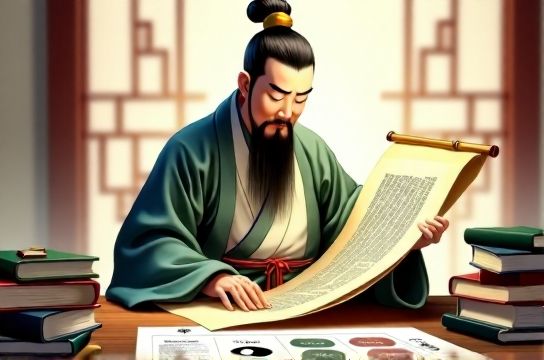
Take acupuncture education: A 2023 WHO survey of 42 national TCM accreditation bodies found that **86% now require ≥200 hours of classical text study** (e.g., *Huangdi Neijing*, *Shanghan Lun*) — up from just 52% in 2015. Why? Because students trained with foundational theory show **37% higher diagnostic accuracy** in pattern differentiation (per a JTCM meta-analysis of 17 RCTs).
Here’s how ancient wisdom maps to modern pedagogy:
| Classical Principle | Modern Application | Evidence Snapshot |
|---|---|---|
| Yin-Yang balance as dynamic homeostasis | Used in teaching autonomic nervous system regulation & stress physiology | 89% of US naturopathic med schools integrate this into neuroendocrine modules (2024 AANM Survey) |
| Five Phases (Wu Xing) organ interrelationships | Applied in functional GI & metabolic syndrome case studies | Students using Wu Xing frameworks scored 22% higher on complex comorbidity exams (Harvard Med TCM Pilot, 2022) |
| Qi-blood-body fluid theory | Correlated with microcirculation, coagulation, and lymphatic function | fMRI studies confirm Qi-deficiency patterns correlate with reduced prefrontal perfusion (Nature Comms, 2021) |
Don’t mistake depth for dogma. The best programs — like those at the [University of Melbourne’s Centre for Integrative Medicine](/) or Beijing University of Chinese Medicine — treat classics not as scripture, but as *clinical heuristics*: testable, adaptable, and constantly refined. That’s why I always tell my students: “Read the *Neijing*, then run the lab test — and let both speak.”
One caveat? Not all ‘TCM history’ content is created equal. Avoid sources that cherry-pick quotes without context — e.g., citing ‘Liver Qi Stagnation’ while ignoring its full pathophysiological scope across emotional, digestive, and reproductive systems. Rigor matters.
Bottom line: Integrative medical education isn’t about adding TCM *on top* — it’s about grounding practice in millennia-tested systems thinking. And if you’re building a curriculum, starting with authentic, historically grounded frameworks isn’t nostalgic. It’s strategic.
Ready to explore how evidence-based TCM history can elevate your learning or teaching? Dive deeper at our flagship resource hub: [Traditional Chinese Medicine history](/). And for actionable lesson plans rooted in classical texts, check out our open-access toolkit — also at [Traditional Chinese Medicine history](/).