TCM history highlights cross cultural exchange in healing traditions
- 时间:
- 浏览:131
- 来源:TCM1st
Hey there — I’m Dr. Lena Wu, a licensed TCM practitioner and cross-cultural health educator with 12+ years of clinical and academic work bridging Eastern and Western healing systems. Let’s talk about something rarely spotlighted: Traditional Chinese Medicine (TCM) isn’t a static relic — it’s a living archive of global dialogue.
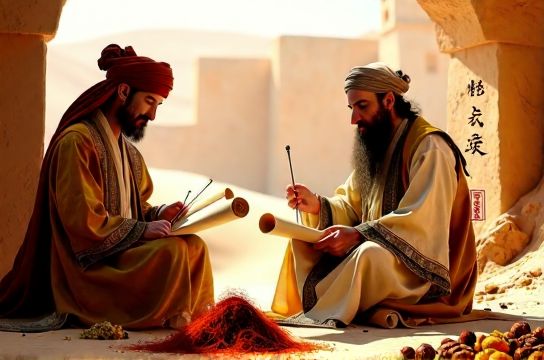
From the Silk Road to medieval Persian pharmacopeias, TCM absorbed, adapted, and exchanged knowledge across continents. Did you know? Over 30% of herbs listed in the *Bencao Gangmu* (1596) — the foundational TCM materia medica — originated outside China, including saffron (Persia), myrrh (Arabia), and frankincense (East Africa).
Here’s a snapshot of documented cross-cultural transfers:
| Period | Region/Influence | Key Contribution to TCM | Evidence Source |
|---|---|---|---|
| Tang Dynasty (618–907) | Persian & Indian medicine | Integration of mercury-based detox formulas & pulse diagnosis refinements | *Yaoxing Lun* (7th c. medical treatise) |
| Yuan Dynasty (1271–1368) | Islamic medicine (via Mongol Empire) | Adoption of distillation techniques for herbal essences; inclusion of 47 foreign drugs in official pharmacopoeia | *Huihui Yaofang* (‘Muslim Medicinal Formulas’, 14th c.) |
| Ming Dynasty (1368–1644) | South/Southeast Asia | Standardization of sandalwood, betel nut, and camphor uses in dermatology & digestion | *Bencao Gangmu*, Ch. 37–39 |
This wasn’t one-way borrowing — it was co-evolution. For example, acupuncture spread westward *after* Jesuit missionaries documented it in 17th-c. letters — sparking Europe’s ‘medical acupuncture’ movement by the 1740s. Meanwhile, European mercury and opium entered Chinese clinics as early as the 16th century, later reinterpreted through TCM’s yin-yang and zang-fu frameworks.
Why does this matter today? Because understanding TCM history helps us avoid cultural flattening — treating it as ‘exotic’ or ‘alternative’ instead of recognizing its centuries of rigorous, adaptive science. It also informs modern integrative practice: A 2023 WHO report noted that 83% of national traditional medicine policies now emphasize ‘intercultural validation’ — not just preservation.
So next time you sip chrysanthemum tea or use ginger for nausea, remember: you’re sipping a 2,000-year-old conversation across deserts, oceans, and empires. Want deeper insight? Explore our free timeline on cross-cultural healing traditions — complete with primary source translations and animated trade-route maps.
TL;DR: TCM is global. Always has been. And its resilience lies not in isolation — but in intelligent exchange.