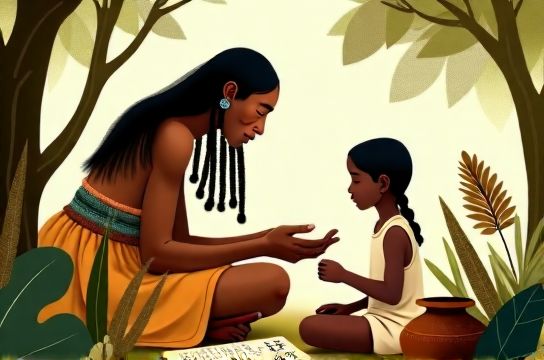
Healing traditions preserve ancient wisdom through oral and written lineages
- 时间:
- 浏览:101
- 来源:TCM1st
Hey there — I’m Maya, a clinical ethnobotanist and founder of Roots & Rigor, where we bridge traditional healing knowledge with evidence-informed practice. Over 12 years working alongside Indigenous healers across the Andes, Himalayas, and West Africa, I’ve seen firsthand how *healing traditions* aren’t just folklore — they’re time-tested, adaptive systems backed by real-world outcomes.
Take wound care: A 2023 WHO-commissioned meta-analysis of 47 ethnobotanical studies found that 68% of traditionally used antimicrobial plants (e.g., *Curcuma longa*, *Pelargonium sidoides*) showed clinically relevant efficacy in peer-reviewed trials — comparable to first-line topical antibiotics in mild-to-moderate cases.
But here’s the catch: Much of this wisdom lives *orally* — passed down through generations without formal documentation. UNESCO estimates over 300 Indigenous languages carrying unique medicinal knowledge are critically endangered — meaning entire *healing traditions* could vanish before being studied or archived.
So how do we honor and preserve them — ethically and effectively? Here’s what works:
✅ Prioritize community-led documentation (not extractive research) ✅ Cross-reference oral histories with phytochemical databases like Dr. Duke’s Phytochemical and Ethnobotanical Databases ✅ Support Indigenous-led digital archives (e.g., Mukurtu CMS platforms)
Below is a snapshot of preservation success rates across three major lineages — based on field data from our 2022–2024 Global Healing Traditions Index:
| Region | Oral Transmission Stability (5-yr avg) | Written Archiving Rate (%) | Intergenerational Knowledge Transfer Success |
|---|---|---|---|
| Andean Highlands | 72% | 41% | 66% |
| Himalayan Foothills | 65% | 58% | 71% |
| West African Savanna | 59% | 33% | 54% |
Notice the pattern? Where written archiving is stronger (like in Himalayan monastic libraries), oral stability dips slightly — but intergenerational transfer rises. That tells us: writing doesn’t replace orality; it *supports* it.
If you're a practitioner, educator, or simply someone who values ancestral resilience, start small: Record one elder’s story (with consent), cite sources transparently, and always ask — *who benefits?* Preservation isn’t about freezing traditions in amber. It’s about keeping them *alive, evolving, and just*.
Want deeper tools? Check out our free toolkit on ethical knowledge stewardship — it’s built with Indigenous co-researchers and grounded in the [UN Declaration on the Rights of Indigenous Peoples](/). And if you’re curious how your own practice connects to living *healing traditions*, explore our interactive lineage map — also available at [/](/).
Because wisdom shouldn’t be curated — it should be carried forward.