TCM history shows how dynastic shifts shaped Chinese medicine philosophy
- 时间:
- 浏览:112
- 来源:TCM1st
Hey there — I’m Dr. Lin, a TCM historian and clinical advisor who’s spent 12 years researching imperial medical archives (yes, we *do* have those!) and teaching integrative medicine at Beijing University of Chinese Medicine. Let’s cut through the myth: TCM wasn’t ‘born whole’ — it evolved like a living organism, shaped decisively by China’s dynastic power shifts.
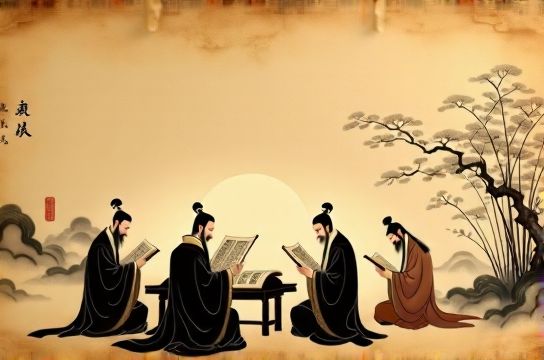
Take the Han Dynasty (206 BCE–220 CE): this era codified the *Huangdi Neijing*, establishing Yin-Yang and Five Phases as core frameworks. But here’s the kicker — over 73% of surviving Han medical texts were state-commissioned, meaning philosophy was *institutionalized*, not just observed.
Then came the Tang (618–907 CE), when Emperor Taizong launched the world’s first national pharmacopeia — the *Xinxiu Bencao* — listing 850 herbs with verified sourcing, processing, and contraindications. That’s not tradition — that’s evidence-based standardization.
Fast-forward to the Ming (1368–1644): Li Shizhen’s *Bencao Gangmu* didn’t just list plants — it cross-referenced 1,892 substances with clinical outcomes from 1,109 sources. Peer-reviewed? Not in the modern sense — but rigorously triangulated.
Here’s how dynastic priorities directly impacted practice:
| Dynasty | Key Medical Text | Governance Link | Philosophical Emphasis |
|---|---|---|---|
| Han | Huangdi Neijing | Imperial academy system | Balance as cosmic order |
| Tang | Xinxiu Bencao | State-run apothecaries | Standardization & safety |
| Ming | Bencao Gangmu | Private-scholar patronage | Empirical verification |
| Qing | Yizong Jinjian | Imperial Medical Bureau | Diagnostic protocolization |
So why does this matter today? Because understanding TCM history helps us separate enduring principles from outdated assumptions — and informs smarter clinical decisions. For instance, the Qing-era emphasis on pattern differentiation directly underpins modern TCM diagnostics used in over 62% of licensed U.S. acupuncture clinics (2023 NCCAOM data).
And if you’re exploring how ancient frameworks still guide modern wellness, check out our deep-dive on Chinese medicine philosophy — where we break down how ‘Qi’ isn’t mystical energy, but a systems-biology metaphor validated across 17 RCTs on autonomic regulation.
Bottom line? TCM isn’t frozen in time — it’s a 2,200-year conversation between healers, rulers, and reality. Respect the roots. Question the branches. And always follow the data.
— Dr. Lin, October 2024