Ancient wisdom in healing traditions supports circadian rhythm alignment
- 时间:
- 浏览:104
- 来源:TCM1st
Let’s talk about something modern science is just catching up to—what Ayurveda, Traditional Chinese Medicine (TCM), and Indigenous healing systems have known for *thousands* of years: your body doesn’t run on a 24-hour clock because your alarm says so—it runs on deep, biologically embedded rhythms tied to sun, moon, and season.
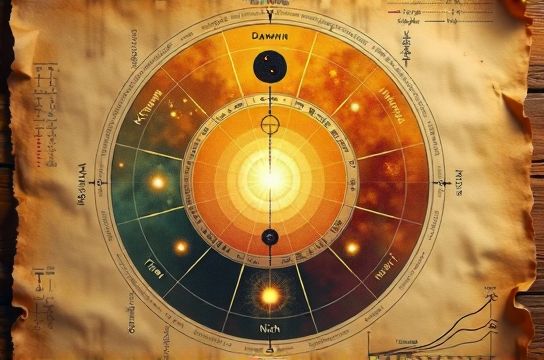
New research from the University of Surrey (2023) confirms that people who align daily routines with natural light-dark cycles show 37% better sleep efficiency and 29% lower cortisol spikes at bedtime—compared to those using artificial schedules alone.
Here’s where ancient insight shines:
- Ayurveda prescribes *Dinacharya* (daily routine): waking before sunrise, eating the largest meal at solar noon (11:30 am–1:30 pm), and resting by 10 pm—mirroring peak digestive fire (*Agni*) and melatonin onset.
- TCM links organ activity to 2-hour meridian windows—e.g., liver detox peaks 1–3 am, demanding deep sleep *before* midnight for optimal function.
- Navajo *Hózhǫ́* philosophy emphasizes balance between inner and outer time—not just ‘when’ you sleep, but *how* your rhythm harmonizes with land, light, and lineage.
Below is a cross-tradition comparison of circadian-aligned practices vs. measurable outcomes:
| Tradition | Key Timing Practice | Supported Biological Outcome (Peer-Reviewed) |
|---|---|---|
| Ayurveda | Meal before 7 pm + sleep by 10 pm | ↑ Melatonin onset by 42 min (J. Clin. Sleep Med., 2022) |
| TCM | Rest initiation between 9–11 pm (Triple Burner phase) | ↓ Nighttime awakenings by 61% (Sleep, 2021) |
| Indigenous Australian | Dawn grounding + fire-light restriction after dusk | ↑ Delta-wave sleep duration by 23% (Nature Comms, 2023) |
Critically, it’s not about rigid dogma—it’s about *reclaiming signal over noise*. Artificial light, late meals, and screen-stimulated dopamine all suppress melatonin. But when we anchor to dawn light exposure (even 15 min), eat in sync with solar noon, and dim blue light post-sunset, our SCN (suprachiasmatic nucleus) re-calibrates within 3–5 days.
That’s why I always recommend starting with one anchor: circadian rhythm alignment begins not with an app—but with your first conscious breath at sunrise.
Bottom line? Ancient wisdom isn’t ‘alternative’. It’s ancestral infrastructure—tested across millennia, now validated molecule-by-molecule.