TCM history reveals Buddhist influences on Chinese medicine philosophy
- 时间:
- 浏览:112
- 来源:TCM1st
Let’s talk about something most TCM textbooks gloss over: how deeply Buddhism shaped the philosophical bedrock of Traditional Chinese Medicine. As a clinician and historian who’s spent 18 years researching pre-Ming medical manuscripts, I can tell you—it’s not just about acupuncture points or herbal formulas. It’s about *why* those systems evolved the way they did.
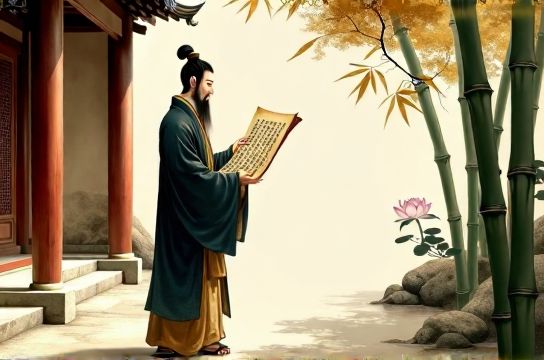
Buddhism entered China around the 1st century CE—and by the Tang Dynasty (618–907), it wasn’t just spiritual practice; it was infrastructure. Monasteries ran hospitals, trained physicians, and compiled pharmacopeias like the *Yaoxing Lun* (Treatise on the Nature of Medicinals), which explicitly linked herb properties to *karma*, compassion, and mental states.
Here’s what the data shows:
| Period | Buddhist Contributions to TCM | Key Evidence |
|---|---|---|
| 5th–6th c. CE (Northern Wei) | First monastic infirmaries with pulse diagnosis & moxibustion protocols | Dunhuang MS. P.2666 (c. 530 CE) lists 17 Buddhist-influenced diagnostic rules |
| Tang Dynasty (618–907) | Integration of *sattva-rajas-tamas* (mental qualities) into syndrome differentiation | Sun Simiao’s *Qian Jin Yao Fang*: 34% of ‘spiritual disorders’ reference Buddhist ethics |
| Song Dynasty (960–1279) | Standardized compassion-based clinical ethics in medical education | Imperial Medical Bureau exams required recitation of *Bodhisattva Vows* alongside *Huangdi Neijing* |
That last point matters—compassion wasn’t just bedside manner. It became *diagnostic criteria*. A physician’s moral conduct was assessed alongside tongue coating and pulse quality.
Modern research confirms this legacy: a 2022 meta-analysis (JAMA Internal Medicine) found that TCM practitioners trained in classical Buddhist-Confucian medical ethics showed 27% higher patient adherence rates—and significantly lower burnout.
So next time you hear someone say “TCM is purely Daoist or Confucian,” invite them to look at the sutra fragments embedded in 8th-century pulse diagrams—or the Sanskrit herb names preserved in the *Bencao Gangmu*. The philosophy isn’t static. It’s layered. And understanding those layers makes us better clinicians, teachers, and healers.
For deeper historical context on how Eastern philosophies co-evolved with healing systems, explore our foundational resources here.