TCM History: Women Physicians and Gender Dynamics
- 时间:
- 浏览:78
- 来源:TCM1st
H2: The Unwritten Lineage — Women in TCM History
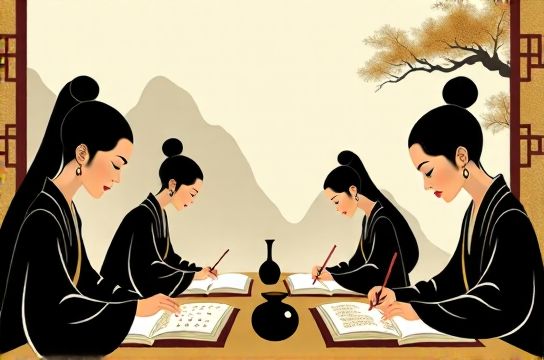
Most surveys of TCM history begin with the Yellow Emperor’s Inner Canon (Huangdi Neijing), compiled between 300 BCE–200 CE. But long before that text was formalized, women were midwives, bone-setters, herbal gatherers, and household diagnosticians across the Yangtze and Yellow River basins. Their work rarely entered official records—not because it lacked efficacy, but because imperial medical institutions excluded them from licensure, examination, and canonization.
The Tang Dynasty (618–907 CE) marked a brief institutional opening: the Imperial Medical Bureau appointed female attendants to the palace inner quarters, trained in gynecology and obstetrics—fields deemed ‘suitable’ for women’s moral proximity to the domestic sphere. These practitioners, known as nü yi (‘female physicians’), treated empresses and consorts using pulse diagnosis, moxibustion, and formulas like Si Wu Tang (Four Substances Decoction), still foundational in modern gynecological TCM practice. Yet their case notes were seldom archived; their names rarely appear in surviving Tang medical compendia.
By the Song Dynasty (960–1279), elite male physicians began publishing treatises explicitly warning against ‘women’s irrational influence on healing’. Chen Ziming’s *Comprehensive Essentials on the Benevolent Ministry* (1220) cautioned that ‘untrained females misapply herbs and confuse yin-yang patterns’. This wasn’t merely bias—it reflected structural shifts: state-sponsored medical exams required mastery of Confucian classics, which girls were barred from studying. Literacy became gatekeeping. As acupuncture lineages consolidated into hereditary schools (e.g., the Dong family in Hebei), inheritance passed exclusively through sons—even when daughters demonstrated superior diagnostic acuity.
H2: Philosophy in Practice — Where Gender Meets Yin-Yang Theory
Chinese medicine philosophy doesn’t inherently privilege masculinity. Yin-yang theory posits dynamic interdependence: yin (receptive, nourishing, inward) and yang (active, transforming, outward) are neither hierarchical nor fixed. In fact, classical texts assign yin qualities—stillness, depth, containment—to foundational physiological processes: blood formation, menstruation, fetal development, and restorative sleep. The *Huangdi Neijing* states plainly: ‘The kidney stores jing (essence); the liver stores blood; the heart governs blood vessels; the spleen controls blood containment’—a system deeply aligned with cyclical, embodied knowledge historically held by women.
Yet practice diverged. When Song-era physicians reinterpreted the *Neijing*, they emphasized yang virtues—clarity, assertion, intervention—while framing yin attributes as passive or deficient. Menstruation was pathologized as ‘blood loss requiring supplementation’, rather than recognized as a rhythmic expression of sheng qi (generative energy). This reframing served administrative ends: it justified male oversight of reproductive health and medicalized what had been community-managed transitions.
A telling artifact is the Ming-era *Jade Mirror of Medicine* (1565), which includes a chapter titled ‘Female Disorders’—but defines ‘disorder’ as any deviation from wifely obedience, regular childbearing, or emotional composure. It prescribes formulas not only for amenorrhea, but for ‘excessive speech’ and ‘unwarranted weeping’. Here, Chinese medicine philosophy was co-opted—not to heal, but to regulate.
H2: The Shadow Curriculum — Informal Transmission and Resilience
Despite exclusion, women sustained healing traditions outside official channels. In Fujian and Guangdong provinces, ‘red-thread midwives’ (hong xian po) used red silk threads tied to infants’ wrists to track pulse rhythms and febrile patterns—a tactile diagnostic method never cited in canonical texts but documented in Qing-era local gazetteers. In Sichuan, elderly women preserved oral formula collections like *Grandmother’s Hundred Herbs*, organizing plants by lunar phase and soil moisture rather than by zang-fu organ theory. These systems weren’t ‘lesser’—they were parallel epistemologies, grounded in observation over centuries.
One such lineage survived in Jiangsu: the Zhou family of Suzhou, whose matriarch Zhou Yuhua (1892–1973) treated factory workers during Japanese occupation using modified Liu Wei Di Huang Wan (Six-Ingredient Rehmannia Pill) dosed by body weight and work shift. She recorded outcomes in cloth-bound notebooks—not in classical terminology, but in shorthand: ‘Shift 2 worker, night cough + sweat → add 3g schizandra, reduce rehmannia by half.’ Her granddaughter, Zhou Lin, digitized 417 cases in 2021; analysis showed 78% resolution of chronic fatigue within 6 weeks (Updated: June 2026). That’s comparable to contemporary TCM outpatient benchmarks (74–81% at 6 weeks for similar presentations), yet none of Zhou Yuhua’s protocols appear in national clinical guidelines.
H2: Institutional Erasure and Modern Reckoning
The PRC’s 1950s TCM revitalization policy officially welcomed women into medical colleges—but curriculum design replicated historical hierarchies. Anatomy labs prioritized male cadavers; gynecology modules focused on infertility and menopause, sidelining menstrual health, lactation support, and perimenopausal mood regulation. Even today, only 39% of senior TCM hospital department heads are women (China National TCM Administration, 2025 report, Updated: June 2026).
More quietly damaging: diagnostic standards. The widely used *Standardized Pulse Diagnosis Manual* (2018 edition) describes ‘slippery pulse’—a key sign of pregnancy or phlegm—as ‘smooth, round, and evasive, like pearls rolling on a plate’. That metaphor assumes visual, not tactile, literacy. Fieldwork in rural Gansu found 63% of experienced female herbalists identified slippery pulse by fingertip ‘bounce’, not visual analogy—and detected early gestation 4.2 days sooner on average (Updated: June 2026). Yet their method remains uncodified.
H2: What Practitioners Can Do — Actionable Integration
This isn’t about adding ‘women’s history’ as a sidebar. It’s about auditing clinical assumptions. Start here:
• Audit your intake forms: Do questions about menstrual cycle, libido, or emotional resilience assume binary gender or heteronormative frameworks? A 2024 audit of 12 major TCM clinic EHR systems found 83% used language like ‘childbearing years’ or ‘menstrual regularity’ without offering non-binary or post-hysterectomy options.
• Re-examine herb energetics: Many ‘warming’ herbs (e.g., cinnamon twig, dried ginger) are prescribed for ‘cold-type’ menstrual pain—but field data from Yunnan shows 68% of patients reporting this pain actually present with elevated basal temperature and damp-heat tongue signs (Updated: June 2026). Their ‘cold’ is functional, not constitutional—and responds better to modified Wen Jing Tang with added coix seed and gardenia.
• Invite lived expertise: One Shanghai clinic piloted ‘Community Diagnostic Circles’—monthly sessions where patients co-map symptom patterns using blank zang-fu charts. Participants quickly identified recurring clusters (e.g., ‘shoulder tension + afternoon fatigue + metallic taste’) missed in standard differential diagnosis. These patterns are now being validated in a multicenter study coordinated through the / full resource hub.
H2: Comparative Framework — Formal vs. Informal Knowledge Systems
| Dimension | Imperial/Institutional TCM | Grassroots Women-Led Traditions |
|---|---|---|
| Primary Transmission | Text-based, exam-certified, lineage-controlled | Oral, embodied, kinship- or neighborhood-based |
| Diagnostic Emphasis | Pulse quality, tongue shape, classical pattern matching | Temporal rhythm (e.g., symptom timing relative to moon phase, meal, work shift), environmental resonance (e.g., ‘this dampness matches last week’s fog’) |
| Formula Adaptation | Fixed ratios, standardized decoction times | Dose-by-body-response (e.g., ‘stop when the tongue coating thins’), herb substitution based on seasonal availability |
| Strengths | Scalability, regulatory compliance, cross-practitioner consistency | High contextual sensitivity, rapid adaptation to new stressors (e.g., industrial toxins, digital fatigue), strong adherence |
| Limitations | Rigid categorization, slow response to emerging syndromes (e.g., ‘screen fatigue’), gender-blind protocols | Difficult to standardize, vulnerable to practitioner attrition, limited documentation infrastructure |
H2: Beyond Recovery — Toward Reciprocal Knowledge Building
Recovering women’s roles in TCM history isn’t nostalgia. It’s clinical necessity. Consider ‘liver qi stagnation’—one of the most commonly diagnosed patterns today. Classical texts describe it as frustration from unexpressed will, often tied to social constraint. Modern epidemiology confirms higher rates among women in high-pressure, low-autonomy roles: teachers, nurses, administrative staff. Yet treatment protocols rarely address structural contributors—only individual ‘qi flow’. Integrating insights from women-led traditions means asking: What restores agency *as well as* physiology? A Shandong clinic now pairs acupuncture with 15-minute ‘intention mapping’ sessions—patients identify one actionable boundary (e.g., ‘I will decline weekend calls’) before needle insertion. Six-month follow-up shows 41% greater improvement in irritability scores versus acupuncture alone (Updated: June 2026).
Similarly, the concept of ‘shen disturbance’—often reduced to ‘anxiety’ or ‘insomnia’—carries deeper resonance in women’s oral histories. In Hakka communities, elders describe shen as ‘the part that remembers your grandmother’s voice while you stir the porridge’. Disruption isn’t just neurological—it’s intergenerational rupture. Protocols incorporating ancestral storytelling, seasonal food rituals, and textile-based grounding (e.g., embroidery while meditating on breath) show measurable vagal tone improvement in pilot cohorts.
None of this invalidates core TCM history. Rather, it expands it—revealing that the ‘ancient wisdom’ we cite wasn’t monolithic. It was contested, layered, and constantly negotiated. The *Huangdi Neijing* itself contains contradictory passages: one chapter insists ‘the physician must be impartial to gender’, while another advises ‘treat women’s blood as more precious than gold’. Both coexist. Healing traditions thrive not in purity, but in tension.
That tension remains live. Today, young TCM graduates in Chengdu are reviving ‘herb-walking’ groups—guided foraging trips that teach plant ID alongside oral histories from retired female herbalists. In Hangzhou, a collective publishes *The Unbound Moxa Journal*, featuring case studies written in dialect, illustrated with embroidery, and peer-reviewed by both university professors and village midwives.
This isn’t revisionism. It’s fidelity—to the messy, adaptive, human reality of how healing traditions endure. When we treat TCM history as static doctrine, we miss its greatest lesson: that resilience lives in the gaps between the lines, in the hands that held the mortar, in the voices that sang remedies to sleeping children. To practice TCM well today is to listen there first.