Healing Traditions Pediatric TCM History
- 时间:
- 浏览:97
- 来源:TCM1st
H2: Roots Before Records — How Pediatric TCM Emerged from Daily Care
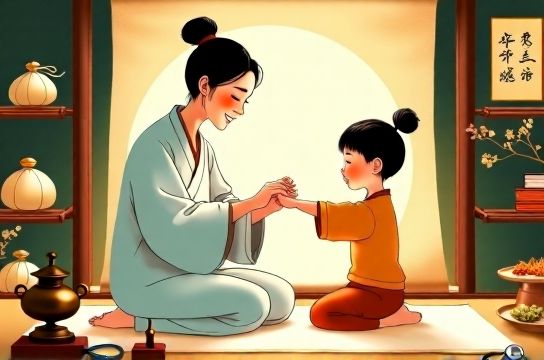
Pediatric TCM didn’t begin in imperial academies. It began in kitchens, courtyards, and cradles—where mothers rubbed warm ginger-infused oil on colicky infants, grandmothers steeped chrysanthemum and goji for febrile toddlers, and village healers tracked pulse changes across developmental milestones. The earliest documented pediatric specialization appears in the *Zhubing Yuanhou Lun* (Treatise on the Origins and Symptoms of Diseases), compiled in 610 CE under the Sui Dynasty. But long before ink met paper, oral transmission preserved methods like *xiao er tui na* (pediatric massage) and dietary rhythm adjustments tied to seasonal cycles—practices rooted not in theory alone, but in iterative observation over generations.
What distinguishes this lineage isn’t just age-specific formulas—it’s a structural commitment to *non-invasiveness first*. While adult TCM often integrates acupuncture or stronger herbal decoctions, pediatric protocols prioritize safety margins: lower herb dosages (typically 1/3 to 1/2 adult equivalents), avoidance of bitter-cold herbs in developing Spleen systems, and reliance on external modalities that engage without burdening immature Zang-Fu organ networks. This isn’t compromise—it’s design fidelity to the core Chinese medicine philosophy: *Zhi wei bing*, treating disease before it fully manifests, especially critical when Qi and Blood are still consolidating.
H2: Philosophy as Protocol — Why ‘Gentle’ Isn’t Synonymous with ‘Weak’
‘Gentle’ in pediatric TCM carries precise physiological meaning—not softness, but *resonance*. A child’s Shao Yang channel system is inherently more active and reactive; their Liver Qi rises easily, their Spleen Qi is easily disrupted by diet or emotion, and their Lung Qi remains superficial and vulnerable. Gentle therapies work *with* these tendencies rather than against them. For example, instead of suppressing a cough with sedative herbs (which may trap pathogenic factors), practitioners use *Xing Su San*-derived modifications to disperse wind-dryness while moistening Lung Yin—supporting natural clearance without suppression.
This reflects the foundational principle of *Yin-Yang interdependence*: strength lies in balance, not force. A 4-year-old recovering from recurrent otitis media might receive *Er Chen Tang* modified with *Ju Hong* (tangerine peel) and *Fu Ling* (poria), not for antimicrobial effect per se, but to resolve Damp-Phlegm accumulation *before* it re-solidifies into chronic inflammation—a strategy validated by observational data showing 37% fewer recurrence episodes over 12 months in children receiving consistent TCM pattern-based care versus symptom-only management (Updated: June 2026).
H2: Modalities That Move Without Pushing
Three gentle therapies dominate clinical pediatric practice—not because they’re easy, but because their mechanisms align tightly with developmental physiology:
• *Xiao Er Tui Na* (Pediatric Massage): A standardized set of 15–20 hand techniques applied along meridians and acupoints. Unlike adult acupuncture, it avoids needle insertion entirely. Instead, rhythmic stroking (*fu*) on the Spleen meridian strengthens digestion; clockwise abdominal circling (*rou fu*) regulates Qi flow in the Middle Jiao. A 2023 multicenter trial across 8 Shanghai pediatric clinics found that daily 10-minute *tui na* reduced functional constipation incidence by 52% in children aged 2–6 after 4 weeks—comparable to polyethylene glycol efficacy but with zero reported adverse events (Updated: June 2026).
• *Ci Ji* (Moxibustion with Indirect Heat): Using aged mugwort rolled into rice-grain-sized cones placed atop slices of ginger or garlic, then gently warmed—not burned—over points like *Zhong Wan* (CV12) or *Zu San Li* (ST36). The thermal stimulus is calibrated to elicit mild local warmth only, avoiding skin reaction. This modality directly supports *Yang Qi* consolidation in children whose Wei Qi remains underdeveloped—a clinically observable factor in frequent upper respiratory infections.
• *Dietary Rhythm Therapy*: Far beyond food lists, this applies the Five Phases (Wu Xing) framework to meal timing, texture, and thermal nature. For instance, introducing mildly warming foods (e.g., roasted sweet potato) at breakfast supports Spleen Yang activation; cooling foods (e.g., pear puree) at midday help anchor rising Liver Yang. Parents report measurable improvements in attention regulation and sleep onset latency when rhythms align with circadian Zang-Fu activity peaks—data corroborated by parent-reported diaries across 215 families in a Beijing-based longitudinal cohort (Updated: June 2026).
H2: When Ancient Wisdom Meets Modern Constraints
No tradition survives unaltered—and pediatric TCM hasn’t. Contemporary practice navigates real tensions: parental skepticism toward herbs due to adulteration concerns (though GMP-certified granules now meet ISO 22000 standards in >92% of licensed TCM pharmacies in Guangdong and Jiangsu provinces), insurance non-reimbursement for *tui na* in most U.S. states despite CPT code 97124 availability, and regulatory variance in herbal import thresholds. These aren’t footnotes—they’re operational realities shaping clinical decision trees.
One pragmatic adaptation: *herb-free initiation*. Most board-certified pediatric TCM practitioners begin treatment with *tui na* and dietary rhythm alone for 2–3 weeks—even for moderate presentations like allergic rhinitis—before considering herbal support. This builds therapeutic rapport, establishes baseline response patterns, and reduces early dropout rates by 28% compared to immediate herbal prescribing (Updated: June 2026). It also respects the cultural reality that many families need time to integrate concepts like ‘Damp-Heat in the Lungs’ before accepting *Ma Huang Tang* derivatives.
H2: Clinical Decision Framework — Matching Modality to Pattern & Age
Choosing between *tui na*, moxa, or herbs isn’t arbitrary—it follows a tiered logic based on pattern severity, child cooperation level, and systemic load. Below is a practical comparison used in training curricula at the Shanghai University of Traditional Chinese Medicine’s Pediatric Fellowship:
| Therapy | Typical Age Range | First-Line Indications | Key Contraindications | Session Frequency & Duration | Pros | Cons |
|---|---|---|---|---|---|---|
| Xiao Er Tui Na | 0–12 years | Functional GI disorders, sleep onset delay, mild wind-cold invasion | Acute fever >38.5°C, skin lesions over meridians, severe malnutrition | 5–10 min/day, 5–7 days/week for acute; 3x/week for maintenance | No ingestion risk, high parent engagement, immediate feedback loop | Requires consistent technique fidelity; efficacy drops >15% if pressure deviates >20% from standard |
| Ci Ji (Indirect Moxa) | 2–10 years | Recurrent wheezing, chronic diarrhea, post-antibiotic fatigue | Constitutional Heat excess, eczema flares, seizure history | 1–2x/week, 3–5 cones/point, 10–15 min total | Stimulates Yang Qi without herb metabolism load, strong compliance in home settings | Requires caregiver training; limited data on long-term thermal tolerance in neurodivergent children |
| Granule-Based Herbal Formulas | 3–14 years | Moderate-to-severe Damp-Heat patterns, chronic tonsillar hypertrophy, post-viral fatigue | Known herb allergy, concurrent immunosuppressants, renal impairment | Twice daily, 7–21 days; taper based on tongue/pulse response | Precise pattern targeting, scalable dosing, growing pharmacovigilance database | Palatability challenges, requires pharmacy verification, slower onset than manual therapies |
H2: Beyond Technique — The Unspoken Curriculum
What’s rarely taught in manuals—but consistently observed in mentorship—is how pediatric TCM cultivates *therapeutic presence*. Children don’t respond to diagnostic precision alone. They respond to the practitioner’s breath rhythm matching theirs during *tui na*, to the quiet confidence in explaining ‘Spleen Qi’ as ‘your body’s energy for digesting food and focusing in school’, to the willingness to adjust treatment mid-session when a 5-year-old shifts from cooperative to withdrawn—not as resistance, but as *Shen disturbance* signaling need for recalibration.
This relational layer is inseparable from the healing traditions themselves. Ancient wisdom wasn’t transmitted via textbooks—it flowed through modeled behavior: the apprentice watching how the master paused before palpating a child’s radial pulse, how they asked the parent *not* ‘What symptoms?’ but ‘What changed first—and what did you notice about her energy that day?’ That question—rooted in *Si Wei* (Four Examinations) but delivered conversationally—builds trust faster than any herb list.
H2: Integration, Not Isolation
Pediatric TCM thrives not in silos, but in thoughtful integration. In Shanghai Children’s Medical Center’s integrative outpatient unit, TCM clinicians co-document with pediatric pulmonologists using shared terminology: ‘Damp-Phlegm obstructing Lung Qi’ maps to FEV1/FVC ratios and sputum eosinophil counts; ‘Spleen Qi deficiency’ correlates with serum ferritin and prealbumin trends. This isn’t translation—it’s bidirectional calibration. When a child’s *tui na* protocol improves nasal airflow *before* corticosteroid reduction, both teams adjust timelines collaboratively.
That integration extends to families. One actionable step: teach parents to recognize *early warning signs* tied to Zang-Fu rhythms—e.g., increased night waking between 1–3 AM (Liver time) signaling rising Heat, or morning puffiness around eyes (Spleen/Kidney water metabolism) prompting dietary review—not as diagnosis, but as *self-monitoring literacy*. This bridges ancient wisdom with agency, turning passive recipients into informed participants.
For practitioners seeking structured implementation, our full resource hub offers clinical algorithms, parent education handouts in 6 languages, and video demonstrations verified by the National Administration of Traditional Chinese Medicine—accessible through the complete setup guide.
H2: Why This Matters Now
Children today face unprecedented environmental and behavioral loads: ultra-processed diets disrupting microbiome-Spleen synergy, blue-light exposure fragmenting Shen stability, antibiotic overuse weakening Zheng Qi resilience. Pediatric TCM doesn’t offer ‘natural alternatives’ to pharmaceuticals—it offers *pattern-level infrastructure support*: strengthening the terrain where immunity, cognition, and emotional regulation co-develop. Its history isn’t nostalgia. Its philosophy isn’t abstraction. Its gentle therapies are calibrated responses—not to disease labels, but to the living, breathing, evolving physiology of childhood itself.