Exploring the TCM History and Its Evolution Over Centuries
- 时间:
- 浏览:91
- 来源:TCM1st
If you’ve ever scratched your head wondering how Traditional Chinese Medicine (TCM) went from ancient scrolls to modern clinics, you’re not alone. As a health blogger who’s spent years diving into holistic healing systems, I’m here to break down the real story—no fluff, just facts with flavor.
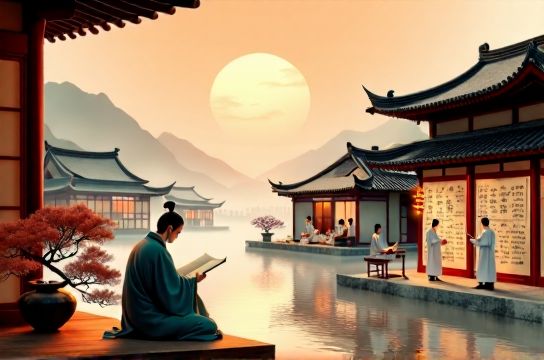
TCM isn’t just about acupuncture needles and herbal stews. It’s a 2,000+ year-old system rooted in balance—think yin and yang, qi flow, and harmony between body and nature. But how did it evolve? Let’s time-travel through key eras.
The Roots: Han Dynasty & The Yellow Emperor’s Bible
The game-changer? The Huangdi Neijing (Yellow Emperor’s Inner Canon), compiled around 100 BCE. This text laid the foundation—diagnosis methods, meridians, and the five elements. By the Han Dynasty, TCM was already a structured practice, used by imperial courts and commoners alike.
Golden Age: Tang & Song Dynasties
Fast forward to 600–1200 CE. The Tang Dynasty saw the first medical college in Chang’an. Herbal compendiums exploded—Bencao Gangmu by Li Shizhen (Ming Dynasty, but built on Song research) listed over 1,800 substances. Yes, that includes rhino horn (now banned) and pangolin scales (controversial AF today).
Modern Clash: 19th Century Onward
Western medicine crashed the party in the 1800s. TCM got labeled 'quackery' by some colonial powers. But in China? It survived—barely. Mao Zedong revived it in the 1950s as a cost-effective public health tool. Smart move? Absolutely. By 2023, China invested over $15 billion annually in TCM research and clinics.
Today’s Global Reach
Now, TCM is everywhere. According to WHO, over 100 countries recognize TCM practices. Acupuncture is FDA-approved for pain management in the U.S. And get this—global TCM market value hit $140 billion in 2023, projected to reach $240 billion by 2030 (Statista, 2023).
Key Milestones in TCM History
| Era | Contribution | Impact |
|---|---|---|
| Han (206 BCE–220 CE) | Huangdi Neijing published | Established core theories |
| Tang (618–907) | First medical school | Standardized training |
| Ming (1368–1644) | Bencao Gangmu compiled | Most comprehensive herbal guide |
| Modern (post-1950) | State-backed integration | Global expansion of TCM practices |
But let’s keep it real—TCM isn’t perfect. Some herbs lack clinical trials. Quality control? A mess in unregulated markets. Yet, studies show acupuncture reduces chronic pain by 50% in 60% of patients (NIH, 2022). That’s not placebo-level noise.
So whether you're sipping goji berry tea or booking an acupuncturist, remember: TCM’s staying power comes from adaptation, not mysticism. It evolved because it works—for many, in measurable ways.