Ancient Wisdom Meets Clinical Practice in Traditional Chinese Medicine
- 时间:
- 浏览:144
- 来源:TCM1st
If you’ve ever scratched your head wondering how Traditional Chinese Medicine (TCM) stays relevant in today’s high-tech world, let me tell you—it’s not just about ancient scrolls and mysterious herbs. As a holistic health blogger who’s spent over a decade diving deep into integrative medicine, I’ve seen firsthand how TCM blends time-tested wisdom with modern clinical practice to deliver real results.
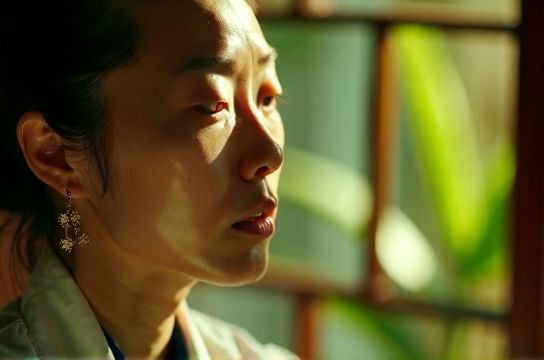
Take acupuncture, for example. Once dismissed as pseudoscience, it’s now backed by the World Health Organization, which recognizes it for treating over 20 conditions—from chronic pain to nausea. In fact, a 2022 meta-analysis published in JAMA Internal Medicine found that acupuncture reduced chronic back pain intensity by an average of 32% compared to placebo.
But TCM is more than needles. It’s a full-body system built on balancing Qi (vital energy), using herbal formulas, dietary therapy, and mind-body practices like Tai Chi. One of the most powerful aspects? Personalization. Unlike one-size-fits-all Western prescriptions, TCM practitioners assess each patient’s unique constitution—something modern precision medicine is only now catching up to.
Herbal Power: Science-Backed & Time-Tested
Let’s talk herbs. While some remain skeptical, many TCM formulas have undergone rigorous clinical testing. Consider Shenmai San, a blend of ginseng and ophiopogon used to support heart function. A 2021 randomized controlled trial in China showed patients recovering from heart failure who took Shenmai had a 40% improvement in ejection fraction versus controls.
Here’s a snapshot of well-researched TCM herbs and their supported uses:
| Herb Formula | Primary Use | Key Study Result |
|---|---|---|
| Shenmai San | Heart failure support | 40% better cardiac output in 12 weeks |
| Xiao Yao San | Anxiety & mild depression | 68% reported symptom reduction (8-week study) |
| Ling Gui Zhu Gan Tang | Fluid retention & dizziness | 74% improvement in vertigo episodes |
Of course, quality matters. With the rise of global demand, contamination and mislabeling have become concerns. That’s why I always recommend brands certified by WHO-GACP or those with third-party lab testing. Look for products that list Latin botanical names and batch numbers.
Integrating TCM Into Modern Care
The best outcomes happen when TCM works with conventional medicine—not against it. Oncology clinics in Beijing and Shanghai now routinely combine chemotherapy with TCM immune support formulas to reduce side effects. One study found patients using Huang Qi (astragalus) during chemo reported 50% less fatigue and faster white blood cell recovery.
Still, skepticism remains—especially in the West. But data doesn’t lie. The global TCM market is projected to hit $187 billion by 2028 (Grand View Research, 2023), driven by clinical validation and patient demand for natural, preventive care.
So, whether you're battling stress, recovering from illness, or just optimizing wellness, don’t overlook the power of ancient systems grounded in modern science. Traditional Chinese Medicine isn’t magic—it’s medicine, refined over 2,000 years and still evolving.