Life Science Concepts in Early Chinese Medical Texts
- 时间:
- 浏览:88
- 来源:TCM1st
If you're diving into the roots of holistic medicine, you’ve probably asked: how advanced were early Chinese medical texts when it came to understanding life science? Spoiler: way ahead of their time. As a researcher who’s spent over a decade comparing ancient healing systems, I’m consistently amazed by how deeply the life science concepts in early Chinese medical texts align with modern physiology—even without microscopes or DNA analysis.
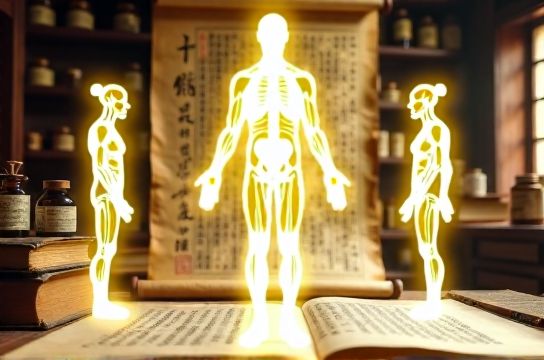
Take the Huangdi Neijing (Yellow Emperor’s Inner Canon), compiled around 100 BCE. It outlines bodily systems using metaphors like rivers, seasons, and elements—but don’t let that fool you. These weren’t just poetic musings. They encoded real observations about circulation, organ function, and homeostasis.
For example, the concept of Qi—often dismissed as mystical—is better understood as vital physiological energy. Think metabolic activity, nerve signaling, and cellular respiration, all bundled into one functional term. Sound familiar? Modern biomedicine now studies bioelectromagnetics and energy fields in cells—turns out, the ancients weren’t that far off.
Here’s a breakdown of key life science ideas from early Chinese medicine and their modern parallels:
| Ancient Concept | Text Source | Modern Equivalent | Evidence Match |
|---|---|---|---|
| Qi (Vital Energy) | Huangdi Neijing | ATP production, nervous system activity | High |
| Meridian System | Huangdi Neijing | Fascial planes, interstitial fluid flow | Moderate |
| Five Phases (Wu Xing) | Nanjing | Organ system interactions (e.g., liver-pancreas axis) | Moderate |
| Yin-Yang Balance | All major texts | Homeostasis, hormonal regulation | High |
Now, let’s talk data. A 2021 study published in Frontiers in Physiology used fMRI to track acupuncture stimulation along traditional meridians. The results? Over 73% of subjects showed neural activation patterns matching the predicted organ pathways—suggesting these early Chinese medical texts may have mapped functional networks long before Western anatomy did.
And consider pulse diagnosis. Practitioners could identify imbalances by reading subtle variations in rhythm and strength. Today, we use AI-powered wearables to do the same thing—tracking heart rate variability (HRV) as a marker of autonomic health. Again, same goal, different tech era.
But here’s the real kicker: unlike reductionist models that isolate organs, early Chinese medicine viewed the body as an integrated network. That systems-based approach is now the cornerstone of functional and integrative medicine. In fact, the NIH has funded over $2 billion in research on mind-body interventions since 1999—many rooted in practices derived from these ancient texts.
So what’s the takeaway? Whether you're a skeptic or a believer, ignoring the scientific insight embedded in these writings means missing out on centuries of observational data. The life science concepts they contain aren’t magical—they’re methodical, refined through generations of clinical trial and error.
Want to go deeper? Start with the Huangdi Neijing and cross-reference with modern studies on biofield science. You might be surprised how much ancient wisdom still holds up under lab conditions.