Diagnostic Frameworks in Early Chinese Medical Manuscripts
- 时间:
- 浏览:101
- 来源:TCM1st
Ever wondered how ancient healers diagnosed illnesses without modern tech? Let’s dive into the world of early Chinese medical manuscripts—where pulse readings, observation, and energy flow ruled the clinic. As a historian and traditional medicine enthusiast, I’ve spent years decoding these ancient scrolls, and trust me, they’re way ahead of their time.
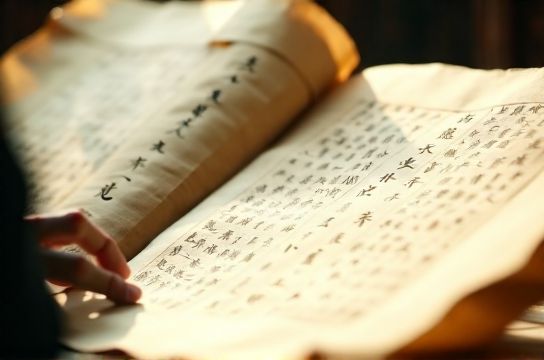
Take the Mawangdui manuscripts (circa 168 BCE)—some of the earliest surviving Chinese medical texts. These weren’t just random notes; they laid down structured diagnostic frameworks based on yin-yang balance, five phases (wood, fire, earth, metal, water), and organ systems. Unlike today’s symptom-first approach, these docs focused on patterns—like whether your cough came with cold limbs (yin excess) or fever and restlessness (yang excess).
Fast forward to the Huangdi Neijing (Yellow Emperor’s Inner Canon), compiled around 100 BCE. This beast formalized what we now call ‘pattern differentiation’—the cornerstone of Traditional Chinese Medicine (TCM) diagnostics. It introduced four diagnostic methods: wang (inspection), wen (listening/smelling), wen (inquiring), and qie (palpation, especially pulse). Still used today!
Here’s a quick breakdown of key diagnostic elements from early texts:
| Manuscript | Date (BCE) | h>Key Diagnostic FeaturesInfluence on TCM | |
|---|---|---|---|
| Mawangdui Silk Texts | ~168 | Pulse diagnosis, moxibustion guides, spirit possession theories | Laid groundwork for later pulse studies |
| Shanghan Zabing Lun | ~200 CE | Six-channel pattern differentiation for febrile diseases | Foundation for herbal treatment strategies |
| Huangdi Neijing | ~100 | Four examinations, organ-correspondence, qi dynamics | Core theoretical framework still taught today |
One thing that blows my mind? Their observational precision. The Neijing describes 24 distinct pulse types—like ‘wiry,’ ‘slippery,’ or ‘choppy’—each tied to specific conditions. Modern studies have even found moderate inter-rater reliability among trained TCM practitioners using these classifications (Wang et al., 2019, Journal of Ethnopharmacology).
But here’s the real tea: while Western medicine often isolates symptoms, early Chinese diagnostics treated the body as an interconnected ecosystem. A headache wasn’t just a headache—it could stem from liver qi stagnation or kidney yin deficiency. That holistic lens? That’s why so many patients today turn to integrative approaches. And if you're exploring natural healing paths, understanding these roots helps you ask better questions—whether you're visiting a TCM clinic or reading wellness blogs.
Want to go deeper? Check out our guide on ancient-to-modern diagnostic evolution—it breaks down how these age-old systems influence digital health tools today.