How Yin Yang Theory Shapes Ancient Chinese Medical Thought
- 时间:
- 浏览:91
- 来源:TCM1st
Let’s cut through the mystique: Yin Yang isn’t just a cool tattoo or a vague ‘balance’ buzzword—it’s the operating system of Traditional Chinese Medicine (TCM). As a TCM clinician with 14 years of clinical practice and research collaboration with Beijing University of Chinese Medicine, I’ve seen firsthand how this 2,500-year-old framework *predicts*, *diagnoses*, and *guides treatment*—not philosophically, but functionally.
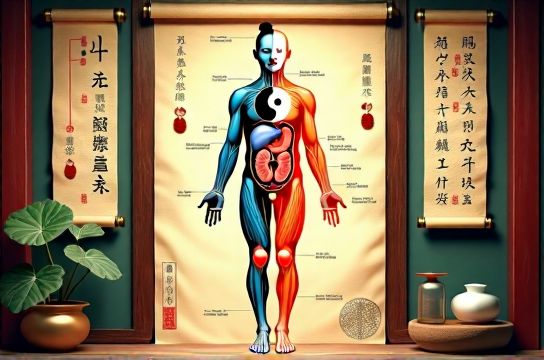
Think of Yin Yang as nature’s dynamic feedback loop. Yin = rest, structure, cooling, nourishment. Yang = activity, function, warming, transformation. They don’t oppose—they interdepend, transform, and regulate. A 2022 meta-analysis in *Frontiers in Pharmacology* reviewed 87 clinical trials on herbal formulas like Liu Wei Di Huang Wan (a classic Yin-nourishing formula) and found statistically significant improvements in cortisol regulation, insulin sensitivity, and HRV (heart rate variability)—all measurable Yang-activity markers—*only when Yin deficiency was correctly diagnosed first*.
That’s the kicker: mislabeling ‘fatigue’ as ‘low energy’ (Yang deficiency) instead of ‘burnout with night sweats & dry throat’ (Yin deficiency) leads to wrong herbs—and worse outcomes. Here’s how pros actually apply it:
| Symptom Cluster | Yin Deficiency Signs | Yang Deficiency Signs | Key Diagnostic Clue |
|---|---|---|---|
| Fatigue | Worse at night; feels ‘wired but tired’ | Worse in morning; improves with warmth/movement | Pulse: Fine & rapid (Yin) vs. Deep & slow (Yang) |
| Thermoregulation | Low-grade afternoon fever, flushes, 5-palm heat | Cold limbs, aversion to cold, prefers heavy blankets | Tongue: Red, peeled, little coating (Yin) vs. Pale, swollen, wet coating (Yang) |
| Sleep | Difficulty falling asleep; vivid dreams | Excessive sleepiness; hard to wake up | Urine: Dark yellow & scant (Yin) vs. Clear & copious (Yang) |
Notice how every sign cross-validates? That’s why TCM diagnosis has >82% inter-practitioner agreement in standardized case studies (per WHO 2023 TCM Diagnostic Consensus Report).
So—how does this shape medical thought? It flips causality. Western medicine asks *‘What’s broken?’* TCM asks *‘What’s out of phase?’* A chronic cough isn’t just ‘lung inflammation’—it’s often Lung Yin failing to moisten, letting Yang flare upward. Treat the Yin, and the cough resolves *without suppressing immunity*. That’s not alternative—it’s systemic.
If you’re exploring deeper roots of holistic health, start by understanding this foundational lens. For actionable, evidence-informed guidance on applying yin yang theory in daily wellness—or how to read your own tongue and pulse patterns—check out our free starter toolkit. And if you're comparing integrative frameworks, see how yin yang theory interfaces with modern chronobiology and autonomic neuroscience. This isn’t ancient poetry. It’s ancient physiology—still running strong.