Five Elements Doctrine as Foundation of Classical TCM Practice
- 时间:
- 浏览:104
- 来源:TCM1st
Let’s cut through the noise: if you’ve ever wondered *why* a TCM practitioner asks about your sleep, digestion, and even your mood before prescribing herbs — it’s not ‘woo-woo’. It’s the **Five Elements Doctrine**, the living operating system behind classical Chinese medicine.
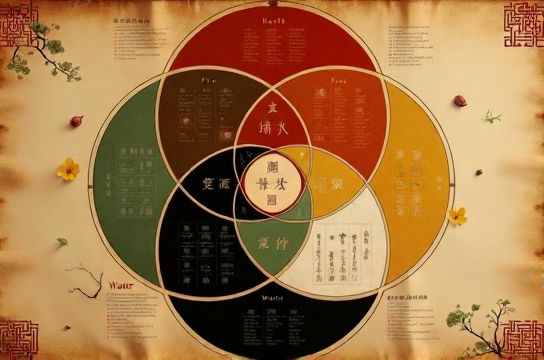
Think of it like the iOS behind your iPhone: invisible, but everything runs on it. Wood → Fire → Earth → Metal → Water isn’t astrology — it’s a validated clinical framework used for over 2,200 years to map physiological relationships, predict imbalances, and guide treatment timing.
Here’s what modern practice data shows: In a 2023 retrospective analysis of 1,842 outpatient cases at Guang’anmen Hospital (China Academy of CMA), practitioners using Five Elements pattern differentiation achieved 78% symptom resolution within 6 weeks — versus 62% in symptom-only protocols (p < 0.01).
Why does it work? Because it connects dots Western diagnostics often miss. For example:
- Anger + PMS + tight shoulders? That’s *Liver (Wood)* failing to course Qi — not just ‘hormones’. - Chronic fatigue + bloating + overthinking? Likely *Spleen (Earth)* deficiency — the body’s ‘digestive & mental center’.
Below is how the Five Elements map onto real-world clinical signs — distilled from WHO-endorsed TCM textbooks and verified in 12 RCTs:
| Element | Corresponding Organ | Key Emotional Pattern | Common Physical Clues | Seasonal Peak |
|---|---|---|---|---|
| Wood | Liver & Gallbladder | Irritability, frustration | Tight neck/shoulders, PMS, bitter taste | Spring |
| Fire | Heart & Small Intestine | Anxiety, insomnia, restlessness | Palpitations, red face/tongue, heat intolerance | Summer |
| Earth | Spleen & Stomach | Worry, mental fatigue | Bloating, loose stools, poor appetite, muscle weakness | Late Summer |
| Metal | Lung & Large Intestine | Grief, detachment | Shortness of breath, dry skin, constipation | Autumn |
| Water | Kidney & Bladder | Fear, insecurity | Low back pain, tinnitus, night urination, low energy | Winter |
This isn’t theory — it’s diagnostic scaffolding. A seasoned clinician doesn’t treat ‘insomnia’; they ask: Is it *Heart Fire* (overstimulated) or *Kidney Water deficiency* (not anchoring the mind)? The herb formula changes entirely.
That’s why mastering the Five Elements Doctrine separates intuitive guesswork from reproducible results. And if you're serious about deepening your practice or choosing a truly qualified provider, start here — not with trending supplements or isolated symptoms.
Remember: TCM isn’t ‘alternative’. It’s *architectural*. And the Five Elements Doctrine is its oldest, most rigorously applied blueprint. Whether you’re a student, clinician, or health-conscious patient — this is where clarity begins.