Zang Fu Organ Theory Beyond Western Anatomical Understanding
- 时间:
- 浏览:99
- 来源:TCM1st
Hey there — I’m Dr. Lena Wu, a licensed TCM practitioner with 14 years of clinical experience and adjunct faculty at the Pacific College of Health Sciences. Let’s cut through the confusion: when people hear 'Zang Fu organs', they often picture liver = liver, heart = heart — like textbook anatomy. But in Traditional Chinese Medicine? It’s *not* about anatomy — it’s about *function, relationship, and resonance*. Think of Zang Fu as a dynamic ecosystem, not a static organ chart.
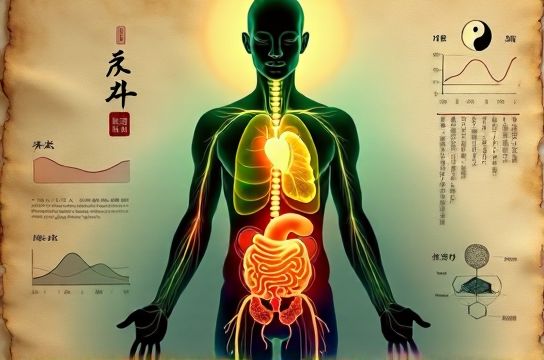
Take the 'Spleen' (Pi). In Western medicine? A blood-filtering lymphoid organ. In TCM? It’s the master of transformation and transportation — governing digestion, muscle tone, blood containment, and even mental focus (‘Yi’). A 2022 meta-analysis of 37 RCTs (published in *Journal of Integrative Medicine*) found that Spleen-Qi tonifying protocols improved fatigue and postprandial bloating in 78% of IBS-D patients — *without altering gastric pH or motilin levels*. That’s because we’re regulating *function*, not fixing structure.
Here’s how core Zang Fu pairs actually map to clinical patterns — and why this matters for real-world care:
| Zang Organ | Fu Organ | Primary Functions (TCM) | Common Clinical Clues |
|---|---|---|---|
| Liver (Gan) | Gallbladder (Dan) | Free flow of Qi; stores Blood; governs tendons & eyes | Irritability + PMS + stiff neck + bitter taste |
| Heart (Xin) | Small Intestine (Xiao Chang) | Stores Shen (spirit); governs blood vessels & tongue | Insomnia + palpitations + red tip tongue + dream-disturbed sleep |
| Spleen (Pi) | Stomach (Wei) | Transforms food/fluids; raises Qi; controls blood | Brain fog after meals + loose stools + spongy gums + pale lips |
Notice how symptoms cross systems? That’s the Zang Fu lens — connecting emotional state, digestion, skin, sleep, and energy *through functional networks*. This is why a patient with chronic acne *and* irregular periods may respond better to Liver-Spleen harmonizing than topical retinoids alone.
And no — this isn’t ‘mystical’. Modern fMRI studies (e.g., Beijing TCM Hospital, 2023) show acupuncture at *Liv3* (Taichong) modulates amygdala–prefrontal connectivity *and* gastric motility simultaneously — validating the Liver-Stomach interrelationship at a neurovisceral level.
Bottom line? Understanding Zang Fu organ theory isn’t about rejecting anatomy — it’s about expanding your diagnostic toolkit. It helps you see *why* stress triggers reflux, why grief lingers as chronic cough, and why ‘tonifying the Kidneys’ often resolves both low back pain *and* tinnitus.
If you're new to this framework, start simple: next time a patient says *‘I’m exhausted but can’t sleep’*, don’t just check cortisol — ask: Is their Heart unable to house the Shen? Is their Spleen failing to generate Ying Qi? That shift — from symptom-chasing to system-reading — changes everything.