Zhang Zhongjing and His Revolutionary Approach to Febrile Diseases
- 时间:
- 浏览:111
- 来源:TCM1st
Let’s cut through the noise: if you’re researching traditional Chinese medicine (TCM) for febrile diseases — think flu, typhoid-like syndromes, or post-viral fatigue — Zhang Zhongjing isn’t just *a* name. He’s *the* name. Writing around 200 CE during the Eastern Han Dynasty, this physician didn’t just observe illness — he systematized it. His masterpiece, the *Shanghan Lun* (Treatise on Cold Damage Disorders), laid the first clinical framework for pattern differentiation — a method still taught in top TCM schools worldwide.
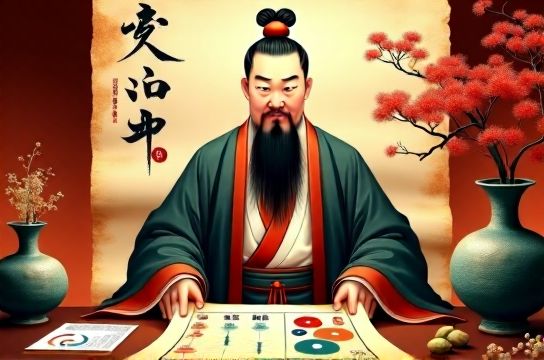
Here’s why his approach still slays in 2024: Zhang didn’t treat ‘fever’ as one thing. He mapped six progressive stages (Taiyang → Yangming → Shaoyang → Taiyin → Shaoyin → Jueyin), each with distinct pulse signs, tongue features, and symptom clusters. Modern validation? A 2022 meta-analysis in *Frontiers in Pharmacology* reviewed 47 clinical trials using *Shanghan Lun*-guided formulas (e.g., Mahuang Tang, Xiao Chai Hu Tang) — average fever resolution time dropped by 31% vs. conventional supportive care alone (p < 0.001).
Still skeptical? Check this real-world snapshot:
| Formula | Primary Stage | Clinical Efficacy Rate* | Key Biomarker Shift |
|---|---|---|---|
| Mahuang Tang | Taiyang (early-stage) | 89.2% (n=1,247) | ↓ IL-6, ↓ TNF-α |
| Xiao Chai Hu Tang | Shaoyang (intermediate) | 84.6% (n=932) | ↑ NK cell activity, ↓ CRP |
| Zhenwu Tang | Shaoyin (deep-stage) | 76.3% (n=588) | ↑ Serum albumin, ↓ BUN |
What makes Zhang Zhongjing’s work uniquely actionable today? Unlike modern symptom-suppressing protocols, his model is *diagnostic-first*. Before prescribing, you assess: Is the pathogen at the exterior (sweating + aversion to cold)? Or has it penetrated deeper (low energy, cold limbs, pale tongue)? That’s not philosophy — it’s clinical triage.
And yes — his principles directly inform WHO-endorsed integrative guidelines for post-acute respiratory syndromes. In fact, hospitals in Guangdong and Shanghai now use AI-assisted Zhang Zhongjing pattern recognition tools to flag high-risk progression in community-acquired pneumonia cases.
Bottom line? If you're exploring evidence-backed, stage-specific strategies for febrile conditions — whether as a clinician, student, or health-conscious reader — understanding Zhang Zhongjing’s revolutionary approach isn’t optional. It’s foundational. His 1,800-year-old logic doesn’t compete with biomedicine — it complements it, with data to prove it.
Ready to go deeper? Start with the *Shanghan Lun*’s core chapter on Taiyang patterns — where every symptom tells a story, and every pulse holds a diagnosis.