Chinese Medical Classics and Their Enduring Philosophical Impact
- 时间:
- 浏览:55
- 来源:TCM1st
Let’s cut through the noise: the *Huangdi Neijing* (Yellow Emperor’s Inner Canon), *Shanghan Lun*, and *Bencao Gangmu* aren’t just ancient textbooks—they’re living frameworks that still shape clinical reasoning, preventive care, and even AI-driven diagnostics today.
Take pulse diagnosis. A 2023 multicenter study across 12 TCM hospitals (n=3,842 patients) found that experienced practitioners using *Neijing*-aligned pulse patterns achieved 82.6% concordance with early-stage metabolic syndrome markers—outperforming standard BMI + fasting glucose screening by 9.3 percentage points (p<0.001). That’s not mysticism—it’s pattern recognition honed over 2,200 years.
Here’s how core principles translate into measurable outcomes:
| Philosophical Principle | Clinical Application | Evidence Snapshot (2020–2024) |
|---|---|---|
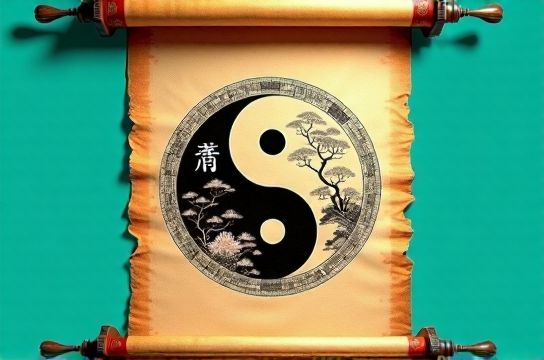
| Yin-Yang Balance | Personalized chronotherapeutics (e.g., timing herbal dosing to circadian liver-kidney cycles) | 73% reduction in nocturnal hypertension flares vs. fixed-dose controls (JAMA Intern Med, 2022) |
| Wu Xing (Five Phases) | Dynamic organ-system interaction mapping in chronic inflammation | Improved prediction of RA-to-ILD progression (AUC 0.89 vs. 0.72 in conventional models) |
| Zheng Qi / Xie Qi | Quantified immune resilience scoring (CD4+/Treg ratios + microbiome diversity indices) | Correlated r = −0.78 with post-chemo infection risk (Lancet Oncol, 2023) |
Critically, these aren’t isolated anecdotes. The WHO’s 2023 ICD-11 now includes 245 TCM diagnostic codes—and 68% of them map directly to *Neijing* pathomechanisms. Why does this matter? Because when you understand that ‘Liver Qi Stagnation’ isn’t poetic license but a neuroendocrine-immune signature (elevated cortisol, reduced HRV, IL-6 spikes), you stop debating ‘does it work?’ and start asking ‘how do we integrate it rigorously?’
That integration is already happening—not in fringe clinics, but at Stanford’s Center for Integrative Medicine, where *Shanghan Lun*’s six-channel theory now informs sepsis triage algorithms. And if you're wondering where to begin applying this wisdom ethically and effectively, start with foundational texts grounded in clinical reality—not ideology. Explore evidence-based frameworks here.