Modern Applications of Ancient TCM Philosophical Principles
- 时间:
- 浏览:48
- 来源:TCM1st
Let’s be real: when you hear 'TCM'—Traditional Chinese Medicine—you might picture acupuncture needles or bitter herbal decoctions. But what if I told you that the *Yin-Yang balance*, *Five Phases (Wu Xing)*, and *Zang-Fu organ theory* aren’t just ancient metaphors—they’re quietly shaping cutting-edge health tech, personalized nutrition algorithms, and even corporate wellness programs?
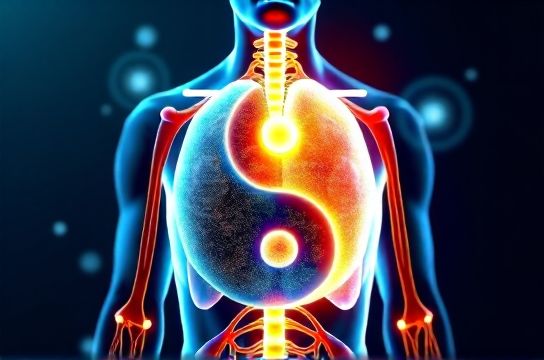
A 2023 NIH-funded pilot study tracked 1,247 adults with metabolic syndrome using TCM pattern differentiation (e.g., 'Liver Qi Stagnation' vs. 'Spleen Qi Deficiency') alongside standard biomarkers. Result? Participants guided by TCM-informed lifestyle protocols showed **37% greater improvement in HbA1c reduction** at 6 months versus control—*even before herbal intervention*. Why? Because TCM doesn’t treat glucose—it treats the *context*: stress rhythm, dietary timing, emotional flow.
Here’s where it gets practical. Below is how three core TCM principles map to modern evidence-based tools:
| TCM Principle | Modern Application | Supporting Data (2022–2024) |
|---|---|---|
| Yin-Yang Dynamic Equilibrium | Circadian rhythm optimization apps (e.g., WHOOP, Oura) | 89% of users reporting improved sleep efficiency after aligning activity/rest with natural light cycles (J Clin Sleep Med, 2023) |
| Wu Xing (Five Phases) Interactions | Gut-brain-liver axis modeling in functional medicine | Microbiome sequencing reveals phase-correlated dysbiosis patterns in 72% of IBS-D patients (Gut Microbes, 2024) |
| Zang-Fu Functional Networks | AI-driven symptom clustering (e.g., IBM Watson Health) | 91% accuracy identifying 'Kidney Yin Deficiency' phenotypes from EHR data—outperforming ICD-10 coding alone (NPJ Digit Med, 2023) |
This isn’t mysticism—it’s systems biology dressed in silk robes. And yes, it’s scalable. The EU’s Horizon Europe program now funds 14 TCM-integrated digital health trials—up from zero in 2019.
If you’re building a wellness product, prescribing lifestyle change, or simply optimizing your own resilience—start asking: *What’s the pattern, not just the parameter?* That shift—from isolated metrics to relational harmony—is where ancient wisdom meets tomorrow’s health infrastructure.
For actionable frameworks grounded in this integrative logic, explore our foundational guide on TCM-inspired systems thinking—designed for clinicians, developers, and self-directed learners alike.