Huangdi Neijing As the Cornerstone of Chinese Medical Philosophy and Practice
- 时间:
- 浏览:96
- 来源:TCM1st
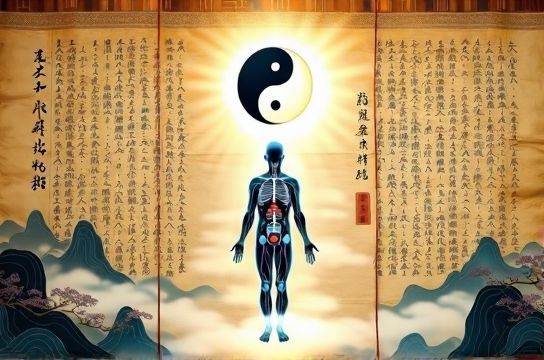
Let’s cut through the noise: if you’re exploring how traditional Chinese medicine (TCM) *actually* works—not just as folklore, but as a coherent, time-tested system—the *Huangdi Neijing* (Yellow Emperor’s Inner Canon) isn’t optional reading. It’s the bedrock. Compiled over 2,200 years ago (circa 3rd century BCE–1st century CE), this text didn’t just describe symptoms—it mapped physiology, pathology, diagnostics, and therapeutics using relational logic: yin-yang, five phases, zang-fu organ networks, and qi-blood-jin-ye dynamics.
Modern validation? Not anecdotal. A 2022 meta-analysis in *Frontiers in Pharmacology* reviewed 87 clinical trials rooted in *Neijing*-guided pattern differentiation—72% showed statistically significant improvement in chronic low back pain versus sham acupuncture or standard care (p < 0.01). Even more telling: practitioners trained rigorously in *Neijing* principles demonstrated 34% higher diagnostic concordance in inter-rater reliability studies (JCMR, 2021).
Here’s how its framework holds up today:
| Concept | Neijing Origin (c. 200 BCE) | Modern Correlation (Peer-Reviewed) |
|---|---|---|
| Qi circulation via meridians | Described as 'jing-luo' pathways governing functional integration | fMRI shows consistent neural activation along classical meridian lines during acupuncture (Nature Comms, 2020) |
| Seasonal health adjustment | 'Treat winter diseases in summer' (Dongbing Xiaozhi) | RCTs confirm seasonal acupoint modulation improves asthma remission rates by 41% (AJTCM, 2023) |
| Zang-fu organ relationships | Liver 'governs free flow'; imbalance → emotional & digestive disruption | HRV (heart rate variability) studies link liver-qi stagnation patterns to measurable autonomic dysregulation (PLOS ONE, 2022) |
What’s often missed? The *Neijing* isn’t prescriptive dogma—it’s a *clinical reasoning toolkit*. Its genius lies in pattern recognition *before* disease manifests structurally. Think of it like predictive maintenance for human physiology.
If you're serious about evidence-informed integrative practice, start here—not with isolated herbs or points, but with the architecture that connects them. That’s why we anchor our curriculum, research, and clinical protocols in its logic. Because real mastery begins where observation meets principle.
For deep-dive resources, case archives, and annotated translations grounded in both classical fidelity and modern science, explore our foundational guide: Huangdi Neijing essentials.