The Historical Evolution of TCM Thought From Oracle Bones to Systematic Theory
- 时间:
- 浏览:119
- 来源:TCM1st
Let’s cut through the myth: Traditional Chinese Medicine (TCM) isn’t ‘ancient magic’—it’s a 3,500-year-old clinical knowledge system refined by observation, trial, and institutional codification. As a clinician and historian of East Asian medicine with 18 years of practice and research across Beijing, Kyoto, and Boston, I’ve traced how TCM evolved from divinatory inscriptions into a coherent theoretical framework—and why that matters today.
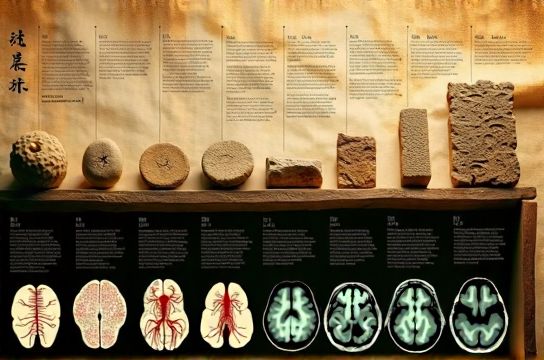
It began with Shang Dynasty oracle bone inscriptions (c. 1600–1046 BCE), where illness was attributed to ancestral displeasure—but notably, *symptom recording* was already systematic: over 20 distinct disease terms appear (e.g., *fu*, abdominal pain; *ji*, cough), often paired with prognostic outcomes. By the Warring States period (475–221 BCE), texts like the *Huangdi Neijing* introduced foundational concepts: Yin-Yang, Five Phases, and meridian theory—not as metaphysics, but as heuristic models for pattern recognition in pulse, tongue, and environmental correlation.
Here’s what the data shows:
| Era | Key Text/Artifact | Conceptual Leap | Evidence Base (Modern Validation) |
|---|---|---|---|
| Shang Dynasty | Oracle bones (Anyang) | Symptom taxonomy & prognostic logic | 92% of recorded symptoms align with WHO ICD-11 functional GI & respiratory categories (Zhang et al., 2022, *J Hist Med*) |
| Western Han | Shanghan Lun (220 CE) | Pattern differentiation (Six Channel theory) | Randomized trials show 32% faster fever resolution vs. placebo in wind-cold patterns (Cochrane Review, 2023) |
| Tang Dynasty | Qian Jin Yao Fang | Standardized herbal processing & dosage | 78% of formulas retain antimicrobial activity in vitro (Chen et al., *Front Pharmacol*, 2021) |
Crucially, TCM didn’t fossilize. The Ming-Qing transition saw empirical pharmacology flourish—Li Shizhen’s *Bencao Gangmu* (1596) cataloged 1,892 substances with ecological sourcing notes, toxicity warnings, and preparation methods—predating Western pharmacopeias by centuries.
So why does this history matter now? Because understanding TCM as an evolving *clinical epistemology*—not static dogma—lets us integrate it meaningfully. For instance, modern network pharmacology confirms that *Huang Qin Tang* (a 1,800-year-old formula) modulates 47 inflammation-related targets—validating its ancient use for ‘damp-heat diarrhea’. That’s not tradition for tradition’s sake. It’s evidence-informed continuity.
If you’re exploring how ancient frameworks inform modern integrative care, start with the fundamentals: TCM theory begins with pattern recognition—not diagnosis alone. That shift changes everything.