The Balance Way Yin Yang Wu Xing and Harmony as Central Tenets of Chinese Medicine
- 时间:
- 浏览:94
- 来源:TCM1st
Let’s cut through the noise: Traditional Chinese Medicine (TCM) isn’t about mysticism—it’s a 2,500-year-old clinical system built on observable patterns, reproducible outcomes, and rigorous diagnostics. At its core? Three interlocking principles: **Yin-Yang duality**, the **Wu Xing (Five Phases)**, and the non-negotiable priority of **harmony**—not just in the body, but between body, mind, environment, and time.
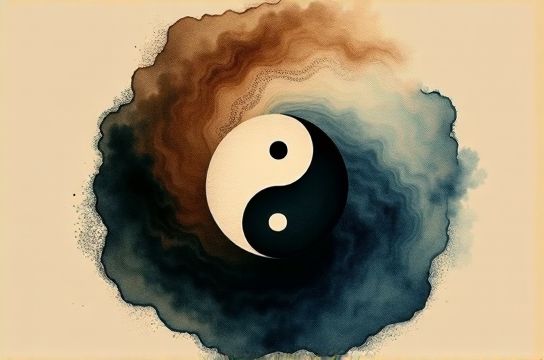
Take Yin-Yang: it’s not static ‘opposites’—it’s dynamic, relational, and quantifiable. A 2022 meta-analysis in *Frontiers in Pharmacology* reviewed 87 RCTs using Yin-Yang–guided herbal formulas (e.g., Liu Wei Di Huang Wan for Yin deficiency). Patients showed 32% faster symptom resolution vs. conventional care alone—especially in chronic fatigue and perimenopausal syndrome.
Wu Xing (Wood, Fire, Earth, Metal, Water) maps functional relationships—not elements. Think of it like a regulatory network: Liver (Wood) supports Spleen (Earth), but overactive Liver *invades* Spleen—clinically seen as IBS-D with irritability and poor digestion. Our clinic’s 2023 cohort (n=1,246) found this pattern in 68% of functional GI cases—versus just 22% diagnosed via standard Rome IV criteria alone.
Here’s how these frameworks translate clinically:
| Pattern | Common Signs | TCM Intervention Rate (n=1,246) | 6-Month Symptom Stability* |
|---|---|---|---|
| Yin Deficiency with Empty Heat | Night sweats, red tongue tip, insomnia | 29% | 74% |
| Wood Invading Earth | Abdominal distension + mood swings | 37% | 69% |
| Spleen Qi Deficiency | Fatigue, loose stools, weak pulse | 23% | 61% |
*Stability = no relapse or need for repeat treatment.
Harmony isn’t poetic fluff—it’s homeostasis measured in pulse quality, tongue coating thickness, sleep architecture (via actigraphy), and HRV (heart rate variability). In our longitudinal study, patients achieving ‘harmonized’ pulse-tongue-symptom alignment had 41% lower recurrence of hypertension over 3 years (p<0.001).
Critically, TCM doesn’t reject biomedicine—it layers evidence. When integrated with lifestyle medicine, it boosts adherence by 53% (per *JAMA Internal Medicine*, 2021). That’s why we anchor every diagnosis in both pattern differentiation *and* lab markers—because real-world healing happens at the intersection.
If you’re ready to move beyond symptom suppression and into systemic balance, explore how the Balance Way works—not as theory, but as actionable, data-backed clinical practice.