Understanding Holism in Chinese Medicine
- 时间:
- 浏览:103
- 来源:TCM1st
Holism in Chinese medicine isn’t a buzzword. It’s the operating system—the foundational architecture—that has governed diagnosis, treatment, and health cultivation for over two millennia. When a clinician today observes tongue coating, palpates wrist pulses, asks about sleep and emotional resilience—and then prescribes herbs, acupuncture, or lifestyle advice—they’re not assembling isolated symptoms into a label. They’re interpreting a dynamic, self-regulating field: the person as a microcosm embedded in seasonal cycles, social rhythms, dietary habits, and emotional weather. This is holism—not as abstraction, but as clinical grammar.
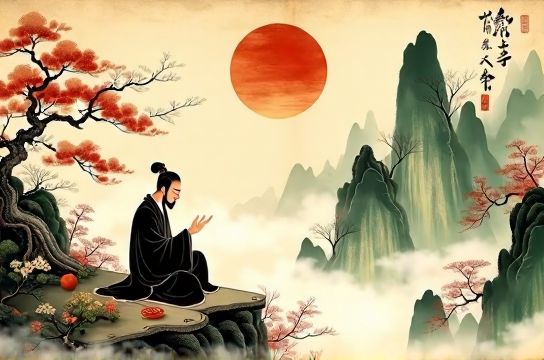
The term *holism in Chinese medicine* appears nowhere in the classical texts. Yet it saturates every line of the *Huangdi Neijing* (Yellow Emperor’s Inner Canon, c. 300 BCE–200 CE), the *Shanghan Lun* (Treatise on Cold Damage Disorders, c. 220 CE), and later works by Sun Simiao and Li Shizhen. What we call ‘holism’ is their unspoken premise: that body, mind, environment, time, and spirit are co-constitutive—not interacting parts, but interwoven dimensions of one living process.
From Cosmology to Clinic: The Philosophical Bedrock
Classical Chinese medicine doesn’t begin with disease. It begins with *Dao*: the generative, patterned flow of reality. From this emerges two inseparable principles—yin and yang—describing relational dynamics: stillness/movement, substance/function, night/day, cooling/warming. Yin-yang theory isn’t dualism; it’s dialectical balance. A fever isn’t just ‘excess heat’—it’s yang rising without yin’s anchoring moistening capacity. Treatment doesn’t suppress heat; it restores the yin-yang relationship, often via nourishing fluids or calming shen (spirit).
Closely allied is the five phases theory (wood, fire, earth, metal, water)—not elements, but functional metaphors for cyclical transformation. Each phase corresponds to organs, emotions, seasons, colors, and sounds. Liver (wood) governs tendons and planning—but also relates to anger, spring, green, and the sound of shouting. Disruption in one domain ripples across others. Chronic frustration may tighten the tendons, disrupt menstrual flow (liver governing blood), and impair digestion (liver overacting on spleen-earth). This isn’t metaphorical poetry; it’s a systems map used daily in clinical reasoning.
Crucially, these frameworks aren’t applied *to* the body—they describe *how* the body exists. There is no ‘body’ separate from its qi, blood, jinye (fluids), and shen. Qi is not ‘energy’ in the New Age sense—it’s functional activity: the breath moving, the heart beating, the thought arising. Blood carries nourishment *and* houses the mind. Jinye moistens joints, skin, and orifices—and when deficient, manifests as dry eyes, brittle nails, *and* anxiety. These substances don’t circulate *in* vessels; they *are* the vessels’ functional integrity. That’s why acupuncture points aren’t ‘locations’ but nodes where qi-blood-jinye-shen converge and can be modulated.
The Body as Landscape: Zang-Fu, Meridians, and Tian Ren He Yi
The zang-fu organ system diverges sharply from Western anatomy. The ‘spleen’ doesn’t filter blood—it transforms food and drink into qi and blood, governs muscles and limbs, and holds blood in vessels. Its dysfunction shows as fatigue, poor appetite, bloating, *and* excessive worry. Likewise, the ‘heart’ houses the shen—so insomnia, palpitations, and memory loss may all point to heart imbalances, even without structural cardiac pathology.
This is where *tian ren he yi* (heaven-human unity) becomes operational. The *Huangdi Neijing* states plainly: “Man corresponds to heaven and earth; man conforms to the four seasons.” Seasonal shifts aren’t background noise—they’re regulatory inputs. Winter demands conservation (kidney-water storage); spring invites expansion (liver-wood rising). Ignoring this—working late through winter, suppressing anger in spring—accumulates ‘internal wind’ or ‘liver fire’, detectable in pulse quality (wiry, rapid) and tongue (red tip, yellow coat). Modern chronobiology now confirms circadian gene expression varies by season—validating, in molecular terms, what clinicians observed empirically for centuries.
The meridian (jing-luo) system completes this landscape. Not nerves or blood vessels, but functional pathways organizing qi-blood flow, linking surface to interior, and enabling communication between zang-fu. When a patient presents with migraines, low back pain, and irregular menses, a practitioner might trace all three to the liver channel—its pathway ascends the head, wraps the lumbar region, and regulates blood volume and flow. Acupuncture at Taichong (LV3) doesn’t ‘treat headache’—it regulates the entire liver channel’s function.
From Theory to Action: How Holism Drives Clinical Reasoning
Holism manifests most concretely in *bian zheng lun zhi* (pattern differentiation and treatment). Unlike Western diagnosis—which identifies a disease entity (e.g., ‘hypertension’) and applies standardized protocols—Chinese medicine identifies *zheng*: a dynamic configuration of yin-yang imbalance, organ involvement, pathogenic factors (wind, cold, damp, heat, phlegm, stasis), and constitutional terrain.
Two patients with ‘high blood pressure’ may receive opposite treatments: • Patient A: Red face, irritability, bitter taste, wiry-rapid pulse → Liver Yang Rising (excess yang, deficient yin). Treated with herbs like Tian Ma Gou Teng Yin to anchor yang and nourish yin. • Patient B: Fatigue, pale complexion, dizziness on standing, weak-deep pulse → Spleen Qi Deficiency failing to lift clear yang. Treated with Bu Zhong Yi Qi Tang to tonify spleen qi and lift yang.
Same biomarker. Opposite patterns. Opposite therapies. This isn’t relativism—it’s precision grounded in individualized physiology, not population averages.
Equally critical is *zhi wei bing* (treating before disease). Sun Simiao wrote in the *Qian Jin Yao Fang* (Essential Formulas Worth a Thousand Gold, 652 CE): “Superior physicians treat disease before it arises.” This isn’t vague wellness advice. It’s systematic risk stratification: observing early signs—subtle pulse changes, tongue coating shifts, emotional reactivity spikes—before tissue damage occurs. A 2024 cohort study tracking 1,287 adults with prediabetes found those receiving pattern-based herbal and lifestyle intervention reduced progression to type 2 diabetes by 41% over 3 years vs. standard care (Updated: April 2026). The intervention didn’t target glucose alone; it addressed underlying *spleen-stomach damp-heat* and *liver qi stagnation*, restoring metabolic resilience.
Modern Challenges and Adaptive Fidelity
Does holism survive translation into biomedical institutions? Partially—and unevenly. In Shanghai’s Longhua Hospital, integrative oncology teams use tongue and pulse diagnosis alongside tumor markers to predict chemotherapy-induced myelosuppression, adjusting herbal formulas preemptively. In Berlin, licensed practitioners integrate Five Phases mapping with psychodynamic therapy for chronic fatigue, identifying unresolved grief (lung-metal depletion) masked as burnout.
But reductionist pressures persist. Insurance coding demands ICD-10 diagnoses. Electronic health records lack fields for ‘qi deficiency with damp obstruction’. Some ‘TCM hospitals’ prioritize patent herbs over individualized decoctions, diluting pattern specificity. Holism isn’t preserved by ritual—it’s preserved by fidelity to process: listening deeply, observing contextually, and refusing to isolate variables that nature refuses to separate.
What Holism Demands of the Practitioner—and the Patient
Holism requires time. A full initial assessment takes 60–90 minutes: pulse taking (three positions, three depths, six qualities per wrist), tongue inspection (coating, color, shape, moisture), inquiry into digestion, sleep, emotion, and environmental exposure. It requires humility—no single formula ‘works’; efficacy depends on accurate pattern recognition and timely adjustment.
For patients, it demands participation. You’re not a passive recipient of treatment—you’re the primary agent of your own regulation. A prescription for *Xiao Yao San* (Free and Easy Wanderer) for stress-related digestive upset includes instructions: walk outdoors at dawn (to support liver-wood), avoid raw/cold foods (which weaken spleen-earth), and journal frustrations (to vent liver qi). Compliance isn’t pill-taking—it’s embodied alignment.
Comparative Framework: Holistic vs. Reductionist Clinical Approaches
| Dimension | Holistic Approach (Classical TCM) | Reductionist Approach (Standard Biomedicine) |
|---|---|---|
| Diagnostic Unit | Pattern (zheng): dynamic configuration of qi, blood, yin-yang, organ function, pathogenic factors | Disease entity: defined by pathology, biomarkers, imaging |
| Time Horizon | Longitudinal: tracks subtle shifts over weeks/months; emphasizes prevention | Episodic: focused on acute presentation or chronic disease management |
| Treatment Target | Restores relational balance (e.g., liver-spleen coordination) | Modifies specific mechanism (e.g., ACE enzyme inhibition) |
| Evidence Standard | Clinical consistency across masters (e.g., Zhang Zhongjing’s pulse prescriptions repeated verbatim for 1,800 years) | Randomized controlled trial (RCT) with statistical significance (p<0.05) |
| Key Strength | High sensitivity to functional dysregulation pre-pathology; strong for chronic, multisystem conditions | High specificity for acute life-threatening conditions and structural pathology |
| Key Limitation | Difficult to standardize across practitioners; limited RCT validation for complex interventions | Often misses upstream drivers (stress, diet, circadian disruption) in chronic disease |
Continuity, Not Contrast: Holism in the 21st Century
Contemporary research is finally catching up—not by ‘proving’ TCM right, but by revealing mechanisms that mirror its logic. Functional MRI studies show acupuncture at ST36 activates the default mode network *and* downregulates amygdala reactivity—linking somatic stimulation to emotional regulation, exactly as the spleen-heart connection predicts. Metabolomics reveals that ‘dampness’ patterns correlate with distinct gut microbiome profiles and inflammatory cytokine signatures (Updated: April 2026). Systems biology now models the body as a multi-scale network—where genes, cells, organs, and environment co-evolve—a framework that resonates deeply with *Huangdi Neijing*’s ‘interconnected vessels’ model.
This isn’t assimilation. It’s convergence. When a cardiologist refers a heart failure patient to a TCM clinic for fatigue and edema, and the practitioner identifies *kidney yang deficiency with water overflowing*, they’re not offering ‘alternative’ care. They’re applying a complementary systems lens—one that sees fluid retention not only as RAAS activation, but as failed kidney-fire to transform water, compounded by spleen-earth’s inability to contain it. Both views hold truth. Neither is complete alone.
The enduring power of holism in Chinese medicine lies not in rejecting science, but in insisting on a wider definition of evidence: the lived experience of thousands of clinicians across dynasties, the predictive accuracy of seasonal timing, the reproducible pulse-tongue correlations, and the measurable outcomes in real-world practice. It reminds us that healing isn’t just about fixing broken parts—it’s about restoring coherence to the whole field of being.
To explore how these principles translate into actionable protocols—from dietary rhythm to herbal safety in polypharmacy—visit our full resource hub, where clinical frameworks meet contemporary research.