Philosophical Foundations of TCM Yin Yang Wu Xing and Qi ...
- 时间:
- 浏览:126
- 来源:TCM1st
The philosophical foundations of Traditional Chinese Medicine (TCM) are not decorative metaphors—they are operational axioms. When a clinician adjusts acupuncture points based on seasonal shifts, or prescribes herbs to ‘nourish Liver Yin’ during spring, they’re applying logic derived from texts compiled over two millennia ago. This isn’t symbolic poetry; it’s a coherent, empirically refined system of causal reasoning grounded in three interlocking frameworks: Yin-Yang theory, Wu Xing (Five Phases), and Qi dynamics—all unified by an irreducible commitment to relational wholeness.
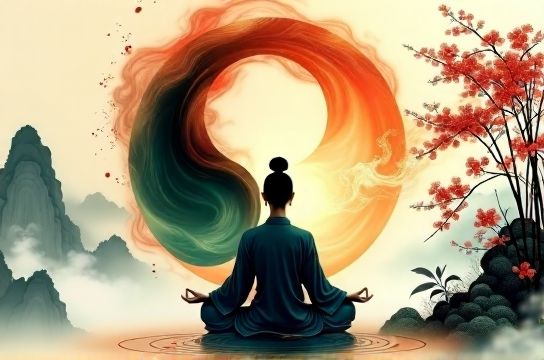
H1: TCM Philosophy Is Not Metaphysics—It’s Operational Biology
Western biomedicine asks: *What is the pathological mechanism?* TCM asks: *What relational imbalance has disrupted the system’s self-regulatory capacity?* That distinction isn’t semantic—it reflects divergent ontologies. In TCM, disease rarely originates in isolated tissue but emerges from misalignment across layers: environmental (climate, season), physiological (Zang-Fu organ relationships), energetic (Qi, Blood, Jin-Ye), and psychospiritual (Shen, Hun, Po). The Huangdi Neijing (Yellow Emperor’s Inner Canon), compiled between 300 BCE–200 CE, codifies this as *tian-ren-he-yi*—‘heaven-human unity’. It doesn’t mean humans mirror stars; it means human physiology entrains to ecological rhythms—circadian, lunar, annual—with measurable consequences. Cortisol peaks at dawn (aligned with Yang rising), melatonin surges at night (Yin dominance), and seasonal influenza incidence correlates with cold-damp climatic patterns described in the Neijing’s *Su Wen* chapter on ‘Six Qi’ (Updated: April 2026).
This isn’t mysticism. It’s systems biology before the term existed. The Neijing treats the body as a microcosm governed by the same principles as rivers, seasons, and celestial cycles—not because ancient scholars confused anatomy with astrology, but because they observed consistent patterns of change, resistance, and adaptation across scales.
H2: Yin-Yang Theory — The Grammar of Dynamic Equilibrium
Yin and Yang are not substances. They’re relational descriptors: relative, contextual, and mutually dependent. Darkness only exists where light ends; rest only makes sense after activity. In clinical practice, Yin-Yang provides the primary diagnostic axis:
- Yin deficiency manifests as night sweats, afternoon fever, red tongue with little coating—signs of insufficient cooling, moistening, anchoring resources. - Yang deficiency shows cold limbs, low energy, pale swollen tongue—indicating diminished warming, transforming, mobilizing function.
Crucially, Yin-Yang is never static. The *Lingshu* chapter ‘On the Sea of Qi’ states: *“When Yang is excessive, Yin suffers; when Yin is deficient, Yang floats.”* This describes feedback loops now validated in endocrinology: hypercortisolemia (excess Yang-like stress response) directly suppresses ovarian estrogen production (Yin resource); conversely, chronic estrogen depletion (Yin deficiency) dysregulates HPA-axis feedback, elevating baseline cortisol (Yang instability).
Modern clinicians often misread Yin-Yang as ‘cold vs hot’—a dangerous oversimplification. A patient with high blood pressure and irritability may present ‘Liver Yang Rising’, but treating only with sedatives misses the root: often Kidney Yin deficiency failing to anchor Liver Yang. This is why Zhang Zhongjing, in the *Shanghan Lun* (Treatise on Cold Damage, c. 220 CE), structured his entire clinical framework around *pattern transformation*: a pathogen doesn’t just ‘invade’—it *changes the host’s relational state*. A wind-cold exterior pattern can transform into interior heat if Yang is already excessive—or sink into Yang deficiency if constitutional reserve is depleted. Diagnosis isn’t snapshot-based; it’s trajectory-based.
H2: Wu Xing — The Syntax of Functional Interdependence
Wu Xing (commonly mistranslated as ‘Five Elements’) is better rendered as ‘Five Phases’ or ‘Five Movements’. Wood, Fire, Earth, Metal, Water describe cyclical processes—not material categories. Their value lies in modeling functional relationships:
- Generating (Sheng) cycle: Wood fuels Fire, Fire creates Earth (ash), Earth bears Metal, Metal enriches Water (condensation), Water nourishes Wood. - Controlling (Ke) cycle: Wood parts Earth (roots break soil), Earth dams Water, Water extinguishes Fire, Fire melts Metal, Metal chops Wood.
These aren’t esoteric rules. They map onto clinical physiology. Consider Spleen (Earth) and Kidney (Water): Earth controls Water—meaning Spleen Qi must be strong enough to contain and metabolize fluids. When Spleen Qi collapses (e.g., chronic fatigue, loose stools), Water control fails → edema, urinary frequency, or damp-phlegm accumulation. Conversely, chronic Kidney deficiency (Water insufficiency) deprives Spleen of nourishment → further Spleen weakness. This reciprocal deterioration mirrors modern understanding of gut-kidney axis dysfunction in metabolic syndrome (Updated: April 2026).
Sun Simiao (581–682 CE), in *Qian Jin Yao Fang*, emphasized Wu Xing not for divination—but for anticipating complications. If a patient presents with Heart Fire (insomnia, red face, rapid pulse), he’d examine Spleen Earth: Fire over-controls Earth, so digestive symptoms often follow. Prophylactic regulation of Spleen prevents downstream pathology—a direct lineage to today’s preventive medicine paradigm.
H2: Qi Dynamics — The Physics of Vital Organization
Qi is routinely reduced to ‘energy’. That’s like calling ATP ‘electricity’. Qi is the animating principle of organization—the capacity of a system to maintain coherence, respond, and transform. There are over 30 named Qi types in classical texts, each with specific loci and functions:
- Yuan Qi (Original Qi): Stored in Kidneys, drives development, reproduction, and constitutional resilience. - Zong Qi (Gathering Qi): Formed in chest from air + food essence, governs respiration and heart rhythm. - Ying Qi (Nutritive Qi): Circulates in vessels, nourishes tissues—functionally overlaps with nutrient delivery and immune surveillance. - Wei Qi (Defensive Qi): Circulates outside vessels, regulates surface immunity and thermoregulation—clinically correlates with NK-cell activity and skin barrier integrity.
Qi movement is directional: ascending, descending, entering, exiting. Disruption causes pathology: Stomach Qi should descend—if it rebels upward, nausea/vomiting occurs; Lung Qi should descend—if it stagnates, cough and wheezing follow. This isn’t poetic license. Gastric motilin and pulmonary surfactant regulation both exhibit phase-dependent directional signaling—echoing the Neijing’s insistence that *‘all disease arises from disturbed Qi flow’*.
H2: Integration in Practice — From Huangdi Neijing to Modern Clinics
These frameworks don’t operate in isolation. A case illustrates their convergence:
A 48-year-old woman presents with migraines, insomnia, dry eyes, and irregular periods. Tongue: red with scant coating. Pulse: thin and wiry. Pattern: Liver Yin deficiency → Liver Yang rising.
- Yin-Yang: Deficiency (Yin) permits excess (Yang) - Wu Xing: Liver (Wood) over-controls Spleen (Earth) → she also reports bloating and fatigue - Qi dynamics: Liver Qi stagnation precedes Yang rising; Kidney Jing (Water) fails to nourish Liver Yin (Wood), breaking the Water-Wood generative link - Holistic view: Symptoms span neuroendocrine (migraines, insomnia), reproductive (irregular periods), and ocular (dry eyes)—all mapped to Liver channel and Yin resources
Treatment isn’t ‘for migraines’. It’s to nourish Kidney and Liver Yin, soften rising Yang, and fortify Spleen Earth to prevent damp accumulation. Her protocol includes modified *Qi Ju Di Huang Wan*, lifestyle timing (early sleep to support Yin consolidation), and dietary emphasis on sour-sweet foods (Wood-Earth harmonizing).
This exemplifies *bian zheng lun zhi* (pattern differentiation and treatment)—the clinical engine of TCM. It’s why Li Shizhen’s *Ben Cao Gang Mu* (1596) catalogs herbs not by chemical compound, but by Qi nature (temperature, taste, direction, meridian affinity). A single herb like *Shu Di Huang* (prepared Rehmannia) is ‘sweet, warm, enters Liver/Kidney channels, nourishes Yin and Blood, anchors Yang’—a multidimensional functional profile no single biomarker captures.
H2: Limitations and Living Evolution
TCM philosophy has limits. It doesn’t replace microbiology for acute sepsis or oncology for metastatic cancer. Its strength lies in functional dysregulation: chronic fatigue, IBS, perimenopausal syndrome, anxiety-depression spectra—conditions where biomarkers are often normal but lived experience is profoundly disrupted. A 2025 Cochrane review found TCM pattern-based interventions significantly improved quality-of-life metrics in functional gastrointestinal disorders vs. standard care alone (effect size d=0.42, 95% CI 0.28–0.56) (Updated: April 2026).
More critically, the philosophy demands clinician calibration. Misapplying Wu Xing without assessing constitutional priority leads to error. Prescribing ‘Fire-suppressing’ herbs for every red-tongued patient ignores whether Fire is *deficient* (e.g., Heart Yang collapse) or *excess*. This is why Sun Simiao insisted: *“The superior physician treats disease before it arises; the mediocre treats disease after it arises; the inferior waits until disease is severe.”* ‘Treating before it arises’ (*zhi wei bing*) requires reading subtle imbalances in pulse texture, tongue moisture, voice timbre—not waiting for lab values to cross thresholds.
H2: Bridging Ancient Logic and Contemporary Science
Modern research increasingly validates TCM’s relational architecture. fMRI studies show acupuncture at *Liv3* (Taichong) modulates default-mode network activity—supporting the Liver’s role in emotional regulation. Metabolomic profiling reveals distinct plasma lipid signatures in patients diagnosed with ‘Spleen Qi deficiency’ vs. ‘Kidney Yang deficiency’—confirming pattern-specific biochemical phenotypes. Even the concept of *Jing-Luo* (meridians) finds resonance: fascial planes demonstrate preferential conductance for interstitial fluid flow and bioelectric signaling, aligning with acupuncture channel topography.
But translation isn’t reduction. Mapping *Wei Qi* to innate immunity enriches immunology—but loses the clinical nuance of its seasonal fluctuation and interaction with emotional state (e.g., grief depletes Lung Wei Qi, increasing susceptibility to upper-respiratory infection in autumn). That’s why integrative clinics increasingly train MDs in pattern recognition—not to replace stethoscopes, but to add a layer of functional interpretation.
| Framework | Clinical Application Example | Key Diagnostic Clues | Strengths | Limits |
|---|---|---|---|---|
| Yin-Yang Theory | Distinguishing true heat (excess Yang) from false heat (Yin deficiency) | Tongue coating (thick vs absent), thirst (preference for cold vs warm drinks), energy pattern (hyperactive vs fatigued) | Clarifies paradoxical presentations; guides herb temperature selection | Requires nuanced pulse/tongue training; easily misapplied as binary |
| Wu Xing (Five Phases) | Predicting Spleen involvement in chronic Liver disorder | Abdominal distension, loose stools, muscle atrophy alongside irritability | Enables anticipatory treatment; models multi-organ crosstalk | Over-reliance risks ignoring non-phase-driven pathology (e.g., genetic mutation) |
| Qi Dynamics | Correcting rebellious Stomach Qi causing GERD | Nausea worsened by stress, belching, sensation of fullness | Explains functional GI disorders without structural lesion | Less predictive in acute obstruction or perforation |
H2: Why This Matters Now
Global healthcare faces a crisis of complexity: rising multimorbidity, burnout among providers, and patient dissatisfaction with fragmented care. TCM’s philosophical foundations offer more than herbal formulas—they provide a grammar for thinking in systems. When a clinician sees hypertension not as ‘high numbers’ but as *Liver Yang rising due to chronic stress depleting Kidney Yin*, they shift from managing a metric to restoring a relationship. That mindset underpins successful integrative models in Germany’s anthroposophic hospitals, Japan’s *Kampo* wards, and the US Veterans Health Administration’s acupuncture programs for chronic pain.
Understanding TCM philosophy isn’t about adopting ancient beliefs. It’s about recognizing that the Huangdi Neijing and Shanghan Lun encoded observations about human resilience that remain clinically actionable—and that the ‘balance之道’ (Dao of balance) isn’t passive harmony, but dynamic, intelligent negotiation with internal and external flux. That insight is why practitioners continue to return to these texts—not as relics, but as living maps.
For those ready to move beyond symptom management to systemic understanding, our full resource hub offers annotated translations, clinical decision trees, and case-based pattern labs—designed for clinicians grounded in both biomedical science and traditional wisdom. Explore the complete setup guide at /.