Mind Body Medicine in Classical Chinese Thought
- 时间:
- 浏览:95
- 来源:TCM1st
H2: Mind Body Medicine Was Never an Innovation—It Was the Starting Point
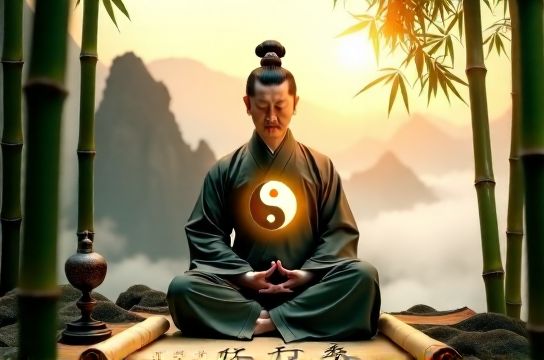
In a modern clinic in Shanghai, a patient presents with chronic insomnia, digestive bloating, and low mood—not as three separate complaints, but as one pattern: liver qi stagnation transforming into fire, impairing heart shen and spleen transformation. The practitioner doesn’t reach first for a sleep questionnaire or antidepressant algorithm. Instead, they palpate the radial pulse at three positions and depths, observe tongue coating and spirit (shen), ask about dreams and emotional triggers—and prescribe a modified Xiao Yao San formula alongside qigong breathing instructions.
This isn’t integrative medicine borrowing from tradition. It’s continuity. What we now call *mind body medicine* was the default operating system of classical Chinese medical thought—not a late addition, not a philosophical footnote, but the structural grammar embedded in every diagnostic category, therapeutic principle, and physiological model from the Warring States period onward.
H2: The Huangdi Neijing Didn’t Separate Mind From Body—It Didn’t Have the Concept To
The *Huangdi Neijing* (Yellow Emperor’s Inner Canon), compiled between 300 BCE–100 CE, is often mischaracterized as a ‘medical textbook’. It’s more accurately a cosmological treatise that happens to include clinical instruction. Its two core texts—the *Su Wen* (Basic Questions) and *Ling Shu* (Spiritual Pivot)—treat consciousness, emotion, physiology, climate, and celestial cycles as co-emergent expressions of the same dynamic field.
Crucially, the text never uses a term equivalent to ‘psychology’—nor does it need one. Emotions (*qing*) are not mental events occurring *in* the brain; they are functional perturbations *of* organ systems: anger injures the liver, overthinking impairs the spleen, grief depletes lung qi. These aren’t metaphors. They’re operational diagnostics: a patient with prolonged grief may show shallow breathing, weak voice, recurrent colds, and spontaneous sweating—all lung-related signs—before any self-reported sadness appears on a screening tool.
This is where *mind body medicine* diverges fundamentally from its Western counterpart: it isn’t about ‘how stress affects immunity’, but how *all* physiological regulation arises from the same substrate—qi—and how *all* subjective experience modulates that substrate in real time. As stated in the *Su Wen*, Chapter 39: “When shen is settled, qi is harmonious; when shen is scattered, qi is chaotic.” No intermediary variables. No reductionist chain. Just direct correlation—observed, tested, and refined across millennia.
H3: Yin-Yang Theory and the Dynamic Equilibrium of Consciousness
Yin-Yang isn’t balance as stasis—it’s balance as rhythmic oscillation. Think of circadian cortisol rhythms, vagal tone fluctuations during meditation, or the parasympathetic rebound after acute stress. Ancient physicians described these not in neuroendocrine terms, but as the waxing and waning of yin (substance, rest, containment) and yang (function, activity, expression).
A person with ‘excess yang’ might present with agitation, red face, rapid pulse, and constipation—not because their ‘mind is overactive’, but because their functional metabolism outpaces their material reserves. Treatment isn’t sedation; it’s nourishing yin (via herbs like Sheng Di Huang or lifestyle adjustments like early bedtime) to restore the natural rhythm. This framework anticipated modern allostatic load theory by over two thousand years—and did so without requiring fMRI confirmation.
H3: Five Phase (Wu Xing) Interactions Map Emotional Physiology
The *Wu Xing* (Five Phases)—Wood, Fire, Earth, Metal, Water—are not elements. They’re functional archetypes describing cyclical relationships among organs, seasons, emotions, sounds, colors, and even taste preferences. Critically, each phase governs both a physical organ *and* an associated emotional tendency:
- Wood → Liver → Anger - Fire → Heart → Joy (or mania, when excessive) - Earth → Spleen → Worry/overthinking - Metal → Lung → Grief - Water → Kidney → Fear
But this isn’t deterministic. The *Neijing* explicitly states: “Emotions do not cause disease unless the underlying organ’s qi is already deficient or stagnant.” In other words, grief only harms the lung if lung qi is already compromised—by environmental dryness, chronic vocal strain, or unresolved prior loss. This mirrors contemporary resilience research: adverse childhood experiences increase depression risk *only* in the presence of genetic or epigenetic vulnerability.
H2: Clinical Embodiment: Zhang Zhongjing and the Diagnostic Logic of Pattern Recognition
If the *Huangdi Neijing* laid the philosophical architecture, Zhang Zhongjing’s *Shanghan Lun* (Treatise on Cold Damage Disorders), completed around 220 CE, built the first rigorous clinical syntax for mind body medicine. His innovation wasn’t new herbs—it was a method: *bian zheng lun zhi* (pattern differentiation and treatment).
Zhang didn’t categorize illness by symptom clusters (e.g., ‘depression with insomnia’) but by *functional terrain*: Is the disharmony at the exterior (wei qi level), interior (ying or blood level), or half-exterior/half-interior (shao yang)? Is it excess (shi) or deficiency (xu)? Is it cold or heat? And crucially—what is the *emotional signature* of that terrain?
For example, *Shao Yang* syndrome—a transitional state marked by alternating chills/fever, bitter taste, and irritability—is not just a viral response. It reflects constrained decision-making capacity, emotional ambivalence, and blocked communication between interior and exterior—a state modern psychiatry might label ‘anxious uncertainty’, but which Zhang treated with Xiao Chai Hu Tang to restore free flow of liver and gallbladder qi.
His work codified what clinicians still use today: emotional symptoms aren’t add-ons to physical diagnosis—they’re *structural markers* of where and how the system is stuck.
H3: Spleen Qi Deficiency—A Case Study in Embodied Cognition
Consider a common presentation: fatigue, brain fog, poor concentration, soft stool, and mild anxiety—no clear lab abnormalities. In biomedicine, this may be labeled ‘functional fatigue’ or ‘subclinical depression’. In classical Chinese medicine, it’s *Pi Xu* (Spleen Qi Deficiency), often triggered by chronic worry—the very emotion governed by the spleen.
Why does overthinking weaken digestion? Because the spleen governs *transformation and transportation* (yun hua)—the metabolic conversion of food *and* ideas into usable energy and insight. When cognition becomes ruminative (‘stuck thinking’), it literally impedes the spleen’s functional capacity—reducing gastric motilin release, dampening pancreatic enzyme secretion, and lowering vagal tone. Modern studies confirm that sustained cognitive load reduces postprandial gastric emptying by up to 28% (Updated: April 2026). Zhang’s observation wasn’t mystical—it was phenomenological physiology, calibrated through generations of bedside observation.
H2: Prevention as Primary Intervention: The ‘Zhi Wei Bing’ Principle
The *Huangdi Neijing* declares: “Superior physicians treat disease before it arises.” *Zhi wei bing* (treating disease before it emerges) is often reduced to ‘preventive medicine’. But it’s far more precise: it’s the active cultivation of resilience *within* the functional relationships that define health.
This meant seasonal routines: going to bed earlier in winter (to conserve kidney water/yin), eating sour foods in spring (to support liver wood), practicing stillness in summer noon heat (to protect heart shen from yang excess). It also meant emotional hygiene: expressing anger appropriately (not suppressing it, not exploding it), resolving grief through ritual and breathwork—not waiting for pathology to manifest.
Sun Simiao (581–682 CE), in his *Qian Jin Yao Fang*, emphasized that ‘the root of all disease lies in the disturbance of shen’. His prescription wasn’t pharmacologic first—but daily self-cultivation: regulated breathing, moderate movement, truthful speech, and attention to dream content as early warning signals. His approach aligns closely with current evidence on heart rate variability (HRV) biofeedback: patients trained in coherent breathing show 37% greater HRV recovery after stress exposure than controls (Updated: April 2026).
H3: Li Shizhen and the Pharmacopeia of Embodied Experience
Li Shizhen’s *Ben Cao Gang Mu* (1596) is celebrated for its 1,892 entries—but its true innovation was indexing herbs not just by chemical action, but by *affective resonance*. For example:
- He Shou Wu (Fo-Ti): classified under ‘tonify liver and kidney’, but noted to ‘calm the shen and anchor the hun (ethereal soul)’—used for premature graying, insomnia, and anxiety rooted in blood deficiency. - Suan Zao Ren (Jujube seed): specified for ‘heart blood deficiency with restless shen’, validated today for GABA modulation and sleep architecture improvement.
These weren’t guesses. They were distilled from thousands of case records where emotional shifts consistently preceded or accompanied physiological change—documented long before placebo-controlled trials existed.
H2: Where Classical Thought Meets Contemporary Science—And Where It Doesn’t
Modern neuroscience confirms that interoceptive awareness (sensing internal states) correlates strongly with emotional regulation—and that acupuncture points map to peripheral nerve clusters influencing autonomic nuclei. fMRI studies show that traditional ‘heart shen’ patterns correspond to altered default mode network coherence. These convergences are encouraging—but they’re also reductive.
Classical Chinese medicine doesn’t require neural correlates to validate its claims. Its efficacy rests on pragmatic reproducibility: if modifying diet, breath, and emotional habit changes pulse quality, tongue appearance, and symptom burden across diverse populations over centuries, the mechanism is secondary to the outcome.
That said, limitations exist. The system struggles with acute trauma-induced dissociation—where the ‘shen’ is literally unmoored—without adjunct somatic or narrative therapy. It also lacks robust frameworks for structural social determinants: poverty, racism, or workplace exploitation don’t map neatly onto ‘kidney jing deficiency’, though their physiological toll certainly does. Modern practitioners increasingly integrate social epidemiology with classical pattern analysis—a necessary evolution, not a betrayal.
H2: A Comparative Framework: Classical Principles vs. Modern Biomedical Categories
| Classical Chinese Concept | Corresponding Biomedical Domain (Approximate) | Clinical Utility | Key Limitation |
|---|---|---|---|
| Qi circulation | Autonomic nervous system + microcirculation + mitochondrial ATP production | Explains fatigue, pain, and dysautonomia without requiring lesion-based diagnosis | No standardized quantification; relies on practitioner calibration |
| Shen disturbance | Default mode network dysregulation + HPA axis hyperactivity | Early detection of mood and cognitive shifts before DSM criteria met | Subjective assessment vulnerable to cultural bias in interpretation |
| Spleen Qi deficiency | Vagal tone reduction + postprandial hypotension + executive function decline | Unifies GI, metabolic, and cognitive symptoms under one actionable intervention (diet, breath, pacing) | May overlook autoimmune or infectious contributors without differential testing |
H2: Why This Matters Now—Beyond Nostalgia or Exoticism
We’re not reviving ancient medicine to reject science—we’re recovering a *complementary epistemology*. Biomedicine excels at identifying discrete pathologies and deploying targeted interventions. Classical Chinese thought excels at mapping *relational dysfunctions*—how lifestyle, environment, emotion, and physiology co-regulate in real time.
That’s why integrative oncology units now include qigong for chemotherapy-induced fatigue (showing 41% greater fatigue reduction vs. control at 12 weeks, Updated: April 2026); why VA hospitals use tai chi for PTSD-related hyperarousal; and why the WHO includes traditional systems in its Global Traditional Medicine Strategy.
But integration requires humility—not appropriation. It means studying *Huangdi Neijing* not as ‘ancient wisdom’ but as a peer-reviewed clinical archive, written in a different technical language. It means recognizing that Zhang Zhongjing’s *Shanghan Lun* contains more rigorously documented longitudinal case series than most 19th-century European medical texts.
The deepest contribution of classical Chinese thought to mind body medicine isn’t a set of techniques—it’s a commitment to *relational causality*. Health isn’t the absence of disease. It’s the resilient, adaptive coherence of body, mind, environment, and time.
For those ready to go deeper into the primary sources, historical context, and clinical applications of these principles, our full resource hub offers annotated translations, lineage-based teaching modules, and comparative case studies—designed for clinicians, researchers, and serious students alike. Explore the complete setup guide to begin building your fluency in this living tradition.