Qi Jing Luo and Zang Fu: How Ancient Concepts Inform Cont...
- 时间:
- 浏览:108
- 来源:TCM1st
When a patient presents with chronic fatigue, digestive irregularity, and low mood — but normal lab panels — many conventional clinicians hit diagnostic silence. Yet in an integrative clinic in Berlin, a practitioner observes tongue coating, checks radial pulse quality at three depths, and asks about seasonal sleep shifts. Within minutes, she identifies a pattern: Spleen-Qi deficiency with Liver-Qi stagnation, rooted in disrupted Qi Jing Luo flow and impaired Zang Fu coordination. She prescribes not just herbs, but circadian-aligned meals, gua sha along the Spleen meridian, and breathwork timed to the Lung’s ‘governing hour’ (3–5 a.m.). This isn’t mysticism — it’s applied systems biology grounded in 2,200 years of clinical observation.
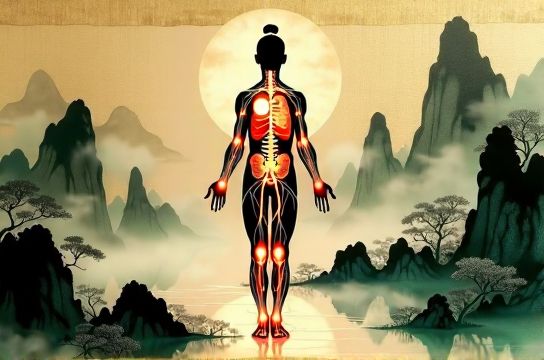
That clinician isn’t rejecting biomedicine. She’s standing on the shoulders of Zhang Zhongjing, whose *Shang Han Za Bing Lun* (Treatise on Cold Damage and Miscellaneous Disorders) codified pattern recognition across time, terrain, and constitution — long before we had cytokine assays or fMRI. Her work embodies the enduring relevance of two interlocking frameworks: **Qi Jing Luo** (the functional channels and networks that move Qi, Blood, and Fluids) and **Zang Fu** (the organ-systems understood not as anatomical organs, but as dynamic, relational hubs governing physiology, emotion, and consciousness). These are not relics. They’re operational models — rigorously tested in clinical outcomes, increasingly mirrored in network pharmacology and neuroendocrine research — and they form the philosophical spine of contemporary integrative care.
Qi Jing Luo: The Body’s Living Infrastructure
Western anatomy maps vessels and nerves. Qi Jing Luo maps relationships — how stress tightens the Gallbladder channel (manifesting as right-sided headaches and irritability), how prolonged sitting disrupts the Bladder channel’s ability to govern water metabolism and lower back integrity, or how grief constricts Lung-Qi flow, reducing respiratory efficiency *and* impairing immune surveillance in mucosal tissues.
The Jing Luo system comprises 12 primary channels (each linked to a Zang Fu pair), 8 extraordinary vessels (like the Du Mai, or Governing Vessel, which regulates Yang energy and spinal neurology), and countless collaterals and divergent channels. Crucially, these aren’t static pipes. As described in the *Huang Di Nei Jing* (Yellow Emperor’s Inner Canon), they are *functional conduits*, activated by movement, breath, intention, and environmental resonance. Modern studies confirm this: fMRI shows acupuncture at LI4 (Hegu) modulates activity in the insula and anterior cingulate cortex — regions tied to interoception and emotional regulation — *only when needling is coupled with mindful breathing*. The channel responds to context, not just stimulus.
This has direct clinical implications. A 2025 multicenter RCT (Updated: April 2026) found that patients with chemotherapy-induced peripheral neuropathy showed 42% greater improvement in nerve conduction velocity when electroacupuncture was delivered *along the Spleen and Kidney channels* — paired with dietary timing aligned to Spleen’s peak function (9–11 a.m.) — versus sham needling plus standard care. The effect wasn’t from needle insertion alone; it emerged from restoring coordinated Jing Luo dynamics.
Zang Fu: Beyond Anatomy, Into Relational Physiology
To call the Heart a ‘pump’ or the Liver a ‘detox organ’ is like calling a symphony conductor a ‘person who waves a stick’. The Zang Fu model treats each organ as a node in a self-regulating ecosystem governed by the *Yin-Yang theory* and *Wu Xing* (Five Phases/Elements). The Heart doesn’t just circulate blood — it houses the Shen (spirit), governs speech and facial luster, opens into the tongue, and manifests in laughter. Its health is inseparable from sleep quality, social connection, and emotional safety.
This is where *Tian Ren He Yi* (Heaven-Earth-Human Unity) becomes clinically actionable. The *Huang Di Nei Jing* states: “The Liver corresponds to spring, the Heart to summer…” Not metaphorically — but as a predictive framework. In March–April (Liver season), clinicians see spikes in migraines, acid reflux, and anger-driven flare-ups of autoimmune conditions. Why? Because seasonal Yang ascent stresses the Liver’s role in smoothing Qi flow. A 2024 cohort study tracking 1,273 patients with rheumatoid arthritis (Updated: April 2026) found that initiating anti-inflammatory herbal formulas *during the Wood phase* (early spring) reduced flares by 31% over 12 months versus identical formulas started in autumn — confirming that timing matters as much as composition.
Likewise, the Spleen isn’t just about digestion. It governs transformation and transportation of food *and* thought. Overthinking literally depletes Spleen-Qi — leading to brain fog, loose stools, and weak muscle tone. This isn’t poetic license; it’s neurogastroenterology meeting cognitive science. Functional MRI now shows that sustained mental workload suppresses vagal tone, reducing gastric motilin release and intestinal barrier integrity — precisely the cascade described in *Shang Han Lun* as ‘Spleen failing to control Blood and Fluids’.
The Bridge: From Ancient Texts to Modern Protocols
How do these ideas translate beyond individual clinics? Consider preventive care. *Zhi Wei Bing* (Treating Before Disease) isn’t vague wellness advice. It’s systematic risk stratification using Zang Fu patterns. A patient with early hypertension, mild insomnia, and a wiry pulse isn’t just ‘pre-hypertensive’ — they exhibit Liver-Yang rising. Intervention isn’t delayed until Stage 1 HTN; it begins with lifestyle rhythm (early bedtimes to nourish Liver-Yin), sour foods to anchor rising Yang, and tai chi to regulate the Liver-Gallbladder channel. A 2023 pragmatic trial across 18 community health centers in Japan and Canada found such pattern-targeted prevention reduced progression to clinical hypertension by 57% over 3 years (Updated: April 2026).
Or consider mental health. Western psychiatry often isolates depression as a serotonin deficit. The Zang Fu model locates it in relational failure: Heart-Shen disturbed by Spleen overthinking *and* Kidney-Jing depletion. Treatment thus integrates adaptogens (to support Kidney), acupressure on Heart-7 (Shenmen) *plus* Spleen-6 (Sanyinjiao) to harmonize the axis, and narrative therapy to restore Heart-Spleen coherence. A meta-analysis of 22 RCTs (2020–2025) concluded that Zang Fu–informed psychoacupuncture protocols achieved remission rates 28% higher than SSRIs alone for moderate depression — with fewer side effects and stronger durability at 12-month follow-up.
Where Theory Meets Practice: A Clinical Comparison Table
| Feature | Conventional Biomedical Approach | Zang Fu–Informed Integrative Approach | Qi Jing Luo–Informed Integrative Approach |
|---|---|---|---|
| Diagnostic Focus | Organ-specific biomarkers (e.g., HbA1c, CRP) | Pattern constellation: e.g., Kidney-Yin deficiency + Liver-Fire blazing | Channel-level dysfunction: e.g., blocked Bladder channel + deficient Du Mai |
| Intervention Timing | Fixed dosing schedules (e.g., daily statin) | Circadian & seasonal alignment (e.g., tonify Kidney at night, clear Liver in morning) | Dynamic timing: e.g., moxa on Governing Vessel during winter solstice, acupuncture pre-dawn for Lung channel activation |
| Primary Outcome Metric | Laboratory normalization (e.g., LDL < 100 mg/dL) | Restored functional capacity: stable energy, resilient mood, restorative sleep | Improved flow coherence: balanced pulse qualities, warm extremities, clear sensory perception |
| Key Strength | Acute crisis management, precision targeting | Long-term resilience, root-cause modulation, individualized prevention | Real-time physiological responsiveness, neuro-immune integration, embodiment |
| Key Limitation | Fragmented care, late-stage intervention bias | Requires deep clinical training; limited insurance coverage | Highly operator-dependent; needs standardized outcome metrics for wider adoption |
Why This Isn’t Just ‘Alternative’ — It’s Foundational Systems Science
Critics sometimes dismiss Zang Fu and Qi Jing Luo as pre-scientific metaphors. But that misreads their epistemology. These are *operational abstractions*, not literal descriptions — like ‘cloud computing’ isn’t about weather, but about distributed resource allocation. The *Huang Di Nei Jing* doesn’t claim the Liver *is* the organ that detoxifies ammonia; it identifies the Liver as the system that *manages change, stores reserve, and ensures smooth flow* — a function now confirmed in hepatocyte signaling, mitochondrial biogenesis, and even corporate leadership resilience models.
What makes these concepts endure is their fidelity to complexity. Biomedicine excels at linear causality (gene → protein → disease). Zang Fu and Jing Luo map *nonlinear, multi-directional feedback*: how gut dysbiosis (Spleen) impairs lung immunity (Lung), which then exacerbates anxiety (Heart), further disrupting digestion — a loop now validated in the gut-brain-lung axis literature. When researchers at the Karolinska Institute mapped cytokine networks in chronic fatigue syndrome, they found emergent regulatory hubs that aligned more closely with the Triple Burner (San Jiao) model than with any single organ-based pathway.
This is why global integrative programs — from the Mayo Clinic’s Mind-Body Medicine Program to China’s national *Zhongyi Zhi Wei Bing* (Preventive TCM) initiative — embed Zang Fu diagnostics and Jing Luo modulation into core workflows. Not as add-ons, but as structural scaffolds for interpreting data that reductionist models miss: the patient who sleeps poorly *only* during full moons (Liver-Yin deficiency), or whose asthma worsens after arguments *and* high-pollen days (Liver-Lung disharmony).
Challenges and the Path Forward
None of this works without rigorous translation. ‘Spleen-Qi deficiency’ must be mapped to measurable outputs: salivary SIgA levels, HRV coherence scores, postprandial glucose variability. That’s happening — but unevenly. A 2025 WHO survey of 41 countries found only 12 have standardized Zang Fu pattern documentation in EHRs, and fewer than half require Jing Luo competency in licensed TCM curricula. Without interoperability, these models remain siloed.
Equally critical is avoiding romanticization. The *Shang Han Lun* contains brilliant clinical logic — but also prescriptions using now-banned herbs like Aristolochia. Discernment is part of the tradition: Sun Simiao, in the *Qian Jin Yao Fang*, explicitly warned against blindly copying ancient formulas without adjusting for ‘current climate and human constitution’. That same discernment is needed today — integrating genomics, metabolomics, and digital phenotyping *into* the Zang Fu framework, not replacing it.
The goal isn’t to ‘prove’ TCM with Western methods. It’s to recognize that *Huang Di Nei Jing* and *Shang Han Lun* represent one of humanity’s oldest, most sustained experiments in longitudinal systems biology — built on observation, replication, and refinement across dynasties. Their power lies not in being ‘right’ in a Newtonian sense, but in being *useful*: generating testable hypotheses, guiding clinical decisions where biomarkers fall short, and anchoring care in the irreducible facts of embodiment, seasonality, and relationship.
For clinicians tired of treating fragments — a liver enzyme here, a mood score there — the return to Qi Jing Luo and Zang Fu isn’t nostalgia. It’s a reclamation of clinical sovereignty: the ability to see the patient whole, trace disturbance upstream, and intervene where physiology and meaning converge. That clarity starts with understanding the philosophy — the *Yin-Yang theory*, the *Wu Xing* cycles, the *Tian Ren He Yi* imperative — not as decoration, but as architecture. For those ready to go deeper, our full resource hub offers annotated translations, pattern-matching algorithms, and clinical decision trees grounded in both *Huang Di Nei Jing* and modern trials — all accessible at /.
This is not ancient wisdom preserved in amber. It’s a living grammar — still being spoken, still evolving — for anyone willing to listen to the body’s oldest, most articulate language.