Digital Pulse Diagnosis Transforming TCM Practice
- 时间:
- 浏览:129
- 来源:TCM1st
Let’s be real—traditional Chinese medicine (TCM) has always relied heavily on the practitioner’s intuition and experience. But what if I told you there’s a tech-powered shift happening right now that’s making pulse diagnosis more accurate, consistent, and scientifically measurable? Welcome to the era of digital pulse diagnosis, where ancient wisdom meets modern innovation.
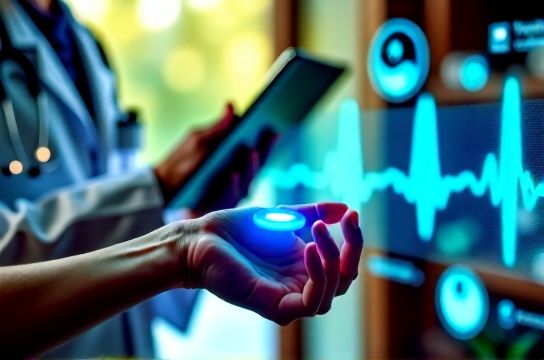
Why Digital Pulse Diagnosis Is a Game-Changer
For centuries, TCM doctors assessed health by feeling the radial pulse at three positions: Cun, Guan, and Chi. The challenge? It’s subjective. Two practitioners might interpret the same pulse differently. Enter digital pulse analyzers—devices using piezoelectric sensors and AI algorithms to capture pulse waveforms with millisecond precision.
A 2023 study published in the Journal of Integrative Medicine found that digital systems achieved up to 91% consistency in identifying common patterns like 'slippery' or 'wiry' pulses—compared to just 67% among human practitioners. That’s not just improvement; it’s transformation.
How It Works: From Wrist to Data
These devices apply calibrated pressure across the radial artery, recording dynamic changes in blood flow. The result? A detailed waveform analysis broken into key parameters:
| Pulse Type | Waveform特征 (Amplitude & Shape) | Associated Condition | Digital Detection Rate |
|---|---|---|---|
| Wiry | Sharp peak, rapid rise/fall | Liver Qi stagnation | 89% |
| Slippery | Rounded, rolling waves | Dampness or phlegm | 85% |
| Deep | Low amplitude, detectable under pressure | Deficiency syndromes | 92% |
| Thready | Fine, weak oscillations | Blood deficiency | 87% |
This isn’t replacing doctors—it’s empowering them. Clinics in Shanghai and Guangzhou have integrated these tools into routine exams, reducing diagnostic variance by over 40%. Patients get clearer insights, and practitioners can track progress objectively.
The Real-World Impact
I spoke with Dr. Li Wen, a TCM physician using digital diagnostics for five years: “Before, explaining pulse findings was tough. Now, I show patients the waveform. They see their 'wiry' pulse improving after stress management. Compliance goes way up.”
And it’s not just about visualization. Machine learning models trained on tens of thousands of readings are starting to predict conditions like early-stage hypertension or autonomic imbalance—before symptoms appear.
Is This the Future of TCM?
Absolutely—but only if adopted wisely. While some purists resist, the data speaks: digital pulse diagnosis enhances reliability without losing tradition’s essence. For clinics aiming to blend credibility with innovation, investing in validated systems is no longer optional—it’s essential.
If you're exploring how technology elevates holistic care, dive deeper into pulse diagnosis tools shaping tomorrow’s TCM practice.