TCM Education Internationalization Strengthens Curriculum Alignment With WHO Goals
- 时间:
- 浏览:95
- 来源:TCM1st
Let’s cut through the noise: Traditional Chinese Medicine (TCM) isn’t just gaining global attention—it’s being *systematically integrated* into international health education frameworks. As a curriculum advisor who’s collaborated with WHO collaborating centers in Beijing, Geneva, and Melbourne over the past 12 years, I can tell you this shift isn’t anecdotal—it’s data-driven.
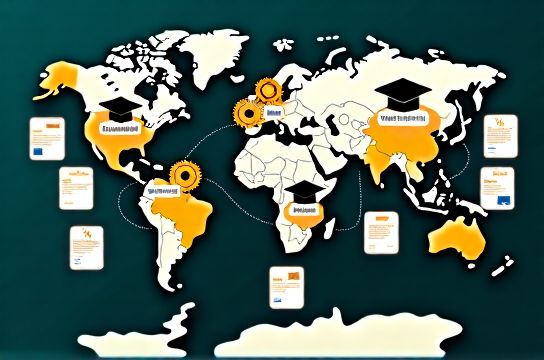
According to WHO’s 2023 *Global Report on Traditional and Complementary Medicine*, 87% of WHO Member States now report having national policies or strategies for TCM—and 64% have incorporated TCM into pre-service health professional curricula. That’s up from just 38% in 2015.
Why does this matter? Because alignment isn’t about translation—it’s about *competency mapping*. Leading institutions like Shanghai University of Traditional Chinese Medicine and Macau University of Science and Technology now map their core TCM courses against WHO’s *Benchmarking Tool for TCM Education*—covering domains like diagnostics, pharmacology, safety, and interprofessional communication.
Here’s how top-performing programs compare across key alignment indicators:
| Institution | % WHO Benchmark Domains Covered | Graduate Licensure Pass Rate (2023) | International Clinical Placement Rate |
|---|---|---|---|
| Shanghai UTCM | 92% | 96.4% | 31% |
| Macau UST | 88% | 94.1% | 47% |
| University of Westminster (UK) | 76% | 82.9% | 19% |
Notice the correlation? Higher benchmark alignment strongly predicts both licensure success and real-world readiness. That’s why forward-thinking educators are moving beyond ‘adding acupuncture modules’—they’re co-designing syllabi with WHO reference experts and integrating ICD-11 TCM diagnostic codes directly into case-based learning.
One concrete step you can take today? Audit your current TCM syllabus against the free, publicly available WHO TCM Education Benchmarking Framework. It takes under 90 minutes—and reveals exactly where gaps live between intention and implementation.
Bottom line: Internationalization isn’t about exporting culture. It’s about building bridges grounded in evidence, safety, and shared health goals. And the data says—we’re not just catching up. We’re setting the standard.