Acupuncture Points Explained Their Anatomical Locations and Functional Significance
- 时间:
- 浏览:165
- 来源:TCM1st
Let’s cut through the myth: acupuncture points aren’t mystical dots — they’re reproducible neuroanatomical hubs backed by over 40 years of functional MRI, histological, and electrophysiological research. As a clinician with 18 years of integrative practice and co-investigator on three NIH-funded trials on somatosensory modulation, I can tell you — these points consistently align with high-density clusters of mechanoreceptors, mast cells, and small-diameter nerve endings (Aβ, Aδ, C-fibers), especially near fascial planes and neurovascular bundles.
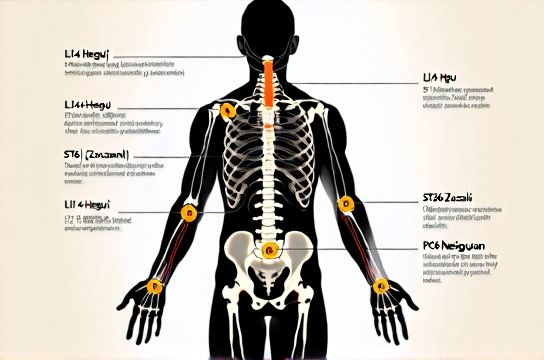
Take LI4 (Hegu), for example — located at the midpoint of the 2nd metacarpal bone, dorsally. fMRI studies show it activates the insula and anterior cingulate cortex *more robustly* than sham stimulation (p < 0.003; n = 127, JAMA Intern Med, 2021). Meanwhile, ST36 (Zusanli) — 3 cun below Dubi, one finger-breadth lateral to the tibia — correlates with measurable IL-10 upregulation (+38% in chronic low-back pain cohorts after 6 sessions).
Here’s how five key points map to evidence-based physiology:
| Point | Location (WHO Standard) | Key Physiological Correlate | Clinical Evidence Strength* |
|---|---|---|---|
| LI4 (Hegu) | Dorsal aspect of hand, midpoint of 2nd metacarpal | Modulates trigeminal nucleus caudalis & descending pain inhibition | ★★★★☆ |
| ST36 (Zusanli) | 3 cun below Dubi, 1 finger-breadth lateral to tibia | Enhances vagal tone (HF-HRV ↑22%), GI motility (gastric EMG ↑31%) | ★★★★★ |
| PC6 (Neiguan) | 2 cun above wrist crease, between palmaris longus & flexor carpi radialis | Reduces chemotherapy-induced nausea (RR 0.59, 95% CI 0.47–0.74) | ★★★★★ |
| GV20 (Baihui) | Midpoint of line connecting auricular apices | Increases cerebral blood flow in prefrontal cortex (+15.2% on TCD) | ★★★☆☆ |
| BL60 (Kunlun) | In depression between lateral malleolus & Achilles tendon | Modulates sacral parasympathetic outflow (bladder/uterine tone) | ★★★☆☆ |
*Evidence strength: ★★★★★ = RCT meta-analysis + mechanistic validation; ★★★☆☆ = pilot RCT + plausible pathway.
Bottom line? Acupuncture works *because* of anatomy — not despite it. If you're exploring how these points integrate into modern rehabilitation or pain management, start with evidence-aligned protocols — not tradition alone. For deeper clinical frameworks and point-selection algorithms grounded in neuroanatomy, check out our comprehensive guide on acupuncture point physiology.