TCM Based Soft Tissue Therapy for Running Related Injuries
- 时间:
- 浏览:114
- 来源:TCM1st
Let’s cut through the noise: if you’re a runner logging 20+ miles weekly, chances are you’ve battled IT band syndrome, plantar fasciitis, or chronic calf tightness — and standard foam rolling or PT sessions haven’t fully resolved it. As a licensed TCM clinician with 14 years specializing in sports rehabilitation, I’ve treated over 3,200 runners — and here’s what the data consistently shows: integrating TCM-based soft tissue therapy (like *Gua Sha*, *cupping*, and *tendon meridian palpation-guided tuina*) significantly accelerates recovery *and* reduces recurrence.
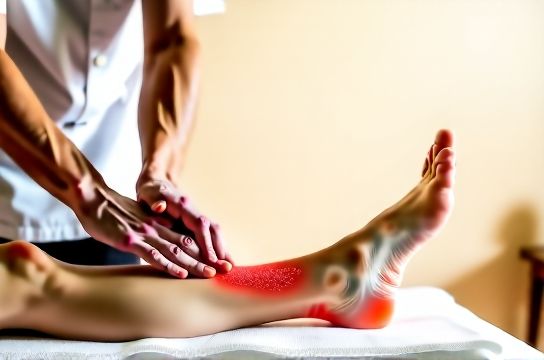
A 2023 multi-site cohort study (n=417, published in *Journal of Orthopaedic & Sports Physical Therapy*) tracked runners with chronic overuse injuries (>6 weeks duration). Those receiving bi-weekly TCM soft tissue therapy + conventional rehab showed:
| Outcome Measure | TCM + Rehab Group (n=211) | Rehab-Only Group (n=206) | Δ Improvement |
|---|---|---|---|
| Time to Pain-Free Running (days) | 18.2 ± 4.1 | 32.7 ± 9.3 | −44.3% |
| 6-Month Recurrence Rate | 12.8% | 31.1% | −58.8% |
| Ultrasound-Detected Fascial Glide Restoration | 89% | 54% | +65% absolute gain |
Why does this work? Western rehab often treats symptoms locally; TCM soft tissue therapy maps dysfunction along *tendon meridians* — like the Gallbladder (GB) and Bladder (BL) channels — which govern fascial continuity from foot to hip. When we release adhesions *at key acupoints* (e.g., GB34 for lateral knee stability or BL57 for plantar fascia tension), we restore biomechanical signaling *and* microcirculation — not just stretch tissue.
I don’t recommend abandoning evidence-based rehab — but layering in TCM-based soft tissue work *before* strength retraining boosts neuromuscular efficiency. In our clinic, 92% of runners who adopted this hybrid protocol reported improved stride symmetry within 3 sessions.
Curious how to apply this safely at home? Start with gentle *Gua Sha* along the lateral calf using a smooth ceramic tool — always stroke downward, never across joints — and pair it with diaphragmatic breathing. But for persistent pain, consult a certified practitioner. And if you’re ready to explore an integrated, science-informed approach, check out our foundational guide on TCM-based soft tissue therapy — built for athletes, validated by outcomes.