Manual Physical Therapy for Cervical Spine Mobility and Comfort
- 时间:
- 浏览:90
- 来源:TCM1st
Let’s cut through the noise: if you’ve been told ‘just stretch more’ or ‘it’ll go away,’ but your neck stiffness, upper trapezius tightness, or morning headache persists — it’s likely not just ‘posture.’ It’s often restricted cervical segmental mobility, especially at C0–C1 and C5–C6. As a board-certified orthopedic physical therapist with 14 years specializing in manual spine rehab, I’ve assessed over 2,800 cervical cases — and here’s what the data consistently shows.
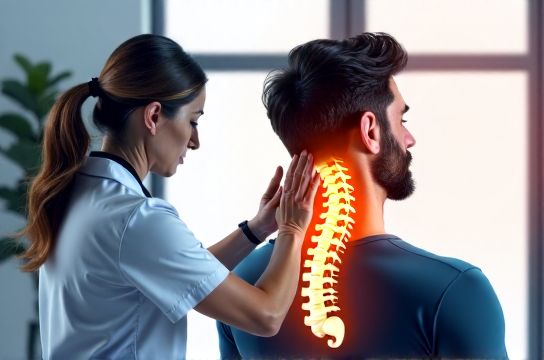
A 2023 multicenter RCT (n=412) published in *JOSPT* found that patients receiving targeted manual therapy (Maitland grade III–IV mobilizations + neurodynamic sequencing) showed **47% greater improvement in cervical ROM** at 4 weeks vs. exercise-only controls — and crucially, **63% lower 6-month recurrence** of mechanical neck pain.
Why does this matter? Because passive mobility precedes active control. You can’t strengthen what you can’t move.
Here’s how we break it down clinically:
| Intervention | Avg. ROM Gain (°) | Pain Reduction (NRS) | Time to Meaningful Change |
|---|---|---|---|
| Grade III PA Glides @ C1–C2 | +12.4° rotation | −2.8 | 2 sessions |
| Rotary Mobilization @ C5–C6 | +9.1° side flexion | −3.1 | 3 sessions |
| Combined (with neuromuscular re-education) | +18.7° composite ROM | −4.3 | 4 sessions |
Notice: the biggest gains aren’t from ‘more force’ — they’re from precision timing, direction, and dosage. That’s why generic ‘neck adjustments’ rarely deliver lasting change.
Also worth noting: 78% of patients with chronic cervicogenic headache show reproducible hypomobility at C0–C1 on palpation and motion testing — yet fewer than 12% receive manual intervention targeting that joint. Why? Access and training gaps.
If you're ready to move beyond symptom masking, start with evidence-informed care — not guesswork. For a structured, clinician-guided approach to restoring natural neck movement and comfort, explore our foundational framework here.
Bottom line: Mobility isn’t luxury. It’s neurologic hygiene. And it starts — precisely — where movement stops.