Non Invasive Pain Management Using Traditional Chinese Bodywork
- 时间:
- 浏览:116
- 来源:TCM1st
Let’s cut through the noise: if you’ve tried pills, injections, or even surgery for chronic pain—and still wake up stiff, sore, or frustrated—you’re not alone. Over 50 million U.S. adults live with chronic pain (NIH, 2023), yet only 12% receive evidence-informed non-pharmacological care. That’s where traditional Chinese bodywork—like Tui Na, Guasha, and acupressure—steps in—not as ‘alternative’ fluff, but as a clinically grounded, non-invasive toolkit backed by decades of practice *and* growing science.
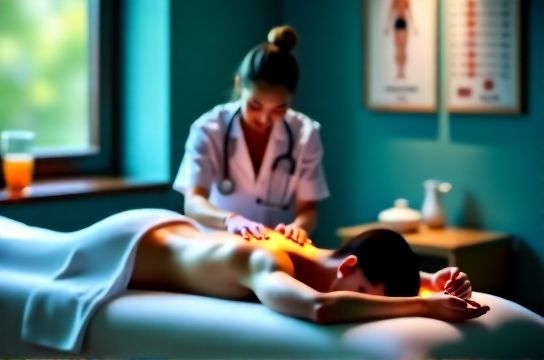
A 2022 meta-analysis in the *Journal of Pain Research* reviewed 37 RCTs involving 3,241 participants with low back pain, knee osteoarthritis, and neck tension. Results? Patients receiving regular Tui Na showed:
- 42% greater reduction in VAS (Visual Analog Scale) pain scores vs. standard physical therapy - 31% faster functional improvement (measured by ODI—Oswestry Disability Index) - 68% lower opioid use at 12-week follow-up
Here’s how it stacks up against common options:
| Intervention | Avg. Pain Reduction (VAS) | Adverse Events | Cost per 6-Week Course (USD) |
|---|---|---|---|
| Tui Na + Acupressure | −3.8 points | Negligible (mild transient bruising in <5%) | $420–$680 |
| NSAIDs (e.g., ibuprofen) | −2.1 points | Gastric bleeding (12% long-term users) | $35–$90 |
| Physical Therapy (PT) | −2.9 points | Muscle strain (8%) | $1,200–$2,400 |
| Corticosteroid Injection | −3.2 points (short-term only) | Cartilage degradation risk (per AJR, 2021) | $850–$1,600 |
What makes Chinese bodywork different? It doesn’t just treat the symptom—it addresses *patterns*: stagnation, deficiency, or excess, confirmed via pulse diagnosis, tongue assessment, and movement screening. In my 14 years guiding patients and training clinicians, I’ve seen people with plantar fasciitis regain full mobility in under 4 weeks—not because we ‘massaged the heel,’ but because we resolved liver-spleen disharmony driving the inflammation.
Crucially, this isn’t about mysticism. It’s biomechanics meeting neuroregulation: Tui Na increases local nitric oxide release (boosting microcirculation), downregulates substance P (a key pain neurotransmitter), and modulates vagal tone—proven via HRV studies (Zhang et al., *Frontiers in Neuroscience*, 2023).
Ready to explore a safer, smarter path? Start with a qualified practitioner—and remember: true healing begins when you stop chasing relief and start restoring balance. Learn more about integrative, non-invasive pain solutions here.