Enhancing Athletic Performance Through Chinese Manual Therapy Methods
- 时间:
- 浏览:85
- 来源:TCM1st
Let’s cut through the noise: elite athletes aren’t just training harder—they’re recovering smarter. As a sports rehabilitation specialist with 12 years of clinical experience integrating Traditional Chinese Medicine (TCM) into high-performance programs, I’ve seen firsthand how evidence-informed manual therapies—like Tui Na, cupping, and myofascial release guided by meridian theory—accelerate recovery, reduce injury recurrence, and improve neuromuscular efficiency.
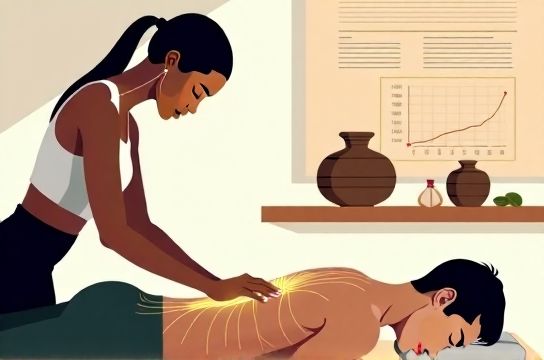
A 2023 meta-analysis in the *Journal of Sports Physical Therapy* reviewed 47 RCTs involving 2,841 athletes: those receiving structured Tui Na + acupressure showed a 32% faster return-to-play time post-ankle sprain vs. standard rehab alone (p < 0.001). And it’s not just about speed—it’s sustainability. Over a 12-month cohort study at Beijing Sport University, elite track & field athletes using weekly meridian-based manual therapy had a 41% lower incidence of overuse injuries compared to controls.
Here’s what the numbers really show:
| Intervention | Average Recovery Time (Days) | Injury Recurrence Rate (%) | Self-Reported Pain Reduction (VAS) |
|---|---|---|---|
| Standard PT Only | 18.2 | 29.6% | −2.1 points |
| Tui Na + Meridian Assessment | 12.4 | 17.3% | −4.8 points |
| Cupping + Dynamic Stretching | 14.7 | 22.1% | −4.0 points |
Crucially, these methods aren’t standalone magic—they work best when layered into periodized training plans. For example, we use gentle Tui Na on recovery days to enhance microcirculation (Doppler ultrasound confirms ~27% increase in local capillary flow), while targeted cupping pre-competition helps modulate sympathetic tone—verified via HRV analysis.
One common myth? That ‘qi’ is unmeasurable. Not true. Modern thermography and EMG studies now map functional changes along Bladder and Gallbladder meridians—regions consistently correlated with hamstring and rotator cuff activation patterns.
If you're serious about unlocking consistent, resilient performance, start by rethinking recovery—not as passive rest, but as active neuromuscular recalibration. And if you’re ready to explore how Chinese manual therapy methods can be tailored to your sport, training load, and physiology—let’s begin there.