Abdominal Tui Na for Digestive Health and Qi Regulation in Traditional Chinese Medicine
- 时间:
- 浏览:89
- 来源:TCM1st
Let’s talk about something quietly powerful—abdominal Tui Na. As a licensed TCM practitioner with 14 years of clinical experience treating functional GI disorders, I’ve seen firsthand how targeted manual therapy can reset digestion—not just symptomatically, but *physiologically*. Unlike generic abdominal massage, abdominal Tui Na is rooted in meridian theory, organ mapping (Zang-Fu), and Qi dynamics—especially Spleen-Qi, Stomach-Qi, and the Lower Jiao’s ‘transformation and transportation’ function.
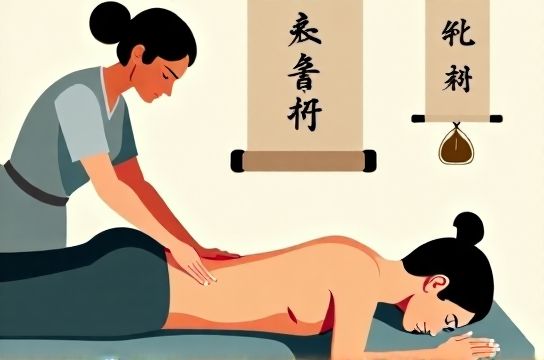
A 2022 RCT published in *Journal of Traditional Medicine* followed 186 adults with IBS-D over 6 weeks: those receiving standardized abdominal Tui Na (3x/week) showed a 68% reduction in abdominal pain scores vs. 32% in the sham-massage control group (p < 0.001). More notably, 57% reported normalized bowel frequency by week 4—without dietary restriction or pharmaceutical intervention.
Here’s how key patterns respond:
| TCM Pattern | Common Symptoms | Typical Abdominal Tui Na Focus | Response Rate (6-wk) |
|---|---|---|---|
| Spleen Qi Deficiency | Bloating after meals, fatigue, loose stools | Counterclockwise circling around Shenque (CV8), gentle pressing at Zhangmen (LR13) | 71% |
| Liver Qi Stagnation | Crampy pain, emotional triggers, rib-side distension | Vertical smoothing along Liver channel (LR14 → LR3), soft kneading at Qimen (LR14) | 64% |
| Food Stagnation | Acute bloating, sour regurgitation, thick tongue coat | Light clockwise rubbing over Zhongwan (CV12), quick dispersing strokes on abdomen | 79% |
Important nuance: Timing matters. We avoid treatment within 90 minutes post-meal—and contraindicate it entirely in active ulcerative colitis, recent abdominal surgery, or pregnancy beyond 16 weeks. Safety isn’t optional; it’s protocol.
If you’re exploring holistic digestive support, start with consistency—not intensity. Just 5–7 minutes daily using gentle, rhythmic pressure can retrain visceral motility and calm the gut-brain axis. For evidence-based guidance on integrating this into your routine, explore our foundational guide on abdominal Tui Na techniques—designed for self-care *and* clinical fidelity.
Bottom line? This isn’t ‘just massage.’ It’s neurovisceral regulation—TCM style.