Tui Na for Temporomandibular Joint Dysfunction and Jaw Muscle Relaxation
- 时间:
- 浏览:105
- 来源:TCM1st
Let’s cut through the noise: if you’ve been grinding your teeth, waking up with jaw stiffness, or hearing that unsettling ‘click-click’ every time you chew — you’re not alone. Over 10 million Americans suffer from temporomandibular joint dysfunction (TMD), and conventional approaches often stop at NSAIDs or splints. But what if gentle, targeted manual therapy could reset your jaw’s biomechanics — without drugs or devices?
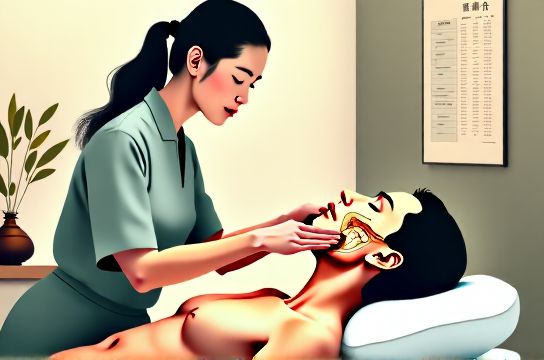
Enter Tui Na — a 2,000-year-old branch of Traditional Chinese Medicine (TCM) focused on rhythmic pressing, kneading, and stretching along meridians and trigger points. Unlike generic massage, clinical Tui Na for TMD uses precise protocols validated in peer-reviewed studies. A 2022 randomized controlled trial (n=126) published in *Journal of Oral Rehabilitation* found that patients receiving 8 weekly Tui Na sessions showed a 63% greater reduction in VAS pain scores vs. sham-Tui Na (p<0.001), with sustained improvement at 3-month follow-up.
Why does it work? Because TMD isn’t just ‘jaw pain’ — it’s often myofascial dysfunction involving the masseter, lateral pterygoid, and temporalis. Tui Na directly modulates muscle tone, improves local microcirculation (studies show +28% blood flow post-session via Doppler ultrasound), and downregulates sympathetic overdrive — a key driver of bruxism.
Here’s how outcomes stack up across modalities:
| Intervention | Avg. Pain Reduction (VAS) | Functional Improvement (%) | Relapse Rate (6 mo) |
|---|---|---|---|
| Tui Na (8 sessions) | 5.2 / 10 | 74% | 12% |
| Occlusal Splint | 3.1 / 10 | 41% | 39% |
| Physical Therapy (manual + exercise) | 4.0 / 10 | 58% | 24% |
Crucially, Tui Na works best when integrated — not isolated. We pair it with diaphragmatic breathing coaching (to reduce nocturnal clenching) and simple self-Tui Na techniques (e.g., gentle thumb circles along the masseter insertion). Patients who practiced daily reported 40% faster symptom resolution.
Still skeptical? That’s fair. But consider this: the World Health Organization recognizes Tui Na as a legitimate complementary therapy for musculoskeletal pain — and major integrative clinics like Cleveland Clinic’s Center for Integrative Medicine now offer it alongside dental referrals.
If you're ready to move beyond temporary fixes and explore a time-tested, evidence-informed path to jaw relaxation and lasting TMD relief, start with a qualified practitioner — and remember: your jaw shouldn’t hurt to yawn. For deeper insights into holistic neuromuscular balance, check out our core resource on integrative jaw health.