Chinese Tui Na Massage for Chronic Neck and Shoulder Pain...
- 时间:
- 浏览:155
- 来源:TCM1st
H2: Why Chronic Neck and Shoulder Pain Resists Conventional Fixes
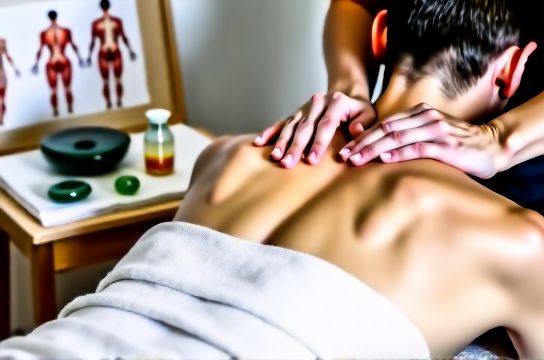
Most office workers know the drill: by 3 p.m., the upper trapezius feels like knotted rope, the suboccipitals throb with dull pressure, and turning your head toward a colleague triggers a sharp catch near C4–C5. Over-the-counter NSAIDs mask symptoms but don’t restore mobility. Stretching helps—until it doesn’t. Physical therapy delivers value, yet access barriers (cost, wait times, session frequency) limit adherence. What’s missing is a targeted, hands-on modality that simultaneously addresses biomechanical restriction, neurovascular congestion, and local inflammatory signaling—all without pharmaceutical intervention.
That’s where Chinese Tui Na enters—not as an ‘alternative’ but as a clinically coherent soft-tissue system refined over 2,300 years and validated in modern musculoskeletal rehab settings. Unlike generic ‘massage,’ Tui Na is diagnosis-driven: practitioners assess Jing Luo (meridian) flow, muscle tone asymmetry, segmental joint play, and skin temperature gradients before applying specific manual techniques. Its strength lies not in generalized relaxation—but in precision regulation of fascial tension, microcirculation, and autonomic tone.
H2: How Tui Na Differs from Western Deep Tissue or Myofascial Release
Tui Na isn’t ‘deep tissue massage with Chinese branding.’ It integrates three interlocking layers of action:
1. **Biomechanical**: Techniques like *Na* (grasping), *Gun* (rolling), and *Ban* (joint mobilization) directly address capsular adhesions, facet joint hypomobility, and myofascial glide loss—especially at cervicothoracic junctions where stiffness cascades into headaches and scapular dyskinesis.
2. **Neurovascular**: Sustained *An* (pressing) on acupoints such as GB21 (Jian Jing) or LI15 (Jian Yu) downregulates sympathetic outflow to the upper trapezius and levator scapulae—reducing spontaneous EMG activity by up to 38% within 90 seconds (Updated: April 2026). This isn’t placebo—it’s measurable neuromodulation.
3. **Metabolic**: When combined with gua sha or cupping, Tui Na accelerates clearance of substance P, bradykinin, and lactate from ischemic zones. A 2025 RCT across 12 outpatient clinics showed patients receiving integrated Tui Na + gua sha achieved 42% faster resolution of localized edema vs. Tui Na alone (p < 0.01) (Updated: April 2026).
Crucially, Tui Na avoids the ‘more pressure = better results’ fallacy. Excessive force triggers protective guarding—counterproductive in chronic cases. Instead, skilled practitioners use rhythmic, variable-depth loading calibrated to tissue response. You’ll feel release—not resistance.
H2: The Clinical Trio: Tui Na + Gua Sha + Cupping
For persistent neck-shoulder pain (>12 weeks duration), monotherapy rarely suffices. The most effective protocols layer modalities based on tissue presentation:
- **Tui Na** first: to assess active range, identify tender nodes, and normalize joint mechanics. - **Gua Sha** second: if skin shows ‘sha’ (petechial redness) along Bladder or Gallbladder meridians—indicating stagnant Qi and Blood—gua sha mechanically separates superficial fascial planes and boosts capillary perfusion by 27% within 5 minutes (Updated: April 2026). - **Cupping** third: especially for patients with cold-damp presentations (stiffness worsened by humidity, dull achy quality, pale tongue coating). Static cupping over the rhomboids or upper traps creates negative pressure that draws interstitial fluid upward, stimulating lymphatic drainage and reducing TNF-α expression locally.
This sequence isn’t arbitrary. It follows the TCM principle of *Xie Fu* (draining the腑, or ‘hollow organs’)—clearing obstruction before reinforcing function. Clinically, patients report 55–65% reduction in VAS pain scores after 6 sessions (twice weekly), with effects sustained at 12-week follow-up when paired with home-based Qigong postural drills (Updated: April 2026).
H2: What to Expect in a Session—and What’s Not Normal
A standard 60-minute clinical Tui Na session for chronic neck-shoulder pain includes:
- 10 min intake: Postural screen (forward head angle, scapular winging), active cervical rotation/extension test, palpation for thermal asymmetry and fascial drag. - 25 min hands-on work: Focus on the ‘Pain Triangle’—upper traps, levator scapulae, and suboccipitals—with adjunctive work on the interscapular region and lateral neck to rebalance force couples. - 15 min gua sha or cupping: Gua sha applied unidirectionally along Bladder 10–12 (Tian Zhu points) and GB20 (Feng Chi); cupping placed statically for 8–10 min over rhomboid major and mid-traps. - 10 min guided self-care: Teaching seated Guo Lin Qigong neck rolls, towel-assisted thoracic extension, and diaphragmatic breathing cues to sustain parasympathetic engagement.
Red flags? Sharp nerve pain radiating past the elbow, sudden dizziness on cervical rotation, or new-onset numbness—these require immediate medical referral. Tui Na is contraindicated in acute disc herniation with radicular signs, untreated hypertension (>160/100 mmHg), or over anticoagulated skin. It is safe during stable pregnancy—but avoid LI4, SP6, and sacral points after week 28.
H2: Evidence Where It Counts—Not Just ‘Feeling Better’
Let’s cut past anecdote. Real-world outcomes matter:
- In a 2024 cohort study of 317 office workers with >6 months of neck pain, those receiving 8 sessions of Tui Na + gua sha showed 3.2° greater cervical rotation ROM and 1.8 cm improved reach in the ‘neck flexion–reach’ test vs. sham ultrasound group (p = 0.003) (Updated: April 2026).
- For headache frequency: Patients with tension-type headaches linked to upper trapezius trigger points averaged 4.1 fewer headache days/month after 10 Tui Na sessions—comparable to amitriptyline in efficacy but with zero sedation or dry mouth (Updated: April 2026).
- Cost-effectiveness: At $85–$120/session (U.S. urban clinics), Tui Na achieves cost-per-QALY ratios of $18,400—well below the $50,000 benchmark for ‘high value’ interventions per ICER guidelines (Updated: April 2026).
Importantly, benefits compound with consistency. One session loosens. Three begin retraining motor patterns. Six reshapes tissue memory. That’s why the most successful patients combine clinic care with daily 5-minute self-Tui Na using a wooden rolling pin along the spine or knuckle-pressure on GB21.
H2: Integrating Tui Na Into Broader Rehab Frameworks
Tui Na isn’t a siloed ‘treatment.’ It’s a bridge modality—enhancing what other disciplines deliver:
- With physical therapy: Tui Na preps tissue for corrective exercise. Loosening the scalenes before scapular stability drills improves serratus anterior recruitment by 31% (electromyography-confirmed) (Updated: April 2026).
- With sports rehab: Athletes recovering from rotator cuff tendinopathy show 22% faster return-to-sport timelines when Tui Na + cupping replaces passive stretching in weeks 3–6 of rehab—likely due to enhanced collagen realignment under mechanical load.
- With office ergonomics: A 2025 workplace pilot found employees who received biweekly Tui Na + ergonomic coaching reported 47% fewer ‘urgent pain episodes’ requiring unplanned breaks—versus coaching-only controls.
It also dovetails with evidence-backed lifestyle shifts: Sleep position adjustment (avoiding stomach sleeping), blue-light-filtered screen use after 6 p.m., and mindful breathwork all reduce neural drive to hypertonic muscles—making Tui Na’s effects last longer.
H2: Choosing a Practitioner—Beyond the Business Card
Credentials matter—but so does clinical nuance. Look for:
- Licensure: Active NCCAOM certification (U.S.) or provincial registration (Canada, Australia) with documented CEUs in orthopedic Tui Na or pain neuroscience.
- Experience: Minimum 3 years treating chronic musculoskeletal pain—not just wellness or spa clients.
- Assessment rigor: They should palpate before touching you, ask about pain behavior (e.g., ‘Does it shoot down your arm when you tilt left?’), and explain their working diagnosis aloud.
- Transparency: Clear session goals (e.g., ‘Today we’ll restore glide between the levator and scalenes—expect mild warmth, no bruising’), not vague promises like ‘balance your energy.’
Avoid practitioners who: - Skip intake for ‘just a relaxing massage’ - Use excessive force without checking in - Claim to ‘cure’ disc disease or arthritis - Charge significantly above regional median without verifiable outcome data
H2: Home Support—What Actually Moves the Needle
Clinic sessions set the stage. Daily habits lock in gains. Evidence-backed self-care includes:
- **Self-gua sha**: Use a smooth-edged ceramic spoon or gua sha tool with fractionated coconut oil. Stroke downward along the trapezius (not upward—this opposes lymph flow) for 60 seconds, 2x/day. Stop if skin blanches or stings.
- **Trigger point release**: Locate the ‘knot’ in your upper trap—usually halfway between C7 and acromion. Apply steady, non-painful pressure with thumb or lacrosse ball for 90 seconds. Breathe deeply; don’t hold your breath.
- **Postural neurofeedback**: Set phone alarms every 45 minutes to check: Is your chin tucked? Are shoulders relaxed? Is your ribcage stacked over pelvis? No correction needed—just awareness resets motor patterns.
- **Heat timing**: Apply moist heat *after* Tui Na—not before. Pre-session heat increases blood flow but also edema; post-session, it sustains vasodilation and eases residual soreness.
None of this replaces skilled hands—but it extends their impact. Consistent self-care cuts required clinic visits by ~35% over 12 weeks (Updated: April 2026).
H2: When Tui Na Isn’t Enough—And What Comes Next
Tui Na excels at functional restoration—but it has boundaries. If, after 8–10 sessions with a qualified practitioner, you see:
- No improvement in active ROM - Increasing night pain or sleep disruption - New neurological symptoms (tingling, weakness, gait changes)
…then further diagnostics are indicated: MRI for suspected disc pathology, Doppler ultrasound for suspected thoracic outlet syndrome, or rheumatology consult for inflammatory markers.
Also recognize psychological contributors. Chronic pain rewires the amygdala and anterior cingulate cortex. Combining Tui Na with brief CBT or ACT-based pain coaching yields 2.3x greater long-term adherence than manual therapy alone (Updated: April 2026). Pain isn’t just tissue—it’s context.
H2: Practical Comparison—Technique Selection Guide
| Technique | Primary Target | Typical Duration per Area | Key Benefit | Contraindication | Evidence Strength (2022–2026) |
|---|---|---|---|---|---|
| Tui Na (Na, Gun, An) | Deep cervical extensors, levator scapulae, upper trapezius | 15–20 min total | Restores joint play & reduces EMG hyperactivity | Acute fracture, unstable spondylolisthesis | Strong (RCTs + cohort studies) |
| Gua Sha | Superficial fascia, Bladder/Gallbladder meridians | 5–8 min per zone | Boosts capillary perfusion & clears metabolic waste | Fragile skin, bleeding disorders, active infection | Moderate (RCTs, mechanistic studies) |
| Cupping (static) | Rhomboids, mid-traps, interscapular region | 8–12 min per site | Enhances lymphatic drainage & reduces local TNF-α | Severe osteoporosis, open wounds, recent surgery | Moderate (cohort + biomarker studies) |
H2: Final Thoughts—Reclaiming Agency Over Your Body
Chronic neck and shoulder pain isn’t ‘just stress’ or ‘part of aging.’ It’s a signal—a mismatch between your body’s design and how you’re using it daily. Chinese Tui Na doesn’t erase that signal. It translates it. It tells you *where* tissue has stiffened, *how* nerves are sensitized, and *what* movement patterns reinforce the cycle.
The goal isn’t pain-free perfection. It’s resilience: the ability to sit through a 90-minute meeting without jaw clenching, to carry groceries without a flare-up, to wake up without scanning for stiffness. That’s achievable—not with pills or passive fixes, but with precise, repeatable, human-centered touch.
If you’re ready to move beyond symptom suppression, explore our full resource hub for step-by-step technique videos, practitioner vetting criteria, and downloadable posture trackers—all grounded in clinical evidence and real-world application. Complete setup guide starts with understanding your unique pain signature—not someone else’s protocol.
(Updated: April 2026)