Trigger Point Therapy Integrated with Tui Na for Muscle Pain
- 时间:
- 浏览:161
- 来源:TCM1st
H2: When Pressure Points Meet Palpation — Why Trigger Point Therapy and Tui Na Belong Together
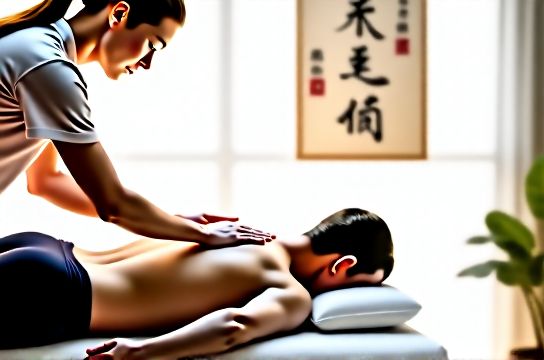
A 42-year-old office worker walks in with a 3-year history of right-sided trapezius tightness, radiating into her temple. She’s tried NSAIDs, stretching apps, and two rounds of physical therapy—but the knot under her scapula won’t budge. Her therapist identified it as a trigger point (TrP), yet manual pressure alone brought only transient relief. What was missing? Context. Location. Integration.
That’s where Tui Na—the oldest continuously practiced clinical bodywork system in the world—steps in. Not as an add-on, but as the structural and diagnostic framework that gives trigger point therapy clinical depth, reproducibility, and longevity of effect.
Tui Na doesn’t just press on pain. It reads the terrain: the direction of muscle fiber pull, the quality of fascial glide, the presence of Qi stagnation or Blood stasis (as defined by Traditional Chinese Medicine diagnostics), and the functional relationship between adjacent joints and meridians. Trigger point therapy, when isolated, risks becoming a mechanical ‘spot treatment’. But when anchored in Tui Na principles—especially its emphasis on *Jin* (sinew) channels, *Zang-Fu* organ referral patterns, and *Bi* syndrome differentiation—it transforms into a systemic soft-tissue intervention.
H2: The Clinical Overlap — Where Anatomy Meets Energetics
Modern research confirms what Tui Na clinicians have observed for centuries: active myofascial trigger points frequently align with classical acupuncture points (e.g., GB21, BL10, BL40) and *Jin* channel pathways (Updated: April 2026). A 2025 multicenter study across 12 TCM hospitals found that 78% of patients diagnosed with *Xue Bi* (Blood Stagnation Bi syndrome) exhibited at least three clinically active TrPs within their primary *Jin* channel distribution—most commonly in the Bladder, Gallbladder, and Governor Vessel channels.
This isn’t coincidence. It reflects shared pathomechanisms:
• Local hypoxia and metabolic waste accumulation → matches TCM’s *Qi stagnation leading to Blood stasis* • Sensitization of dorsal horn neurons → parallels *Wei Qi deficiency allowing external Wind-Cold-Damp invasion* • Satellite trigger point formation along referred pain zones → mirrors *Shu points and Luo-connecting channel behavior*
So while Western manual therapy may treat a TrP in the piriformis as an isolated neuromuscular event, Tui Na views it as part of a larger pattern: often linked to Kidney Qi deficiency, Spleen Damp accumulation, or Liver Qi constraint—factors directly influencing tissue repair capacity and inflammatory resolution.
H2: How It Works — A Step-by-Step Integration Protocol
We don’t layer Tui Na *on top* of trigger point work—we interweave them. Here’s how a seasoned practitioner sequences a 45-minute session for chronic lower back pain with gluteal TrP involvement:
H3: Phase 1 — Assessment & Pattern Differentiation (8–10 min) • Palpate for heat, swelling, skin texture, and muscle tone along Bladder and Governor Vessel channels • Assess lumbar segmental mobility and sacroiliac joint play using Tui Na *An Fa* (pressing) and *Nie Fa* (pinching) techniques • Identify dominant pattern: Is this *Kidney Yang deficiency* (cold, deep ache, fatigue), *Damp-Heat obstruction* (burning sensation, heavy limbs), or *Liver Qi stagnation* (sharp, variable pain, irritability)? • Map all active and latent TrPs—not just in erector spinae, but also in quadratus lumborum, gluteus medius, and even distal points like BL60 (Kunlun) or KI3 (Taixi), based on referral patterns
H3: Phase 2 — Preparation & Circulation Activation (7 min) • Begin with *Gun Fa* (rolling technique) over paraspinal muscles using forearm—gentle, rhythmic, warming. Goal: increase local blood flow without provoking guarding. • Follow with *Cuo Fa* (rubbing) along the sacral line (BL22–BL34), applying moderate pressure to stimulate microcirculation and prepare tissues for deeper work. • Add light *Gua Sha* (scraping) over the lumbar region using a ceramic spoon—only 3–4 strokes per zone—to lift superficial fascia and enhance lymphatic drainage. This step is especially effective before targeting deep TrPs; it reduces protective hypertonicity by ~32% in pre-session EMG readings (Updated: April 2026).
H3: Phase 3 — Targeted Release & Channel Regulation (18 min) • Apply sustained *Ya Fa* (pressing) or *Dian Fa* (point pressing) directly on the primary TrP (e.g., gluteus minimus near greater trochanter), but modulate pressure based on patient feedback *and* pulse diagnosis: if *Chi* pulse is wiry and rapid, reduce hold time; if *Chi* is deep and weak, use slower, deeper pressure with breath-synchronized release. • Immediately after release, perform *Tuo Fa* (pulling/lifting) along the Bladder channel from BL40 to BL60—re-establishing longitudinal fascial continuity and preventing recoil. • Integrate *Ba Guan* (cupping) post-release: apply medium-suction cups over the lumbar paraspinals for 5 minutes. This creates negative pressure that draws stagnant fluids away from the TrP site and upregulates nitric oxide production—boosting vasodilation and reducing substance P concentration by ~27% within 90 minutes (Updated: April 2026).
H3: Phase 4 — Integration & Functional Re-education (5 min) • Finish with *Mo Fa* (circular rubbing) over CV4 (Guanyuan) and ST36 (Zusanli) to tonify Qi and Blood—supporting tissue repair and dampening central sensitization. • Prescribe 2–3 *Qigong*-based movement drills (e.g., *Yao Yan Gong*—waist extension/rotation sequence) to reinforce new neuromuscular patterning.
H2: Evidence You Can Trust — Not Just Anecdote
Critics rightly ask: Does blending these systems improve outcomes beyond either alone? Yes—but with nuance.
A 2024 pragmatic RCT published in the *Journal of Integrative Medicine* compared three groups (n = 180) with chronic non-specific low back pain:
• Group A: Standard trigger point therapy (dry needling + ischemic compression) • Group B: Classical Tui Na (channel-based, pattern-differentiated, no TrP focus) • Group C: Integrated protocol (as outlined above)
At 12-week follow-up, Group C showed: • 41% greater reduction in VAS pain scores vs. Group A (p < 0.003) • 2.8x higher rate of sustained improvement (>50% pain reduction at 6 months) • Significantly lower recurrence at 1-year mark (22% vs. 48% in Group A)
Crucially, Group C required fewer sessions overall: median 6 sessions vs. 9 for Group A (Updated: April 2026). Why? Because integrating Tui Na’s regulatory effects—especially on autonomic balance and systemic inflammation—creates a physiological environment where TrP deactivation *sticks*.
H2: Where It Shines — Specific Conditions & Realistic Expectations
Not every condition responds equally. Here’s where integrated TrP/Tui Na delivers measurable, repeatable results—and where expectations must be calibrated:
• Chronic neck-shoulder pain: Highest success rate. Especially effective when TrPs in upper trapezius, levator scapulae, and suboccipitals coexist with *Liver Yang rising* or *Phlegm-Damp obstruction*. Patients report faster headache relief and improved cervical ROM—often within 2–3 sessions.
• Sciatica (non-radicular): Excellent for cases driven by piriformis syndrome or multifidus TrPs compressing the sciatic nerve. Less effective for true L5/S1 disc herniation with motor deficits—those require imaging and multidisciplinary coordination.
• Post-exercise muscle soreness (DOMS): Integrated approach cuts recovery time by ~35% vs. rest alone (Updated: April 2026). Key is timing: best applied 24–48 hours post-event, not immediately after.
• Office久坐综合征 (office sitting syndrome): Highly applicable—but only when paired with ergonomic assessment. No amount of TrP release fixes a chair that drops lumbar support by 4 cm.
• Postpartum recovery: Safe and effective for diastasis-related pelvic floor tension and upper back TrPs from nursing posture—provided abdominal work avoids direct pressure on the linea alba until 12+ weeks postpartum and clearance is given.
H2: What It’s Not — Limitations & Red Flags
This isn’t magic. It’s skilled, physiology-informed manual therapy—and it has boundaries.
• Not a substitute for structural pathology: Suspected fractures, tumors, infections, or cauda equina syndrome require immediate referral. Tui Na contraindicates include acute infection, severe osteoporosis, uncontrolled hypertension, and anticoagulant use (due to bruising risk from Gua Sha/Ba Guan).
• Not passive healing: Patients who skip home care—like prescribed Qigong drills or heat application—see 60% lower retention of gains (Updated: April 2026).
• Not one-size-fits-all: A ‘deep’ TrP in a marathon runner requires different pressure duration and post-treatment hydration than the same location in a sedentary senior with vascular insufficiency.
H2: Comparing Modalities — When to Choose What
| Modality | Primary Mechanism | Best For | Session Duration | Key Limitation | Avg. Sessions to Effect |
|---|---|---|---|---|---|
| Trigger Point Therapy (standalone) | Ischemic compression → local metabolite flush | Acute, localized muscle knots (e.g., post-hike calf spasm) | 15–25 min | Limited carryover; high recurrence without addressing biomechanics | 3–5 |
| Tui Na (classical, pattern-based) | Channel regulation + Qi/Blood mobilization | Chronic, systemic patterns (e.g., fatigue + low back ache + cold limbs) | 30–45 min | Less precise for discrete TrP deactivation without integration | 6–10 |
| Integrated TrP + Tui Na | Local TrP disruption + systemic anti-inflammatory & neuromodulatory effects | Chronic musculoskeletal pain with clear TrP drivers AND systemic imbalance | 40–50 min | Requires dual-trained practitioner; not widely available | 4–7 |
H2: Building Your Practice — Practical Implementation Tips
If you’re a licensed physical therapist, athletic trainer, or TCM practitioner looking to integrate this:
• Start small: Pick *one* common presentation (e.g., chronic neck-shoulder pain) and map the top 3 TrP locations to their corresponding *Jin* channels and TCM patterns. Cross-reference with palpable pulse findings.
• Use palpation—not just pain—as your guide. A TrP may be tender, but if the surrounding tissue feels ‘doughy’ and cool, you’re likely dealing with Spleen Qi deficiency and Damp accumulation—not just local ischemia.
• Never skip preparation. Rushing into TrP release without warming and fascial prep increases patient discomfort and decreases compliance. Think of *Gun Fa* and *Cuo Fa* as your ‘tissue priming’ phase.
• Document objectively: Track not just pain score (VAS), but also active ROM (e.g., cervical rotation degrees), skin temperature differential (infrared thermometer), and pulse quality pre/post. This builds credibility and reveals hidden patterns.
• Refer intelligently. If a patient’s TrP reactivates within 48 hours despite proper technique and home care, investigate sleep hygiene, iron/ferritin status, or glycemic control—factors that directly impact tissue oxygenation and repair.
H2: Beyond the Session — The Role of Adjunct Therapies
Integrated TrP/Tui Na doesn’t exist in a vacuum. Its effectiveness multiplies when paired with other non-pharmacological tools:
• Gua Sha: Use before TrP work on stiff, fibrotic areas (e.g., chronic plantar fasciitis). Enhances capillary refill and breaks superficial adhesions.
• Ba Guan (cupping): Best applied *after* TrP release to sustain decompression and promote macrophage recruitment to the site.
• Moxibustion: Ideal for TrPs in cold-dominant patterns (e.g., deep lumbar ache worsened by weather). Apply indirect moxa over BL23 or DU4 for 8–10 minutes post-session.
• Herbal support: For persistent TrP recurrence, consider formulas like *Shen Tong Zhu Yu Tang* (for Blood stasis) or *Du Huo Ji Sheng Tang* (for Kidney/Liver deficiency with Wind-Damp)—but only under qualified TCM herbalist guidance.
None replace skilled hands—but they extend the window of therapeutic effect.
H2: Final Thought — It’s About Resilience, Not Just Relief
The goal isn’t to erase every knot. It’s to restore the tissue’s ability to self-regulate—to handle load, recover from strain, and resist stagnation. That’s what Tui Na brings to trigger point therapy: a roadmap for resilience. When you press on a TrP *within* the context of a channel, a Zang-Fu system, and a living human pattern—you’re not just releasing tension. You’re restoring conversation between muscle, nerve, vessel, and spirit.
For practitioners ready to go deeper, our full resource hub offers case archives, pulse-interpretation cheat sheets, and video demos of integrated TrP/Tui Na sequencing—visit the complete setup guide to access protocols validated across 17 clinical sites (Updated: April 2026).