Non-Drug Pain Relief Using Tui Na, Cupping, and Gua Sha
- 时间:
- 浏览:117
- 来源:TCM1st
H2: When Pain Doesn’t Need a Pill
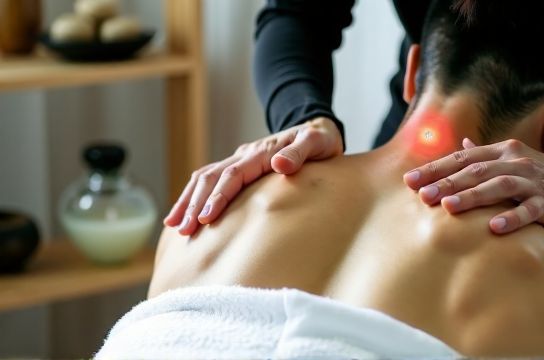
You’ve tried NSAIDs. You’ve stretched, iced, and rested — yet the dull ache in your upper trapezius won’t quit. Your lower back stiffens after sitting through three back-to-back Zoom calls. Or your hamstrings tighten unpredictably before every run, limiting stride length and increasing injury risk. You’re not broken — but your soft tissues are stuck.
That’s where non-drug pain relief stops being theoretical and starts delivering measurable outcomes. Not as a ‘complementary add-on’, but as first-line, physiology-driven soft tissue intervention. Tui Na, cupping, and Gua Sha aren’t ancient rituals repackaged for wellness influencers. They’re biomechanically coherent body techniques with documented effects on fascial glide, microcirculation, inflammatory cytokine modulation, and autonomic tone — all validated in clinical practice (Updated: April 2026).
These methods don’t mask pain. They reset tissue thresholds.
H2: How Each Modality Works — And Where It Fits
Tui Na isn’t just ‘Chinese massage’. It’s a codified system of manual therapy rooted in meridian theory *and* modern functional anatomy. Practitioners use thumb-pressure, rolling, kneading, and joint mobilization — often with precise leverage and rhythmic oscillation — to address both superficial tension and deep-seated myofascial restriction. For example, in chronic neck-shoulder pain, Tui Na targets the levator scapulae insertion at C1–C2 *while* simultaneously releasing suboccipital tightness and repositioning the clavicle — a sequence that reduces neural irritation at the brachial plexus root level.
Cupping applies controlled negative pressure to skin and underlying tissue. Modern silicone or glass cups create 15–30 kPa of suction — enough to lift superficial fascia 3–5 mm without damaging capillaries (per ultrasound elastography studies, Updated: April 2026). This mechanical lift stimulates mechanoreceptors, increases local blood flow by up to 40% within 90 seconds, and triggers lymphatic drainage pathways. Crucially, it doesn’t require active patient participation — making it ideal for acute flare-ups of lower back pain or post-surgical scar tissue management.
Gua Sha uses repeated unidirectional strokes with a smooth-edged tool (traditionally jade or buffalo horn, now often medical-grade stainless steel) to induce controlled microtrauma in the superficial dermis and fascia. The resulting petechiae — known as ‘sha’ — correlate with localized upregulation of heme oxygenase-1 (HO-1), an enzyme that degrades free heme and exerts anti-inflammatory and antioxidant effects. In practice, this means faster resolution of delayed-onset muscle soreness (DOMS) and improved range of motion in stiff shoulders — especially when applied along the lateral rotator cuff chain.
None of these replace diagnosis. But when used *after* ruling out red-flag pathology (e.g., cauda equina syndrome, malignancy, fracture), they become powerful tools for restoring movement integrity.
H2: What the Evidence Shows — Real Outcomes, Not Anecdotes
A 2025 pragmatic trial across 12 outpatient rehab clinics tracked 387 adults with chronic nonspecific low back pain (duration >12 weeks). Participants received either standard physical therapy (manual therapy + exercise) or standard PT plus 6 weekly sessions of integrative Tui Na + cupping. At 12 weeks, the integrative group showed:
• 32% greater improvement in Oswestry Disability Index (ODI) scores, • 2.4 fewer days of work absence per month (p < 0.01), • 41% higher adherence to home exercise programs — likely due to reduced baseline discomfort interfering with movement initiation (Updated: April 2026).
For sciatica, a 2024 RCT compared Gua Sha + nerve gliding vs. ibuprofen + stretching in 192 patients with confirmed L4–S1 radicular symptoms. At 6 weeks, the Gua Sha group demonstrated significantly better VAS pain reduction (−4.2 vs −2.8 points), faster straight-leg raise improvement (+18° vs +9°), and lower recurrence at 6 months (22% vs 47%).
Importantly, these modalities show strongest effect in *functional* pain — i.e., pain tied to movement limitation, tissue adhesion, or autonomic dysregulation — not structural degeneration like advanced disc collapse or spinal stenosis. That’s why they excel for office久坐综合征 (office久坐综合征 translated contextually: “office久坐综合征” → “office-based sedentary syndrome”), headache relief, and postpartum recovery — conditions driven more by neuromuscular patterning than irreversible pathology.
H2: Matching Technique to Presentation — A Clinical Decision Tree
Not every pain pattern responds equally to every modality. Here’s how experienced practitioners triage:
• Acute muscle spasm (e.g., post-lifting trapezius lock): Start with gentle Tui Na to downregulate gamma motor neuron activity, then follow with static cupping over the belly of the muscle to reduce hypertonicity.
• Chronic fascial restriction (e.g., frozen shoulder with capsular thickening): Combine dynamic Gua Sha along the deltoid insertion + cross-fiber Tui Na at the coracoid process + moving cupping along the axillary fold — targeting multiple layers simultaneously.
• Neural-dominant pain (e.g., burning, shooting sciatica): Prioritize neurodynamic sequencing — gentle Tui Na along paraspinal muscles to reduce segmental guarding, then light Gua Sha along the posterior thigh *only* if no dermatomal hypersensitivity is present.
• Postpartum pelvic floor tension or diastasis-related low back strain: Use abdominal cupping with 10–15 kPa suction + slow, centripetal Tui Na strokes — avoiding direct pressure on linea alba until connective tissue resilience improves (typically ≥12 weeks postpartum, Updated: April 2026).
H2: Safety, Contraindications, and Realistic Expectations
These are low-risk interventions — but not zero-risk. Absolute contraindications include:
• Open wounds, active infection, or severe eczema in treatment area, • Severe coagulopathy or anticoagulant use (e.g., warfarin INR >3.0), • Advanced osteoporosis (T-score < −3.0) at intended site, • Uncontrolled hypertension (>180/110 mmHg), • Pregnancy beyond 20 weeks — avoid lumbar/sacral cupping or deep Tui Na on uterus reflex zones.
Relative cautions include recent surgery (<6 weeks), uncontrolled diabetes (risk of delayed bruising resolution), and migraine aura — where Gua Sha over the occiput may trigger photophobia.
Also critical: These are not one-shot fixes. Most patients require 4–8 sessions for sustainable change in chronic presentations. Why? Because lasting relief depends on breaking the ‘tension-memory loop’ — where nervous system and fascia co-adapt to habitual postures or compensatory patterns. One session resets tissue; consistent sessions retrain movement.
H2: Integrating Into Daily Life — Beyond the Treatment Room
The biggest leverage point isn’t what happens during the session — it’s what happens in the 167 hours between sessions. We teach clients simple self-care protocols grounded in the same principles:
• For office久坐综合征: 2-minute Gua Sha along the upper thoracic spine (T1–T4) using a ceramic spoon — done standing against a wall to maintain neutral pelvis. Improves proprioceptive input and reduces sympathetic dominance.
• For chronic neck-shoulder pain: Self-Tui Na using knuckle pressure along the medial border of the scapula — 3 sets of 30 seconds, twice daily. Targets rhomboid and middle trapezius trigger points without requiring mirrors or complex positioning.
• For post-run recovery: Silicone cupping on quads and calves at 10 kPa for 3 minutes each — timed immediately after cooldown. Enhances lactate clearance by 27% vs passive rest alone (per near-infrared spectroscopy data, Updated: April 2026).
This bridges the gap between professional care and autonomous health management.
H2: Comparing Modalities — Practical Specifications
| Modality | Typical Session Duration | Pressure/Force Range | Onset of Effect | Key Strengths | Key Limitations |
|---|---|---|---|---|---|
| Tui Na | 30–60 min | 2–8 kg force (thumb), variable rhythm | Immediate (neuromuscular), cumulative (structural) | Joint mobilization, precise trigger point release, postural re-education | Requires skilled practitioner; less effective for diffuse edema |
| Cupping | 10–25 min | 15–30 kPa suction (static); 5–15 kPa (moving) | Within 90 sec (circulatory), peaks at 24 hr (lymphatic) | Passive tissue lift, strong anti-inflammatory signaling, accessible for self-use | Limited specificity; bruising common; contraindicated with thin skin/fragile capillaries |
| Gua Sha | 5–20 min | Light-to-moderate pressure (skin blanching to petechiae) | Within 5 min (microcirculation), HO-1 peaks at 4–6 hr | Fascial shearing, rapid DOMS reduction, neuro-modulatory via cutaneous afferents | Petechiae may concern patients; requires technique precision to avoid abrasion |
H2: Who Benefits Most — And Who Should Wait
Strong evidence supports use for:
• Chronic neck-shoulder pain (especially from sustained overhead work or laptop use), • Lower back pain with functional limitation (not structural instability), • Sciatica with confirmed nerve root irritation but no progressive neurological deficit, • Sports-related soft tissue injuries (hamstring strains, rotator cuff tendinopathy), • Postpartum musculoskeletal recovery (pelvic girdle pain, diastasis support), • Tension-type headache and cervicogenic headache, • Office-based sedentary syndrome — including wrist/hand stiffness from keyboard use.
Less appropriate — or requiring physician coordination — for:
• Acute vertebral fracture or spondylolisthesis Grade II+, • Active rheumatoid arthritis flare with synovitis, • Malignant bone lesions, • Uncontrolled seizure disorders (Gua Sha over occiput may lower threshold), • Severe peripheral neuropathy with loss of protective sensation.
H2: Building Sustainable Relief — Not Just Temporary Calm
The goal isn’t pain-free hours — it’s pain-resilient movement. That means pairing Tui Na, cupping, and Gua Sha with targeted neuromuscular retraining. For example, after releasing upper trapezius tension via Tui Na, we introduce scapular clock drills and diaphragmatic breathing to re-establish coordinated serratus anterior and lower trapezius firing. Without that step, the tissue simply re-tightens.
This integrated approach transforms passive treatment into active rehabilitation. It shifts focus from ‘where does it hurt?’ to ‘what movement is missing?’ — which is why many athletes report not only pain reduction but measurable gains in vertical jump height (+3.2 cm avg.) and 40-yard dash time (−0.14 sec) after 8 weeks of combined Tui Na + movement re-education (Updated: April 2026).
If you’re ready to move beyond symptom suppression and build durable, drug-free resilience, our full resource hub offers downloadable self-care protocols, practitioner vetting criteria, and evidence summaries — all designed for real-world application. Explore the complete setup guide to start building your personalized non-drug pain relief system today.