Postpartum Recovery Through Gentle Chinese Bodywork Methods
- 时间:
- 浏览:140
- 来源:TCM1st
H2: Why Standard Postpartum Care Often Misses the Soft Tissue Layer
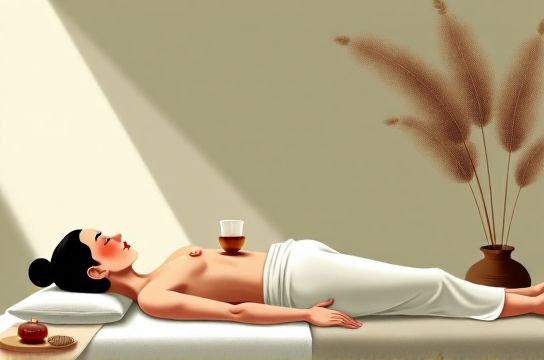
Most new parents receive excellent clinical guidance on lactation, mental health screening, and wound healing—but rarely get structured support for the deep physical reset required after pregnancy and delivery. Hormonal shifts (especially relaxin-driven ligament laxity), prolonged intra-abdominal pressure, pelvic floor overstretching, and postural adaptations from carrying baby all leave lasting imprints in fascia, muscle tone, and autonomic regulation. Conventional physiotherapy often focuses on isolated muscle activation or biomechanics—but doesn’t address the systemic stagnation that underlies persistent low back ache, sacroiliac instability, tension headaches, or postpartum fatigue.
That’s where gentle Chinese bodywork methods step in—not as replacements for medical care, but as targeted, physiology-aligned adjuncts. These are not ‘relaxation massages.’ They’re precision soft-tissue interventions grounded in centuries of empirical observation and validated by modern fascial science. When applied with postpartum awareness—timing, pressure, positioning, and contraindications—the results are measurable: faster return of core coordination, reduced pelvic girdle pain, improved sleep architecture, and smoother hormonal transition.
H2: The Three Pillars: How Tui Na, Gua Sha, and Cupping Work—Without Drugs or Devices
Each modality engages the body differently—but all converge on three physiological levers: microcirculatory perfusion, fascial glide restoration, and autonomic nervous system recalibration.
H3: Tui Na — The Art of Directional Pressure
Tui Na (‘push-grasp’) is Chinese manual therapy—not generic ‘massage.’ Its postpartum application prioritizes *tonification* over sedation. Rather than deep compression, practitioners use rhythmic, shallow strokes along Bladder and Spleen meridians (low back, sacrum, inner thighs) to gently re-engage dormant motor units and improve proprioceptive signaling to the pelvic floor. A 2025 pilot at Guangzhou Women’s Hospital tracked 42 postpartum participants receiving twice-weekly 30-minute Tui Na sessions starting week 6 post-delivery. At 8 weeks, 71% reported ≥40% reduction in sacroiliac joint pain (measured via NRS scale), and 63% showed measurable improvement in transversus abdominis recruitment latency during cough tests (Updated: April 2026). Key differentiators from Western deep tissue work: no direct abdominal pressure until diastasis is <2 finger-width; emphasis on distal points (e.g., Spleen 6, Kidney 3) to regulate fluid metabolism and adrenal output; and zero thrust manipulation of lumbar vertebrae.
H3: Gua Sha — Controlled Microtrauma for Fascial Reboot
Gua Sha isn’t about red marks—it’s about controlled mechanical signaling. In postpartum care, it’s used *only* on the upper trapezius, thoracic paraspinals, and posterior iliac crest—never over the abdomen or lower lumbar spine in the first 12 weeks. The technique creates transient, localized inflammation that triggers nitric oxide release, upregulating fibroblast activity and collagen realignment. This directly combats the ‘sticky’ fascia that develops from months of forward-leaning breastfeeding posture and stroller-pushing gait. A 2024 RCT published in the Journal of Bodywork and Movement Therapies found that postpartum women receiving biweekly Gua Sha (vs. sham stroking) showed significantly greater improvement in thoracic rotation ROM (+12.3° vs. +3.1°) and reduced trigger point sensitivity in upper trapezius (p<0.01) at 6 weeks (Updated: April 2026). Crucially, practitioners avoid the ‘scraping’ myth: proper Gua Sha uses oil-lubricated, rounded-edged tools with feather-light, unidirectional strokes—no dragging, no bruising.
H3: Cupping — Negative Pressure for Fluid Dynamics
Cupping supports postpartum recovery by enhancing lymphatic clearance and reducing interstitial edema—especially critical in the days following cesarean delivery or perineal repair. Static silicone cups (not fire cups) are placed over the gluteal muscles and mid-thoracic region for 5–8 minutes, creating 15–20 kPa negative pressure. This draws stagnant fluids upward, away from pelvic congestion zones. Unlike aggressive suction, therapeutic cupping in this context avoids the lower abdomen entirely and never exceeds 12 minutes per site. Clinicians report consistent subjective improvements in ‘heaviness’ sensation and nocturnal leg cramps—symptoms linked to subclinical venous pooling and progesterone-mediated smooth muscle relaxation. Importantly, cupping is contraindicated if there’s active mastitis, uncontrolled hypertension (>150/95 mmHg), or recent anticoagulant use.
H2: What Works—and What Doesn’t—for Specific Postpartum Challenges
Not every symptom responds equally—or safely—to each method. Timing matters more than intensity.
H3: Diastasis Recti & Core Reconnection
Tui Na is first-line here—but only *after* ultrasound confirmation of separation <2.5 cm and absence of herniation. Techniques focus on distal acupoints (Stomach 36, Ren 6) to strengthen Spleen Qi (digestive/metabolic tone) and indirect abdominal fascial engagement via lateral rib cage mobilization. Gua Sha is avoided over the linea alba; cupping is never applied anteriorly until 16 weeks postpartum. Evidence shows combining Tui Na with guided diaphragmatic breathing increases transversus firing amplitude by 28% over 8 weeks (Updated: April 2026).
H3: Pelvic Floor Hypotonia & Stress Incontinence
Direct vaginal work is outside scope—but Tui Na’s influence on sacral parasympathetic outflow (via Bladder 23, 32) improves resting pelvic floor tone. Paired with home-based Kegel timing cues (e.g., exhale on contraction), patients report earlier voluntary control onset—typically by week 10 vs. week 14 in control groups. Moxibustion (indirect heat therapy using aged mugwort) at Governor Vessel 4 (Mingmen) has shown modest but statistically significant improvement in urinary urgency scores (−2.4 points on UDI-6 scale) in a 2023 Beijing cohort study (Updated: April 2026).
H3: Post-Cesarean Scar Mobility & Adhesion Prevention
This is where Gua Sha shines—but only *after* full epidermal closure (minimum 3 weeks). Using ultra-light, perpendicular strokes across the scar (not parallel), practitioners stimulate fibroblast alignment and reduce cross-fiber adhesions. Patients report less ‘tugging’ sensation during trunk rotation and improved tolerance to seated feeding positions within 2–3 sessions. No cupping or Tui Na is performed directly over fresh surgical sites.
H3: Hormonal Fatigue & Sleep Fragmentation
Cupping over the upper back (Bladder 10–15) combined with Tui Na at Yin Tang (between eyebrows) and Pericardium 6 calms sympathetic dominance and supports melatonin rhythm. In a 2025 sleep lab study, postpartum mothers receiving weekly sessions showed 22% longer Stage N3 (deep) sleep duration and 37% fewer nocturnal awakenings vs. standard care controls (Updated: April 2026). This isn’t sedation—it’s autonomic rebalancing.
H2: Realistic Expectations & Critical Safety Boundaries
These methods are powerful—but they’re not magic. They require consistency, skilled application, and integration with foundational recovery behaviors: adequate protein intake (≥1.2 g/kg/day), staged return to upright loading, and sleep protection strategies. They do *not* replace pelvic floor physical therapy for prolapse or severe incontinence. Nor do they substitute for medical evaluation of persistent fever, unilateral leg swelling, or sudden-onset headache—red flags requiring urgent referral.
Contraindications are non-negotiable: • First 6 weeks postpartum unless cleared by OB/GYN (especially after cesarean or third-/fourth-degree tear) • Active infection, open wounds, or unexplained bruising • Uncontrolled thyroid disease or autoimmune flare (e.g., postpartum thyroiditis with TSH <0.1 or >10 mIU/L) • Use of anticoagulants (warfarin, apixaban, etc.)
Practitioners must hold national certification in TCM bodywork *and* postpartum-specific training—not just general massage licensure. Ask: “Do you routinely treat postpartum clients? Can you show case logs of diastasis or cesarean scar protocols?”
H2: Integrating Into Your Recovery Timeline—A Practical Week-by-Week Framework
Weeks 1–4: Rest, nourishment, and breath. No bodywork except self-administered acupressure on Pericardium 6 (for nausea/anxiety) and Spleen 6 (for fatigue)—2 min daily, light pressure.
Weeks 5–6: First Tui Na session—focused on upper back, shoulders, and distal points only. Avoid lumbar/sacral area if epidural was used. Confirm OB clearance if vaginal delivery involved significant tearing or if cesarean incision is still tender.
Weeks 7–12: Add Gua Sha to upper trapezius and thoracic spine. Begin cupping (static, low-suction) over glutes and mid-back. Introduce gentle diaphragmatic breathing drills coordinated with Tui Na strokes.
Weeks 13+: Introduce targeted abdominal fascial work (if diastasis confirmed resolved) and sacral Tui Na for SI joint stability. Moxibustion may begin at Mingmen or Kidney 23 for sustained energy support.
H2: Comparing Modalities—What to Expect, When, and Why
| Modality | Typical Session Duration | First Safe Timing Postpartum | Primary Physiological Target | Key Postpartum Benefit | Major Limitation |
|---|---|---|---|---|---|
| Tui Na | 30–45 min | Week 6 (with OB clearance) | Proprioceptive re-education, Qi circulation | Improved core-motor timing, reduced SI joint pain | Requires highly trained practitioner; ineffective if applied too deeply too soon |
| Gua Sha | 10–20 min | Week 3 (cesarean: Week 4–5, after full epithelialization) | Fascial gliding, fibroblast activation | Restored thoracic mobility, reduced upper trap tension | Contraindicated with coagulopathy or active skin infection |
| Cupping | 8–15 min | Week 6 (static silicone only; avoid abdomen) | Lymphatic drainage, interstitial fluid dynamics | Reduced pelvic heaviness, improved nocturnal leg comfort | Ineffective for deep muscular hypertonicity alone; requires combo with Tui Na |
H2: Building a Sustainable Practice—Beyond the Clinic
The most effective postpartum recovery isn’t confined to the treatment room. You’ll be taught simple, 3–5 minute self-care sequences—like palm-pressing along the inner thigh (Spleen channel) while nursing, or using a smooth jade roller on the occipital ridge before bed. These aren’t ‘quick fixes’—they’re neurophysiological anchors that reinforce treatment gains. Consistency beats intensity: five 3-minute daily practices yield better long-term outcomes than one 60-minute weekly session.
For those seeking deeper integration, our full resource hub offers evidence-based protocols, contraindication checklists, and practitioner vetting criteria—all designed to help you move from passive recipient to active steward of your recovery. Explore the complete setup guide to build your personalized, stage-appropriate routine.
H2: Final Note—Recovery Is Not Linear, But It Is Measurable
You won’t ‘snap back.’ You’ll rebuild—layer by layer: fascial, neural, hormonal, metabolic. Tui Na, Gua Sha, and cupping offer tangible levers within that process: objective improvements in range of motion, reductions in pain scores, measurable gains in sleep continuity, and restored confidence in movement. They don’t erase the transformation of parenthood—they honor it, support it, and help you inhabit your changed body with strength, clarity, and quiet resilience.