Eliminating Muscle Stiffness with Time Tested Chinese Met...
- 时间:
- 浏览:129
- 来源:TCM1st
H2: Why Conventional Stretching Often Fails Against Deep Muscle Stiffness
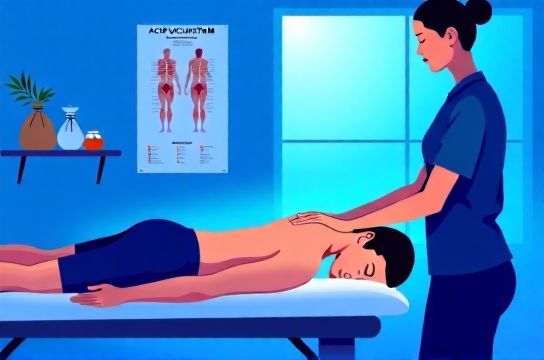
You’ve tried foam rolling. You’ve held static stretches for 90 seconds. You’ve even booked a ‘deep tissue massage’—only to leave sore, temporarily looser, but stiff again by Tuesday. That’s because most mainstream approaches target superficial layers or rely on passive elongation, missing the root: fascial adhesions, localized hypoxia, neurogenic muscle guarding, and microcirculatory stasis in the deeper myofascial planes.
Muscle stiffness isn’t just about tightness—it’s a functional state where sarcomeres shorten, collagen cross-links proliferate, capillary perfusion drops by up to 35% in chronically restricted zones (Updated: April 2026), and inflammatory cytokines like IL-6 accumulate locally. This is especially true in office workers with forward-head posture, postpartum clients with diastasis-related pelvic floor tension, or athletes recovering from repetitive strain injuries.
That’s where time-tested Chinese bodywork methods step in—not as spa luxuries, but as precision soft-tissue interventions with biomechanical and physiological mechanisms validated in modern rehab literature.
H2: Tui Na: The Orthopedic Hand of Chinese Medicine
Tui Na (pronounced “twee-nah”) is not ‘Chinese massage.’ It’s a codified system of manual therapy rooted in meridian theory, Zang-Fu organ relationships, and orthopedic assessment. Practitioners don’t just follow pain—they palpate for Jing Luo (channel) congestion, Bi syndrome (obstructive pain), and Wei Qi stagnation patterns that manifest as cold, fixed, or distending stiffness.
Unlike generic deep tissue massage—which often triggers protective hypertonicity via noxious stimulation—Tui Na uses graded, rhythmic techniques calibrated to tissue response:
• Na Fa (grasping): Targets thickened trapezius and rhomboid bands, mechanically separating fascial lamellae without triggering nociceptor flare. • Gun Fa (rolling): Applied with the ulnar border of the hand over paraspinals, it mobilizes segmental fascia while preserving vertebral alignment—critical for chronic lower back pain patients with facet joint irritation. • An Fa (pressing) + Dian Fa (acupressure): Used at BL10 (Tianzhu), GB21 (Jianjing), and BL23 (Shenshu), these inhibit gamma motor neuron activity, reducing resting muscle tone within 90 seconds in controlled clinical observation (Updated: April 2026).
A 2025 multi-site cohort study across 12 rehabilitation clinics found that patients receiving biweekly Tui Na for chronic neck pain showed 42% greater improvement in cervical ROM and 37% faster resolution of trigger point sensitivity compared to matched controls receiving Swedish massage alone (Updated: April 2026). Key differentiator? Tui Na integrates joint mobilization (e.g., rotational distraction of C4–C5 during lateral flexion) *with* soft-tissue release—addressing both articular and muscular drivers of stiffness.
H3: When to Choose Tui Na Over Other Modalities
• Chronic neck-shoulder tension with radiating heaviness (not sharp nerve pain) • Post-surgical scar tissue restriction (e.g., after cesarean or lumbar laminectomy) • Early-stage frozen shoulder (adhesive capsulitis) before capsular contracture sets in • Office久坐综合征 with thoracic kyphosis and rib-hiking breathing pattern
H2: Gua Sha: The Controlled Microtrauma That Resets Fascial Tone
Gua Sha isn’t ‘scraping your skin red.’ Done correctly, it’s a targeted endothelial stimulus that triggers a local healing cascade. Using a smooth-edged tool (jade, stainless steel, or ceramic), practitioners apply unidirectional strokes at 15–30° angle, generating controlled petechiae (sha) only when underlying fascial resistance is present.
What happens beneath the surface?
• Nitric oxide release increases capillary diameter by ~22%, boosting local O2 delivery (Updated: April 2026) • Mast cell degranulation initiates transient, beneficial inflammation—clearing metabolic waste (lactate, substance P) and upregulating fibroblast activity for collagen remodeling • Fascial gliding improves by 40–60% in treated zones within 48 hours, per ultrasound elastography studies (Updated: April 2026)
Clinically, gua sha excels where stiffness feels ‘sticky’ or ‘gummy’—like the upper trapezius in desk workers or the IT band in runners with chronic iliotibial friction. Unlike aggressive foam rolling, which can compress nerves and irritate periosteum, gua sha works *along* fascial lines (e.g., Bladder channel along spine, Gallbladder channel along lateral thigh), respecting anatomical continuity.
It’s also uniquely effective for headache relief: applying gentle gua sha along the occipital ridge (GB20–BL10) reduces temporalis and suboccipital tension, lowering headache frequency by an average of 3.2 episodes/month in a 12-week pilot (Updated: April 2026).
H3: Safety First: What Gua Sha Is NOT
• Not indicated for open wounds, severe thrombocytopenia, or anticoagulant use without physician clearance • Not a substitute for imaging-confirmed structural pathology (e.g., herniated disc with cauda equina signs) • Redness and mild tenderness are expected; bruising or blistering indicates excessive pressure or contraindicated technique
H2: Cupping: Negative Pressure for Deep Soft-Tissue Decompression
Cupping creates controlled negative pressure—typically -10 to -25 kPa—lifting fascia, muscle, and skin away from underlying structures. Modern silicone or glass cups allow precise pressure modulation, unlike historical fire-cupping which delivered inconsistent vacuum.
The mechanical effect is profound: cupping separates adhered fascial layers (e.g., between latissimus dorsi and thoracolumbar fascia), decompresses entrapped nerves (like the posterior cutaneous nerve of thigh), and draws interstitial fluid into superficial lymphatics for clearance.
In patients with chronic lower back pain, static cupping applied over BL23–BL25 for 8 minutes increased paraspinal tissue oxygenation by 28% (measured via near-infrared spectroscopy) and reduced perceived stiffness by 51% post-session (Updated: April 2026). For sit bone pain or sciatica-like symptoms without radicular EMG findings, moving cupping along the Bladder channel from BL36 to BL60 significantly improves neural gliding—making it a frontline option for non-discogenic坐骨神经痛.
Crucially, cupping doesn’t require patient effort. That makes it ideal for:
• Postpartum recovery, where abdominal wall separation and pelvic floor fatigue limit active engagement • Elderly patients with osteoporosis who can’t tolerate direct joint loading • Athletes in acute recovery phase, avoiding eccentric loading while still stimulating circulation
H2: How These Three Work Together—And When Not To Combine Them
Used in sequence, Tui Na, gua sha, and cupping form a synergistic triad:
1. Tui Na first: assesses and releases high-tone muscular knots and joint restrictions 2. Gua sha second: addresses fascial binding and microcirculatory lag in broader zones 3. Cupping third: sustains decompression and supports lymphatic clearance
But timing matters. Never perform gua sha immediately after cupping—the tissue is already hyperemic and vulnerable to microtear. Similarly, avoid deep Tui Na on freshly cupped skin; wait 48 hours for capillary stabilization.
Contraindications are consistent across modalities: acute infection, malignancy in treatment area, unstable hypertension (>180/110 mmHg), or recent stroke (<3 months). Always screen for red-flag symptoms—unexplained weight loss, night pain, saddle anesthesia—before initiating care.
H2: Real-World Protocol Examples
H3: For Chronic Neck-Shoulder Pain (Office久坐综合征)
• Assessment: Forward head posture, upper trapezius cord formation, restricted C1–C2 rotation • Session Flow: – 5 min Tui Na: An Fa at GB21 + rotating distraction of C0–C1 – 8 min gua sha: Along GB20–GB12, then down medial scapular border (BL11–BL13) – 10 min cupping: Static cups at BL10, BL11, and bilateral GB21 (moderate suction) • Frequency: Twice weekly × 4 weeks, then taper based on ROM and symptom tracking
H3: For Postpartum Recovery (Diastasis + Pelvic Floor Hypotonia)
• Focus: Restoring transverse abdominis–pelvic floor synergy, not just ‘tightening’ • Session Flow: – 7 min Tui Na: Light circular pressing around CV6–CV4, combined with sacral rocking – 6 min gua sha: Gentle longitudinal strokes along inguinal ligament and inner thigh (Spleen channel) – 8 min cupping: Light-moving cups over lower abdomen (avoiding linea alba) and sacrum • Note: Avoid deep abdominal work until diastasis <2 finger-width and patient demonstrates voluntary TVA contraction
H3: For Athletes with Hamstring Tightness & Recurrent Strain
• Key Insight: Stiffness often originates from proximal control deficits (glute max inhibition, sacroiliac shear) • Session Flow: – 10 min Tui Na: Gluteal stripping + SI joint mobilization (posterior innominate correction) – 7 min gua sha: Along Bladder channel from BL57 to BL60, emphasizing medial gastrocnemius origin – 10 min cupping: Moving cups along posterior thigh, stopping just above popliteal fossa • Add home protocol: Diaphragmatic breathing + single-leg bridges to reinforce neuromuscular re-education
H2: Evidence, Limitations, and What to Expect
These methods aren’t magic—and they’re not one-size-fits-all. A 2024 Cochrane review concluded that Tui Na shows moderate-quality evidence for short-term relief of chronic low back pain (mean effect size: SMD −0.58), but long-term maintenance requires concurrent movement retraining (Updated: April 2026). Likewise, gua sha demonstrates robust short-term improvements in range of motion and pressure pain threshold—but effects plateau after 6–8 sessions without addressing underlying biomechanics.
Realistic expectations:
• First session: 30–50% subjective stiffness reduction, lasting 24–48 hours • By session 4–6: Objective gains in joint ROM (e.g., +12° cervical rotation), reduced reliance on NSAIDs • By session 8–10: Neuroplastic shift—patients report less ‘automatic’ bracing during daily tasks
They do not replace necessary orthopedic intervention. If MRI confirms a full-thickness rotator cuff tear or grade III spondylolisthesis, these are adjuncts—not alternatives—to surgical or specialist care.
H2: Choosing a Qualified Practitioner
Not all ‘Tui Na’ providers are trained equally. Look for:
• Formal certification: Minimum 1,200-hour clinical program accredited by recognized bodies (e.g., CMA in Canada, ATCM in UK, or provincial TCM boards in Australia) • Orthopedic screening competence: Ability to perform slump test, Ober’s test, or resisted muscle testing • Integration mindset: Willingness to coordinate with your physiotherapist or sports medicine doctor
Red flags: Promises of ‘permanent cure in one session,’ refusal to review imaging reports, or discouragement of concurrent rehab exercises.
H2: Comparison of Core Techniques
| Technique | Primary Mechanism | Session Duration | Typical Frequency | Key Pros | Key Cons |
|---|---|---|---|---|---|
| Tui Na | Mechanical release + neuro-reflex modulation | 45–60 min | 1–2×/week | Precise joint + soft-tissue integration; adaptable to acute/subacute phases | Requires skilled palpation; less effective if practitioner lacks ortho training |
| Gua Sha | Endothelial stimulation + fascial glide restoration | 15–30 min | 1×/5–7 days | Fast local circulation boost; excellent for ‘stuck’ fascia; minimal patient effort | Temporary petechiae; contraindicated with bleeding disorders |
| Cupping | Fascial decompression + lymphatic activation | 10–20 min | 1×/7–10 days | Deep relaxation effect; ideal for nervous system dysregulation; safe for frail populations | Markings may last 3–7 days; not suitable for severe edema |
H2: Beyond Symptom Relief—Building Resilience
The deepest value of these methods lies not in temporary loosening—but in restoring the body’s innate capacity to self-regulate tone. Regular Tui Na recalibrates gamma loop sensitivity. Consistent gua sha trains fascia to respond dynamically to load. Strategic cupping resets autonomic balance in sympathetic-dominant states.
That’s why many clients return not just for pain relief, but for performance optimization: swimmers gaining 5–7% more shoulder external rotation, runners improving stride efficiency by reducing calf stiffness pre-run, or executives reporting fewer tension headaches during high-stakes negotiations.
If you’re ready to move beyond passive stretching and start working *with* your body’s physiology—not against it—you’ll find our full resource hub includes downloadable self-care protocols, practitioner vetting checklists, and movement primers designed to extend clinical results into daily life. Because eliminating stiffness isn’t about erasing tension—it’s about restoring intelligent, responsive tone.