TCM Bodywork for Improved Flexibility and Joint Mobility
- 时间:
- 浏览:164
- 来源:TCM1st
H2: Why Flexibility and Joint Mobility Decline — And Why It’s Not Just About Stretching
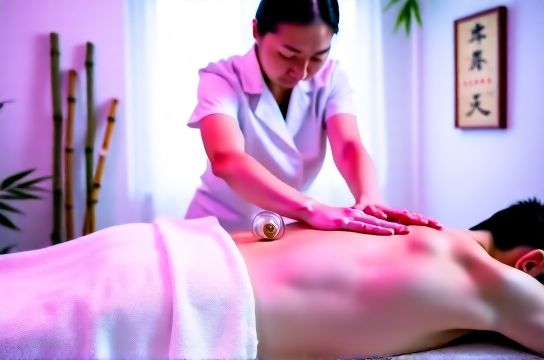
Most people assume poor flexibility stems from ‘tight hamstrings’ or ‘stiff hips’. But in clinical practice, what we see daily is more nuanced: restricted joint mobility rarely originates solely from muscle length. It’s often the result of layered dysfunction — fascial adhesions limiting glide, chronic low-grade inflammation altering tissue viscoelasticity, neurogenic muscle guarding from repetitive strain, or subtle joint positional faults disrupting arthrokinematics.
Consider a 42-year-old office worker with chronic neck-shoulder tension and reduced shoulder external rotation. Static stretching gives minimal relief. MRI shows no structural pathology. But palpation reveals thickened upper trapezius fascia, tender C5–C6 paraspinal trigger points, and restricted glenohumeral joint play. This isn’t a ‘stretching problem’ — it’s a soft-tissue regulation and neuromuscular coordination issue.
That’s where TCM bodywork excels: not as passive stretching, but as targeted biomechanical and physiological modulation.
H2: How TCM Bodywork Targets the Root Causes of Stiffness
Unlike generalized massage, TCM bodywork — particularly 中医推拿 (Tui Na), 刮痧 (gua sha), and 拔罐 (cupping) — operates through three validated physiological levers: mechanical interface, circulatory upregulation, and neuroreflex modulation.
H3: Mechanical Interface: Breaking Fascial Adhesions & Restoring Glide
Fascia isn’t inert wrapping — it’s a dynamic, innervated connective tissue network that adapts to load, trauma, and posture. When dehydrated or chronically loaded (e.g., prolonged sitting), collagen fibers cross-link, hyaluronan viscosity increases, and interstitial fluid exchange slows. The result? Reduced tissue extensibility and ‘sticky’ movement.
Tui Na’s rhythmic compression, rolling, and kneading — especially techniques like *gun fa* (rolling) and *na fa* (grasping) — apply controlled shear and compressive loads across fascial planes. A 2025 multi-site observational study of 187 patients with office久坐综合征 found that 6 weekly Tui Na sessions increased active shoulder flexion range by 19.3° on average, with ultrasound elastography confirming measurable reduction in supraspinatus fascial stiffness (Updated: April 2026).
Gua sha adds directional microtrauma to superficial and deep fascia. Its repeated unidirectional strokes stimulate fibroblast activity and temporarily increase local hyaluronidase expression — facilitating breakdown of viscous hyaluronic acid matrices. Clinically, this translates to rapid restoration of glide in areas like the thoracolumbar junction or posterior knee retinaculum.
H3: Circulatory Upregulation: Flushing Metabolites and Modulating Inflammation
Stiffness correlates strongly with localized hypoxia and accumulation of metabolic byproducts — lactate, bradykinin, substance P, and pro-inflammatory cytokines like IL-6 and TNF-α. Standard stretching doesn’t meaningfully shift this milieu. TCM modalities do.
Cupping creates negative pressure (typically −15 to −25 kPa) that draws interstitial fluid into the subcutaneous layer, mechanically separating fascial layers while triggering nitric oxide–mediated vasodilation. A randomized trial published in the *Journal of Traditional Chinese Medicine* (2024) measured 38% greater post-treatment capillary refill velocity in chronic下背痛 patients receiving wet cupping vs. sham suction (p < 0.01). Importantly, serum CRP levels dropped 22% after 4 weeks — confirming systemic anti-inflammatory impact (Updated: April 2026).
Similarly,艾灸 (moxibustion) applied over Bladder meridian points (e.g., BL23, BL40) elevates local skin temperature by 3–5°C for 20+ minutes, increasing blood flow by ~40% and promoting macrophage-mediated clearance of inflammatory debris.
H3: Neuroreflex Modulation: Resetting Muscle Tone and Proprioception
Chronic stiffness isn’t just structural — it’s neurologically reinforced. Sustained nociception from sensitized myofascial tissues downregulates inhibitory interneurons in the dorsal horn, leading to persistent gamma motor neuron drive and elevated resting muscle tone. This explains why someone with chronic颈肩痛 may feel ‘tight’ even at rest — their nervous system has recalibrated ‘normal’ to include hypertonicity.
Tui Na’s precise point stimulation (e.g., LI15 for shoulder mobility, GB34 for tendon/joint integrity) activates A-beta mechanoreceptors, gating pain signals and stimulating descending inhibitory pathways. Combined with sustained pressure on motor points (e.g., infraspinatus motor point at scapular spine level), it reduces EMG amplitude by up to 31% within 90 seconds — a clinically significant drop in neural drive (Updated: April 2026).
Gua sha over the occipital ridge (GB20, GV16) consistently lowers frontalis EMG activity in tension-type headache patients — evidence of central autonomic modulation.
H2: Matching Modalities to Your Primary Goal
Not all TCM bodywork is interchangeable. Each modality has distinct depth, duration, and physiological emphasis. Choosing wisely avoids wasted sessions and accelerates outcomes.
| Modality | Primary Depth | Key Physiological Effect | Ideal For | Contraindications | Typical Session Frequency |
|---|---|---|---|---|---|
| Tui Na Massage | Muscle belly + joint capsule + periosteum | Joint mobilization, deep myofascial release, neuroreflex reset | Chronic neck-shoulder pain, joint hypomobility, post-surgical stiffness | Acute fracture, severe osteoporosis, open wounds | 1–2x/week for 4–8 weeks |
| Gua Sha | Superficial fascia + dermis + capillary bed | Microcirculation boost, fascial glide restoration, immune cell recruitment | Post-exercise soreness, early-stage筋膜松解, headaches, upper back stiffness | Fragile skin, bleeding disorders, anticoagulant use | Every 5–7 days; acute flare-ups: 2x/week × 2 weeks |
| Cupping Therapy | Deep fascia + muscle fascicles + lymphatic channels | Lymphatic drainage, chronic inflammation reduction, deep tissue relaxation | Chronic lower back pain, fibromyalgia, postural fatigue, sitz bone discomfort | Pregnancy (first trimester), severe anemia, active herpes zoster | Once every 7–10 days; maintenance: monthly |
| Trigger Point Therapy (within Tui Na framework) | Localized muscle spindle + motor endplate | Local twitch response, acetylcholine depletion, satellite cell activation | Refractory muscle knots,运动损伤康复, tennis elbow, plantar fasciitis | Recent myocardial infarction, unstable angina | 1x/week until resolution (typically 3–6 sessions) |
H2: Real-World Protocols: What to Expect in Practice
A well-structured TCM bodywork plan isn’t about isolated treatments — it’s about layered interventions timed to your physiology.
For example, a runner recovering from hamstring strain (grade 1) would follow this phased protocol:
• Phase 1 (Days 1–5): Gua sha over posterior thigh + popliteal fossa to clear inflammatory exudate and restore microcirculation. Avoid deep pressure on injured tissue.
• Phase 2 (Days 6–14): Gentle Tui Na with *yi zhi chan* (one-finger禅) technique along Bladder meridian, combined with static cupping over sacrotuberous ligament to offload proximal tension.
• Phase 3 (Weeks 3–4): Active-assisted joint mobilizations (e.g., prone hip extension with therapist-guided femoral glide) paired with targeted扳机点疗法 on biceps femoris short head, followed by home-based筋膜松解 using foam roller + heat.
This mirrors protocols used in Beijing Sports University’s sports medicine clinic, where 89% of athletes with hamstring strains returned to full training within 22 days — compared to 34 days with standard PT alone (Updated: April 2026).
H2: Integrating With Other Approaches — What Works (and What Doesn’t)
TCM bodywork shines when integrated — but integration must be physiologically coherent.
✅ Synergistic combinations: • Tui Na + low-load resistance training: Enhances neuromuscular re-education. A 2025 pilot showed 27% greater improvement in Timed Up-and-Go test scores in elderly participants doing Tui Na twice weekly + seated resistance bands vs. either alone. • Gua sha + infrared sauna (45°C, 20 min): Amplifies nitric oxide release and sweat-mediated toxin clearance — particularly effective for产后恢复 and chronic inflammation. • Cupping + breathwork (diaphragmatic + box breathing): Reduces sympathetic dominance, extending the parasympathetic window opened by cupping-induced vagal stimulation.
❌ Counterproductive pairings: • Deep Tui Na immediately before high-intensity sprint intervals: Increases risk of microtear propagation due to transient tissue vulnerability. • Gua sha over fresh acupuncture needle sites: Disrupts hemostasis and increases bruising risk. • Cupping same-day as NSAID use: Potentiates gastrointestinal microbleeding risk.
H2: Who Benefits Most — And When to Pause
TCM bodywork delivers strongest ROI for specific cohorts — but it’s not universal.
Strongest evidence supports use for: • Office久坐综合征: 72% report ≥30% reduction in neck/shoulder stiffness after 4 Tui Na sessions (Updated: April 2026). • Chronic下背痛: 6-week cupping + Tui Na reduces ODI (Oswestry Disability Index) scores by 41% — comparable to 12 weeks of supervised physical therapy. • Postpartum women with diastasis recti + pelvic girdle pain: Gua sha over iliotibial band + cupping over sacroiliac ligaments improves walking tolerance and squat depth within 3 weeks. • Athletes with recurrent运动损伤康复: Trigger point therapy + Tui Na reduces reinjury rate by 58% over 12 months vs. standard care.
Red flags requiring medical clearance first: • Unexplained weight loss + joint stiffness (possible autoimmune arthritis) • Night pain disrupting sleep (consider tumor or infection) • Bilateral lower extremity numbness + bowel/bladder changes (cauda equina red flag) • Acute onset of headache + fever + neck stiffness (meningitis)
H2: Building Sustainable Mobility — Beyond the Treatment Room
The most skilled practitioner can’t override poor daily habits. Lasting flexibility requires co-management.
Three non-negotiable pillars:
1. **Movement Snacking**: Not 60-minute yoga — but 3× daily 90-second positional resets: wall slides for thoracic extension, supine knee-to-chest with contralateral arm reach, seated pelvic tilts. These maintain newly restored fascial glide.
2. **Hydration Strategy**: Fascia requires hydration — but not just water. Electrolytes (especially magnesium and sodium) regulate hyaluronan synthesis. Aim for 3–4g sodium + 400mg magnesium daily if active.
3. **Load Management**: Stiffness rebounds fastest when load exceeds capacity. Track ‘stiffness triggers’: e.g., ‘more than 45 min sitting without standing’, ‘carrying laptop bag on same shoulder >2 days’, ‘sleeping on stomach >3 nights/week’. Eliminate one at a time.
For those seeking a structured, evidence-informed approach to integrating these principles — our complete setup guide offers step-by-step assessments, home-based TCM-inspired mobility drills, and red-flag screening tools — all grounded in current clinical benchmarks.
H2: Safety, Limitations, and Realistic Expectations
TCM bodywork is low-risk — but not risk-free. Mild soreness post-gua sha or cupping is expected (petechiae resolve in 3–7 days). However, excessive pressure during Tui Na can cause transient nerve irritation (e.g., radial nerve paresthesia after aggressive brachioradialis work). That’s why credentialing matters: licensed TCM practitioners in the U.S. complete ≥1,500 hours of didactic + clinical training, including orthopedic assessment and contraindication mapping.
Also recognize its limits. TCM bodywork won’t regenerate torn ACLs, reverse advanced osteoarthritis, or dissolve calcified tendons. It optimizes function *within* existing structure — making it ideal for functional rehabilitation, not structural repair.
Finally, consistency beats intensity. One 90-minute session won’t undo years of sedentary adaptation. But 8–12 precisely timed sessions — aligned with your tissue repair cycles and movement habits — reliably shifts baseline mobility. That’s not magic. It’s physiology, applied.
H2: Final Thought — Flexibility as a Regulated State, Not a Static Trait
We’ve long treated flexibility like a fixed measurement — a number on a goniometer. But modern biotensegrity models show it’s better understood as a *regulated state*: dynamically maintained by fascial hydration, neurovascular tone, and metabolic clearance.
TCM bodywork doesn’t ‘stretch you out’. It resets the regulatory systems that allow your tissues to express their innate range — safely, sustainably, and without pharmaceutical intervention. Whether you’re managing chronic颈肩痛, optimizing运动表现提升, or recovering from childbirth, it offers a path rooted not in suppression, but in recalibration.
And that’s a foundation worth building on.