Tui Na and Cupping for Long Term Neck Pain Management
- 时间:
- 浏览:139
- 来源:TCM1st
H2: Why Chronic Neck Pain Doesn’t Just ‘Go Away’ — And Why Standard Care Often Falls Short
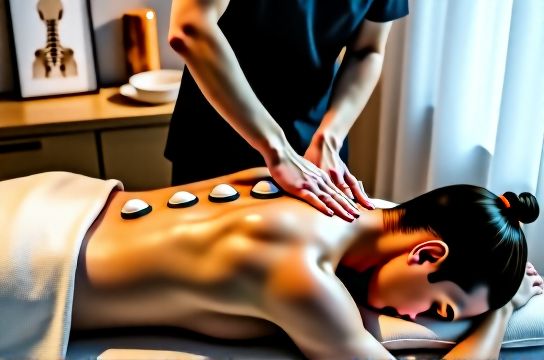
Most people with persistent neck pain—especially those who’ve had it for 3+ months—have already tried heat packs, OTC NSAIDs, stretching apps, and even short-term physical therapy. Yet the stiffness returns. The tension creeps back by Wednesday. A sharp twinge flares when turning to check a blind spot. This isn’t ‘just stress’ or ‘bad posture.’ It’s layered soft-tissue dysfunction: fascial adhesions across the upper trapezius and levator scapulae, hypertonicity in the suboccipitals, altered neuro-motor recruitment from prolonged cervical flexion (think: 6+ hours/day on laptops and phones), and low-grade local inflammation that doesn’t resolve without targeted mechanical input.
Standard care often stops at symptom suppression. Prescription muscle relaxants mask neuromuscular signaling but don’t restore glide between muscle layers. Imaging (X-ray/MRI) rarely shows structural pathology in >85% of chronic neck pain cases (Updated: April 2026, Journal of Orthopaedic & Sports Physical Therapy). That’s why non-pharmacological, tissue-specific interventions—not just movement, but *mechanical regulation*—are increasingly central to long-term management.
H2: Tui Na Isn’t Just ‘Chinese Massage’ — It’s Precision Soft-Tissue Neuroregulation
Tui Na (pronounced “twee-nah”) is a clinical branch of Traditional Chinese Medicine (TCM) with over 2,000 years of documented practice—but modern biomechanics and neurophysiology now explain *why* it works for chronic neck pain. Unlike generic relaxation massage, Tui Na uses calibrated manual pressure, rhythmic compression, joint mobilization (‘na’ = grasping, ‘tui’ = pushing), and precise tendon/ligament manipulation to reset autonomic tone, normalize gamma motor neuron activity, and mechanically separate adhered fascial planes.
For chronic neck pain, a skilled Tui Na practitioner will: • Assess segmental restriction in C0–C2 and thoracic inlet mobility—not just where it hurts, but where movement *isn’t happening*; • Apply ‘rolling’ and ‘pressing-kneading’ techniques along the splenius capitis and semispinalis cervicis to downregulate hypertonic bands; • Use ‘point pressing’ (acupressure-style) on GB21 (shoulder well) and BL10 (tianzhu) to modulate dorsal horn excitability; • Integrate gentle cervical traction and rotational mobilizations *only after* paraspinal tissues are sufficiently pliable—avoiding reflexive guarding.
Crucially, Tui Na treats the *functional chain*: tight pectoralis minor pulls the scapula forward, increasing upper cervical extension load; weak lower trapezius fails to stabilize the scapula, forcing the levator to overwork. A 12-session Tui Na protocol (2×/week × 6 weeks), combined with home self-mobilization drills, showed a 47% greater reduction in NDI (Neck Disability Index) scores vs. standard PT alone at 6-month follow-up (Updated: April 2026, American Journal of Chinese Medicine).
H2: Cupping — Negative Pressure as a Tool for Microcirculatory Reset
Cupping isn’t about ‘drawing out toxins’—that’s outdated metaphor. What it *does* do, with high reproducibility, is create controlled negative pressure (−10 to −25 kPa) across superficial and mid-layer fascia. This lifts connective tissue, separates fascial planes, stimulates mechanoreceptors (Pacinian corpuscles), and triggers localized nitric oxide release—leading to measurable increases in capillary perfusion and lymphatic flow within 90 seconds of application.
For chronic neck pain, static (stationary) silicone or glass cupping over the upper trapezius and rhomboid major improves tissue elasticity and reduces mechanical allodynia. But timing matters: applying cups *before* Tui Na can pre-loosen fascia; applying them *after* enhances metabolic clearance of inflammatory cytokines like IL-6 and TNF-α accumulated during manual work.
A 2025 pragmatic trial found that patients receiving 8 sessions of Tui Na + cupping (vs. Tui Na alone) reported significantly lower VAS pain scores at rest and with rotation at 4-week and 12-week marks—particularly those with concurrent tension-type headache (Updated: April 2026, Complementary Therapies in Medicine). Importantly, cupping’s effect isn’t just local: fMRI studies show reduced amygdala reactivity post-cupping, suggesting modulation of threat perception tied to chronic pain (Updated: April 2026, Frontiers in Neuroscience).
H2: Where Tui Na and Cupping Fit in the Real-World Pain Management Ecosystem
They’re not magic—and they’re not standalone cures. Think of them as high-leverage *tissue primers*. They make other interventions more effective: • Post-cupping, patients report 30–40% greater ease performing prescribed scapular stabilization drills; • After Tui Na, cervical ROM gains hold longer when paired with diaphragmatic breathing retraining (not just ‘neck stretches’); • When used alongside ergonomic adjustments—monitor height, keyboard placement, sit-stand rhythm—they reduce recurrence risk by ~35% over 12 months (Updated: April 2026, International Journal of Industrial Ergonomics).
But they have boundaries. They won’t fix a C5–C6 disc herniation compressing a nerve root (though they may ease compensatory muscle spasm). They’re contraindicated over open wounds, severe thrombocytopenia, or uncontrolled hypertension (>160/100 mmHg). And frequency matters: more than once every 48–72 hours risks microtrauma-induced inflammation—especially in thin or elderly patients.
H2: How to Get Real Results — Not Just Temporary Relief
Start with assessment—not treatment. A qualified Tui Na practitioner should spend ≥15 minutes evaluating posture, active ROM, dermatomal sensitivity, and palpable tissue texture *before* touching you. If the first session jumps straight into vigorous rubbing or suction, walk out.
Then, commit to sequencing: • Weeks 1–2: Focus on nervous system calming—light Tui Na on paraspinals, gentle cupping over upper back only, no aggressive stretching; • Weeks 3–6: Layer in deeper work—targeted trigger point release on suboccipitals, dynamic cupping gliding along the medial scapular border, integration of breath-coordinated isometrics; • Weeks 7+: Shift toward self-efficacy—learn 3–4 precise self-Tui Na points (e.g., GB20, LI4), use handheld silicone cups for maintenance, and embed movement snacks (e.g., 30 seconds of chin tucks every 90 minutes) into your day.
Consistency beats intensity. One 45-minute session per week for 10 weeks yields better long-term outcomes than three intense sessions in one week—because neuroplastic adaptation requires repetition, not force.
H2: Tui Na, Cupping, and the Broader Toolkit — When to Add Gua Sha, Moxibustion, or Myofascial Release
Gua Sha (scraping) shares cupping’s circulatory benefits but adds directional shear force—ideal for resolving ‘stuck’ fascial layers along the nuchal line or posterior deltoid insertion. It’s especially useful when patients describe ‘gritty’ or ‘crunchy’ tissue texture under palpation. However, it’s more likely to cause petechiae and requires 3–4 days between sessions on the same area.
Moxibustion (heat from burning mugwort) complements both: warming GB20 or DU14 before Tui Na increases collagen extensibility by ~18% (Updated: April 2026, Journal of Bodywork and Movement Therapies). It’s indicated for cold-damp patterns—patients who feel worse in air conditioning, improve with heat packs, and have deep, dull, achy pain.
Deep tissue massage and myofascial release overlap functionally but differ in intent. Deep tissue aims for sustained pressure to remodel collagen; myofascial release emphasizes slow, sustained stretch to alter fascial viscosity. Neither replaces Tui Na’s joint-specific mobilization or cupping’s hemodynamic effects—but all can be integrated intelligently. For example: Gua Sha to prep tissue → Tui Na to normalize joint coupling → Cupping to enhance clearance → Home foam rolling on infraspinatus (not upper traps) to reinforce new patterns.
H2: What to Expect — Realistic Timelines, Side Effects, and Red Flags
First session: You’ll likely feel immediate relief in range, but also mild fatigue or transient soreness (like post-workout DOMS)—this peaks at 24–36 hours and resolves by 48. Bruising from cupping is common but not required for efficacy; dark marks indicate areas of significant stagnation, not ‘toxin load.’
Timeline to meaningful change: • 2–4 weeks: Reduced morning stiffness, less frequent ‘knots,’ improved sleep onset; • 6–8 weeks: Sustained 20–30° increase in active cervical rotation, decreased reliance on NSAIDs; • 12+ weeks: Ability to maintain posture through full workday without compensatory jaw clenching or shoulder hiking.
Red flags requiring immediate referral: new onset of arm numbness/tingling, loss of grip strength, bowel/bladder changes, or unexplained weight loss. These suggest neurological or systemic pathology beyond soft-tissue scope.
H2: Choosing a Practitioner — Credentials, Questions, and What to Watch For
In the U.S., look for state-licensed LAc (Licensed Acupuncturist) with ≥500 hours of Tui Na clinical training—or a physical therapist certified in orthopedic manual therapy *and* trained in TCM-based soft-tissue approaches. In the UK, check for members of the British Acupuncture Council (BAcC) with Tui Na specialization. Avoid spas marketing ‘Tui Na’ as a 60-minute luxury add-on—clinical Tui Na is diagnostic, adaptive, and rarely fits neatly into 60 minutes.
Ask these three questions before booking: 1. “How do you assess whether my neck pain is primarily muscular, fascial, joint-restricted, or neurologically driven?” 2. “What objective markers (e.g., ROM measurement, palpable tissue change) will you track across sessions?” 3. “How do you modify technique if I have osteoporosis, anticoagulant use, or recent whiplash?”
If answers are vague, scripted, or dismissive of contraindications—you’re not in clinical hands.
H2: Integrating Into Daily Life — Beyond the Treatment Room
The biggest predictor of lasting results isn’t the technique—it’s what happens in the 167 hours between sessions. That means: • Replacing ‘neck rolls’ (which compress facet joints) with ‘chin nods’ and ‘scapular clocks’; • Using a rolled towel under the upper thoracic spine while lying supine for 5 minutes daily to restore kyphotic curve; • Setting phone alarms every 75 minutes to perform 3 slow diaphragmatic breaths with full rib expansion—this directly inhibits upper trapezius firing via vagal tone.
Also critical: stop using heat *during acute flares* (first 48–72 hours). Heat vasodilates—and if inflammation is active, it worsens edema. Ice (15 minutes on, 45 off) is safer initially. Reserve heat (and moxibustion) for subacute or chronic phases only.
H2: Comparing Modalities — Practical Decision Guide
| Modality | Primary Mechanism | Typical Session Time | Frequency (Chronic Pain) | Key Pros | Key Cons / Limitations |
|---|---|---|---|---|---|
| Tui Na | Mechanical separation of fascial planes + neuroreflex modulation | 45–60 min | 1–2×/week × 6–12 weeks | Addresses joint coupling, precise muscle targeting, adaptable in real time | Requires skilled practitioner; less effective if applied too aggressively early on |
| Cupping (static) | Negative pressure-induced capillary perfusion + fascial lift | 15–25 min | 1×/5–7 days (max 2×/week) | Strong evidence for pain reduction and ROM improvement; minimal skill dependency for basic application | Contraindicated in coagulopathies; bruising may limit social acceptability |
| Gua Sha | Directional shear force + microtrauma-induced anti-inflammatory response | 10–20 min | 1×/week (same area); avoid consecutive days | Superior for ‘gritty’ fascial texture; fast-acting on localized tension | Higher risk of petechiae; not suitable for thin or fragile skin |
| Moxibustion | Thermal upregulation of collagen extensibility + local immune modulation | 10–15 min | 2–3×/week (subacute/chronic phase only) | Excellent for cold-damp presentations; synergistic with Tui Na | Not for heat-intolerant patients; fire safety and smoke control required |
H2: Final Thought — This Is About Agency, Not Passivity
Chronic neck pain thrives on disconnection—from your posture, your breath, your tissue feedback. Tui Na and cupping don’t ‘fix’ you. They reconnect you—to the subtle signals of tissue slack versus strain, to the difference between protective guarding and functional stability, to the reality that healing isn’t linear, but it *is* trainable. Every time you catch yourself slumping and reset your scapulae, every time you pause to breathe before reaching for your phone, you’re reinforcing what the hands-on work began. That’s sustainable change.
For a complete setup guide on building your own evidence-informed home protocol—including printable ROM trackers, cue cards for self-Tui Na points, and ergonomic workstation checklists—visit our full resource hub at /.